
How about the inventory of en 10149-2 steel s420mc in China at present
An in-depth analysis of the current inventory levels, technical specifications, and market dynamics of EN 10149-2 S420MC high-strength steel in China, focusing on its industrial applications and metallurgical advantages.
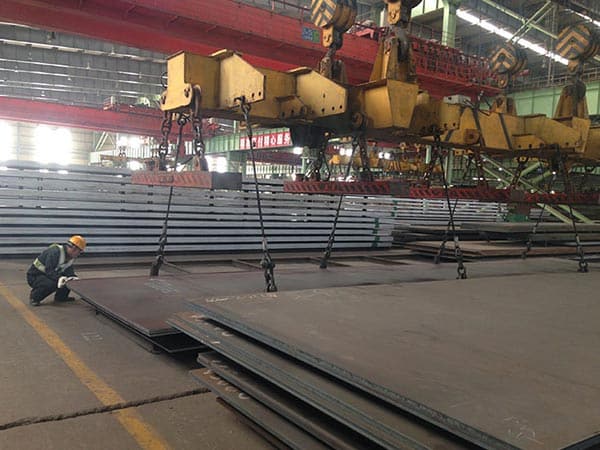
Current Landscape of EN 10149-2 S420MC Steel Inventory in China
The supply chain for high-strength low-alloy (HSLA) steels in China has undergone a significant transformation, with EN 10149-2 S420MC emerging as a cornerstone material for the automotive and heavy machinery sectors. At present, the inventory levels of S420MC across major Chinese steel hubs like Shanghai, Lecong, and Tianjin remain relatively robust, though they are highly sensitive to the production cycles of major domestic mills such as Baosteel, Shougang, and Ansteel. Unlike standard carbon steels, S420MC inventory is often categorized by its surface finish—primarily hot-rolled (HR) and pickled and oiled (P&O)—with the latter seeing higher turnover rates due to its immediate readiness for precision laser cutting and stamping.
Inventory dynamics are currently influenced by a shift toward "just-in-time" procurement strategies among large-scale manufacturers. While warehouse stocks in the Yangtze River Delta remain the highest in the country, the availability of specific thicknesses, particularly in the 2.0mm to 8.0mm range, fluctuates based on the export demand and the domestic automotive production forecast. Stockists are increasingly focusing on maintaining a diverse range of widths, typically 1250mm and 1500mm, to cater to the diverse needs of structural component fabricators.
Metallurgical Composition and Structural Integrity
The exceptional performance of S420MC is rooted in its precise chemical composition, which is governed by the EN 10149-2 standard. This grade is a thermomechanically rolled steel designed for cold forming. Its strength is derived not from high carbon content, which would impair weldability, but from micro-alloying elements such as Niobium (Nb), Vanadium (V), and Titanium (Ti).
| Element | C (max %) | Mn (max %) | Si (max %) | P (max %) | S (max %) | Al (min %) | Nb+V+Ti (max %) |
|---|---|---|---|---|---|---|---|
| S420MC | 0.12 | 1.60 | 0.50 | 0.025 | 0.015 | 0.015 | 0.22 |
The low carbon equivalent (CEV) of S420MC ensures that the material maintains excellent toughness and weldability. The inclusion of micro-alloying elements facilitates grain refinement during the thermomechanical rolling process (TMCP). This fine-grained structure is what allows the steel to achieve a minimum yield strength of 420 MPa while retaining high ductility, a combination that is essential for complex cold-forming operations.
Mechanical Performance and Cold Forming Capabilities
Engineers favor S420MC because it bridges the gap between traditional structural steels and ultra-high-strength grades. Its mechanical properties are optimized for weight reduction (lightweighting) in vehicle frames and structural supports. The inventory currently available in the Chinese market consistently meets or exceeds the following parameters:
- Yield Strength (ReH): Minimum 420 MPa.
- Tensile Strength (Rm): 480 - 620 MPa.
- Elongation (A80mm): Minimum 16% to 19% depending on thickness.
- Bending Radius: For a 90-degree bend, the minimum mandrel diameter is often as low as 0.5 to 1.5 times the thickness, showcasing its superior formability.
The ability of S420MC to undergo severe deformation without cracking is a primary reason for its high inventory turnover. In the production of chassis components, the material must withstand complex stretching and bending. The consistency of these mechanical properties across different batches is a key metric that Chinese mills have mastered, making domestic S420MC a reliable alternative to European imports.
Advanced Processing and Weldability
One of the practical advantages of S420MC found in current Chinese stocks is its compatibility with modern fabrication techniques. The steel is particularly well-suited for laser cutting; the low impurity levels and controlled silicon content result in clean edges and minimal dross. This is critical for industries that require high-precision components with minimal post-processing.
Regarding weldability, S420MC can be joined using all standard welding methods, including MAG, TIG, and laser welding. Because the strength is achieved through TMCP rather than heat treatment, the heat-affected zone (HAZ) remains relatively stable, provided that the heat input is controlled. This prevents the significant softening often seen in other high-strength materials, ensuring the structural integrity of the entire assembly.
Diversified Industry Applications in the Chinese Market
The inventory of S420MC in China is largely consumed by three major sectors. First is the Automotive Industry, where it is used for longitudinal beams, cross members, and chassis reinforcements. The push for electric vehicles (EVs) has increased the demand for S420MC as manufacturers seek to offset battery weight with lighter, stronger steel frames.
Second is the Heavy Machinery and Construction Equipment sector. S420MC is frequently used in the manufacturing of crane booms, excavator frames, and agricultural machinery. Its high strength-to-weight ratio allows for the design of equipment that can handle higher loads without increasing the overall mass of the machine.
Thirdly, the Cold-Formed Section industry utilizes S420MC for producing high-strength profiles used in racking systems, solar panel mounts, and specialized container frames. The material's ability to be roll-formed into complex shapes without losing its structural properties makes it ideal for these applications.
Environmental Adaptation and Sustainability
In the context of global carbon neutrality goals, the inventory of S420MC in China is also reflecting a shift toward "Green Steel." Many Chinese mills are now implementing EAF (Electric Arc Furnace) production routes or utilizing hydrogen-based reduction to lower the carbon footprint of their HSLA products. S420MC inherently contributes to sustainability by enabling material savings; by using a higher-strength grade, designers can reduce the thickness of components, thereby reducing the total steel consumption and the energy required for transport and assembly.
Furthermore, the atmospheric corrosion resistance of S420MC, while not as high as weathering steel, is superior to standard mild steel due to its dense grain structure and controlled chemistry. When combined with modern galvanizing or painting processes, components made from S420MC exhibit excellent longevity in harsh environments, from coastal industrial zones to high-humidity agricultural settings.
Sourcing Strategies and Market Outlook
For procurement managers looking at the current inventory in China, it is essential to distinguish between mill-direct supply and spot market availability. While large-scale projects often secure volume through quarterly contracts with mills like Shougang or Baosteel, the spot market in cities like Wuxi provides the flexibility needed for smaller batches or urgent requirements. The current trend shows a narrowing price gap between S420MC and lower grades like S355MC, further incentivizing the transition to higher-strength materials.
The outlook for S420MC inventory remains positive, with production capacity expanding to meet the needs of the "New Infrastructure" projects across Asia. Buyers should focus on verifying the mill test certificates (MTC) to ensure compliance with EN 10149-2, particularly regarding the impact energy requirements and the specific rolling conditions used during manufacture. As the Chinese steel industry continues to sophisticated, the availability of specialized grades like S420MC is expected to become even more stabilized, supporting the next generation of high-performance engineering.
Leave a message