
s460 steel equivalent astm cutting is widely used in mechanical manufacturing
Explore the technical specifications, ASTM equivalents, and advanced cutting techniques for S460 high-strength steel. This guide covers mechanical properties, industrial applications, and processing strategies for mechanical manufacturing.
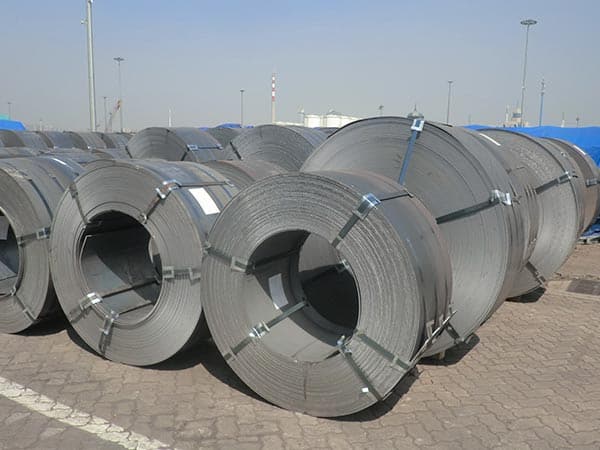
The Evolution of High-Strength Structural Steel in Modern Engineering
In the contemporary landscape of mechanical manufacturing, the demand for materials that balance weight reduction with enhanced load-bearing capacity has led to the widespread adoption of high-strength low-alloy (HSLA) steels. Among these, S460 steel stands out as a premier choice for engineers seeking structural integrity without the bulk associated with traditional carbon steels. Defined by its minimum yield strength of 460 MPa, this grade represents a significant leap in metallurgical design, incorporating fine-grain practice to ensure both strength and toughness. Manufacturers increasingly look toward S460 to optimize the performance of heavy machinery, offshore structures, and complex architectural frameworks.
ASTM Equivalents and Global Standards for S460 Steel
Navigating international material standards is critical for global supply chains. S460 steel, primarily governed by the European standard EN 10025-3 (for normalized rolled steel) or EN 10025-4 (for thermomechanically rolled steel), finds its closest counterparts in the American Society for Testing and Materials (ASTM) system. Understanding these equivalents ensures that mechanical properties remain consistent across different procurement regions.
The most common ASTM equivalent for S460 is ASTM A572 Grade 65. While S460 offers a yield strength of approximately 66.7 ksi, A572 Gr 65 provides a minimum yield of 65 ksi, making them functionally interchangeable in most structural applications. Another relevant comparison is ASTM A913 Grade 65, which is often used for rolled shapes in seismic-resistant structures due to its excellent weldability and toughness. For specialized machinery components, ASTM A656 Grade 70 may also be considered, particularly when weight savings are prioritized through higher yield thresholds.
| Standard | Grade | Yield Strength (min) | Tensile Strength | Elongation (min) |
|---|---|---|---|---|
| EN 10025-3 | S460N / S460NL | 460 MPa | 540-720 MPa | 17% |
| ASTM A572 | Grade 65 | 450 MPa (65 ksi) | 550 MPa (80 ksi) | 15% |
| ASTM A913 | Grade 65 | 450 MPa (65 ksi) | 550 MPa (80 ksi) | 17% |
| ASTM A656 | Grade 70 | 485 MPa (70 ksi) | 550 MPa (80 ksi) | 14% |
Mechanical Integrity and Microstructural Excellence
The superior performance of S460 steel is not merely a result of its chemical composition but its refined microstructure. By utilizing micro-alloying elements such as Niobium (Nb), Vanadium (V), and Titanium (Ti), steelmakers achieve a fine-grained structure that resists crack propagation. This is particularly vital in mechanical manufacturing where components are subjected to cyclic loading and fatigue.
- High Yield-to-Tensile Ratio: S460 provides a high yield point, allowing designers to utilize thinner sections without risking permanent deformation.
- Impact Toughness: Grades like S460NL are tested for impact energy at temperatures as low as -50°C, ensuring reliability in arctic or high-altitude environments.
- Ductility: Despite its high strength, S460 maintains sufficient elongation, which is essential for safety in the event of unforeseen structural overloads.
Advanced Cutting Technologies for S460 Steel Plates
Processing S460 steel requires a deep understanding of how thermal and mechanical stresses affect the material's edge properties. Cutting is a foundational step in mechanical manufacturing, and the choice of technology directly impacts the cost and quality of the final assembly.
Laser Cutting: For thicknesses up to 25mm, fiber laser cutting offers unparalleled precision. The high energy density results in a narrow heat-affected zone (HAZ), which is crucial for S460 to maintain its fine-grain properties near the cut edge. This method is preferred for intricate machinery parts where tight tolerances are non-negotiable.
Plasma Cutting: High-definition plasma cutting is the workhorse for S460 plates ranging from 20mm to 50mm. While the HAZ is slightly wider than laser cutting, modern plasma systems using oxygen or nitrogen-water injection can produce clean, dross-free edges that require minimal post-processing.
Oxy-Fuel Cutting: For very thick S460 sections (above 50mm) used in heavy equipment bases, oxy-fuel remains the standard. However, due to the high heat input, preheating the plate is often necessary to prevent edge cracking, and the resulting HAZ must be carefully managed through subsequent machining or heat treatment.
Weldability and Joining Strategies
One of the primary advantages of S460 over higher-strength quenched and tempered steels is its excellent weldability. The low carbon equivalent (CEV) of S460 reduces the risk of cold cracking in the weld zone. In the context of mechanical manufacturing, this allows for the fabrication of large, complex structures such as crane booms and excavator frames without the need for intensive preheating in many cases.
Using low-hydrogen welding consumables is mandatory to maintain the integrity of the joint. Submerged Arc Welding (SAW) and Gas Metal Arc Welding (GMAW) are the most common processes utilized. Engineers must ensure that the heat input is controlled to avoid grain coarsening in the HAZ, which could lead to a localized drop in toughness.
Industrial Applications: Beyond Structural Frames
The versatility of S460 steel extends into diverse industrial sectors where performance-to-weight ratios are critical. In the lifting and transport industry, S460 is used to manufacture telescopic crane booms, allowing for higher reach and capacity while keeping the vehicle's gross weight within legal limits.
In the mining and earthmoving sector, the steel's resistance to impact and fatigue makes it ideal for the chassis of heavy-duty dump trucks and the structural components of crushers. The ability of S460 to withstand harsh operating conditions while providing a long service life reduces maintenance costs and downtime for operators.
The offshore energy sector utilizes S460 for platform jackets and wind turbine foundations. The steel's environmental adaptability, particularly its resistance to brittle fracture in cold marine environments, ensures the safety of these massive structures against wave and wind loads.
Environmental Adaptability and Sustainability
S460 steel contributes significantly to green manufacturing initiatives. By allowing for lighter designs, it reduces the total amount of raw material required for a project, which in turn lowers the carbon footprint associated with steel production and transportation. Furthermore, the durability of S460-based structures extends the replacement cycle, promoting a more circular and sustainable industrial economy.
The material's performance in corrosive environments can be further enhanced through modern coating systems or galvanization. Because S460 has a controlled silicon content, it is highly suitable for hot-dip galvanizing, providing long-term protection against atmospheric corrosion in infrastructure projects.
Optimizing Procurement and Material Selection
When specifying S460 or its ASTM equivalents, it is essential to consider the specific sub-grade (e.g., M, ML, N, or NL). The 'N' suffix denotes normalized or normalized rolled steel, while 'M' indicates thermomechanically rolled steel. Thermomechanical rolling (TMCP) often results in better weldability and toughness at the same strength level compared to normalized steel, making it the preferred choice for high-stress mechanical components.
Quality assurance starts with verifying the Mill Test Certificate (MTC). For critical applications in mechanical manufacturing, ensuring that the steel meets the supplementary requirements for through-thickness properties (Z-grade) can prevent lamellar tearing in highly constrained welded joints. This level of technical scrutiny ensures that the transition from S460 design to ASTM-equivalent execution is seamless and reliable.
Leave a message