
What are the top 7 S700MC steel for cranes structure heavy plates mills in Turkey
Discover the leading S700MC high-strength steel options for crane structures in Turkey. This expert guide covers mill capabilities, technical specifications, and processing advantages for heavy plate applications.
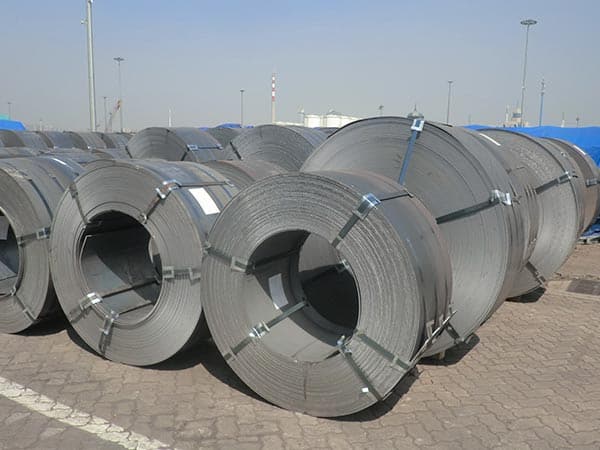
The Strategic Shift to S700MC in Turkish Crane Engineering
The Turkish crane manufacturing industry has undergone a radical transformation over the last decade. As global demand for higher lifting capacities and lighter equipment weight intensifies, engineers in industrial hubs like Gebze, Ankara, and Izmir have pivoted from traditional S355 grades toward high-yield-strength thermomechanically rolled steels. S700MC steel, governed by the EN 10149-2 standard, represents the pinnacle of this evolution, offering a minimum yield strength of 700 MPa. This allows for significant thickness reduction in telescopic booms, lattice structures, and chassis components without compromising structural integrity.
In Turkey, the availability of S700MC is driven by a mix of domestic production excellence and high-end European imports. The selection of a specific mill or brand often depends on the specific requirements of the crane type—whether it is a mobile hydraulic crane, a tower crane, or a heavy-duty port crane. The primary advantage of S700MC lies in its thermomechanical control process (TMCP), which creates a fine-grained microstructure that balances extreme strength with exceptional weldability and cold-forming properties.
1. Erdemir (Eregli Iron and Steel Works)
As the cornerstone of Turkish flat steel production, Erdemir has developed robust capabilities in producing high-strength low-alloy (HSLA) steels that meet the S700MC criteria. Their production line utilizes advanced cooling systems to achieve the precise micro-alloying precipitation required for 700 MPa yield strength. Erdemir’s S700MC is frequently specified for truck-mounted cranes and trailer chassis within the Turkish domestic market. Their proximity to major manufacturing zones reduces lead times and logistics costs, making them a primary choice for high-volume structural components.
2. Colakoglu Metalurji
Colakoglu Metalurji has invested heavily in modernizing its hot rolling mills to cater to the growing demand for high-performance steels. Their S700MC offerings are characterized by excellent surface quality and tight dimensional tolerances. For crane manufacturers, this means less rework during the assembly phase. Colakoglu’s focus on clean steel technology ensures that non-metallic inclusions are minimized, which is critical for the fatigue resistance of crane booms subjected to cyclic loading. Their ability to produce wide coils and plates allows for fewer welded joints in large-scale structures.
3. SSAB (Strenx 700MC)
While not a domestic Turkish mill, SSAB’s Strenx 700MC is arguably the most recognized brand in the Turkish crane sector. Distributed through a sophisticated network in Turkey, Strenx is often the benchmark for quality. It is known for its remarkable consistency in thickness and flatness. Crane designers often prefer Strenx 700MC for high-reach applications because its predictable springback during bending allows for highly accurate manufacturing of hexagonal or decagonal boom sections. The brand’s technical support in Turkey provides local engineers with advanced welding and forming calculations.
4. Tosyali Holding
Tosyali Holding, particularly through its advanced production facilities in Iskenderun, has become a formidable player in the high-strength steel market. Their commitment to sustainability and modern technology has allowed them to produce S700MC grades that compete on a global scale. Tosyali’s plates are increasingly used in the construction of heavy-duty lifting equipment for the energy and infrastructure sectors. Their integrated production approach ensures that the chemical composition is strictly controlled, which is vital for maintaining toughness at sub-zero temperatures.
5. Habas Sinai ve Tibbi Gazlar Istihsal Endustrisi
Habas has expanded its flat steel production capabilities to include high-yield grades like S700MC. Their focus on the industrial machinery sector makes them a key supplier for crane components that require a balance of strength and ductility. Habas utilizes advanced rolling technology to ensure that the mechanical properties are uniform across the entire width and length of the plate, a factor that is essential for the safety-critical nature of crane structures. Their entry into this high-spec market has increased competitive pressure, benefiting Turkish crane fabricators through better pricing and availability.
6. ThyssenKrupp (PERDUR / N-A-XTRA)
ThyssenKrupp maintains a strong presence in Turkey, supplying specialized high-strength plates that often exceed standard S700MC requirements. Their PERDUR and N-A-XTRA series are synonymous with extreme durability. In the Turkish market, these steels are often chosen for the most demanding crane applications, such as offshore cranes or heavy-lift crawlers. The technical advantage of ThyssenKrupp lies in their proprietary heat treatment processes, which result in a steel that is not only strong but also exceptionally resistant to brittle fracture, even in harsh environments.
7. MMK Metalurji
MMK Metalurji, with its significant presence in the Mediterranean region of Turkey, provides high-quality hot-rolled products that serve the structural steel market. While they produce a wide range of grades, their capability in high-strength low-alloy steels supports the secondary structures and chassis of crane systems. Their strategic location near the port of Iskenderun allows for efficient distribution to both domestic and international crane manufacturers. MMK’s S700MC equivalent products are valued for their consistent mechanical properties and ease of processing.
Technical Comparison of S700MC Properties
Understanding the mechanical limits of S700MC is essential for safe design. The following table outlines the typical specifications found across these top suppliers in the Turkish market:
| Property | Value (EN 10149-2) | Significance for Cranes |
|---|---|---|
| Min. Yield Strength | 700 MPa | Allows for higher load moments with less steel. |
| Tensile Strength | 750 - 950 MPa | Ensures structural integrity under peak loads. |
| Min. Elongation (A5) | 12% - 13% | Provides the necessary ductility for safe deformation. |
| Impact Energy (KV) | 40 J at -20°C / -40°C | Critical for cranes operating in cold climates. |
| Bending Radius (min) | 1.0 - 1.5 x t | Enables the creation of complex boom shapes. |
Metallurgical Advantages: Why S700MC Wins
The secret to S700MC’s performance is its low carbon equivalent (CEV). Traditional high-strength steels achieved their hardness through high carbon content or intensive quenching, which often made them difficult to weld. S700MC, however, uses micro-alloying elements such as Niobium (Nb), Vanadium (V), and Titanium (Ti). These elements, combined with the TMCP process, refine the grain size to a level that is impossible to achieve with standard normalizing. This fine grain structure is the primary reason why S700MC can be welded with standard MIG/MAG processes without the need for extensive preheating, provided that the heat input is carefully controlled.
For Turkish fabricators, this translates to faster production cycles and lower energy costs. When welding S700MC, it is vital to monitor the cooling time (t8/5). If the weld cools too slowly, the grain size in the heat-affected zone (HAZ) can grow, leading to a localized drop in strength. Conversely, if it cools too fast, there is a risk of hydrogen cracking. The top mills mentioned above provide detailed welding CCT (Continuous Cooling Transformation) diagrams to help engineers optimize their welding procedures.
Environmental and Economic Impact in Turkey
The adoption of S700MC is not just a technical choice but an economic and environmental one. By reducing the weight of a crane’s superstructure by up to 30% compared to S355, manufacturers can significantly reduce the fuel consumption of the carrier vehicle. This is a major selling point for Turkish crane exporters selling into the European and North American markets, where carbon footprint and operational efficiency are scrutinized. Furthermore, less steel usage means less raw material consumption and lower transport emissions, aligning with the global push toward "Green Steel" initiatives.
In the competitive landscape of Turkey, the ability to source S700MC from multiple reliable mills—both domestic and international—gives manufacturers a strategic advantage. It ensures supply chain resilience and allows for the optimization of material costs based on project-specific requirements. Whether it is the local reliability of Erdemir or the specialized performance of Strenx, S700MC remains the backbone of modern lifting technology in the region.
Processing Best Practices for Heavy Plates
Working with S700MC requires specialized knowledge in the workshop. Cold forming is one of the most critical processes. Because of the high yield strength, the "springback" effect is more pronounced than with mild steel. Fabricators in Turkey typically use CNC-controlled press brakes with high tonnage to ensure precision. It is also recommended to grind the edges of the plates before bending to remove any micro-cracks from thermal cutting, which could act as stress raisers during the forming process.
Laser and plasma cutting are the preferred methods for S700MC. The narrow heat-affected zone of laser cutting is particularly beneficial for maintaining the steel's properties right up to the edge of the component. As Turkish industry continues to modernize, the integration of robotic welding and automated cutting for S700MC is becoming the standard, further cementing Turkey's position as a hub for high-quality crane manufacturing.
Leave a message