
What is the difference between S900MC automobile frame steel and medium thick plate
Detailed comparison between S900MC high-strength steel and standard medium thick plates, covering mechanical properties, processing performance, and industrial applications.
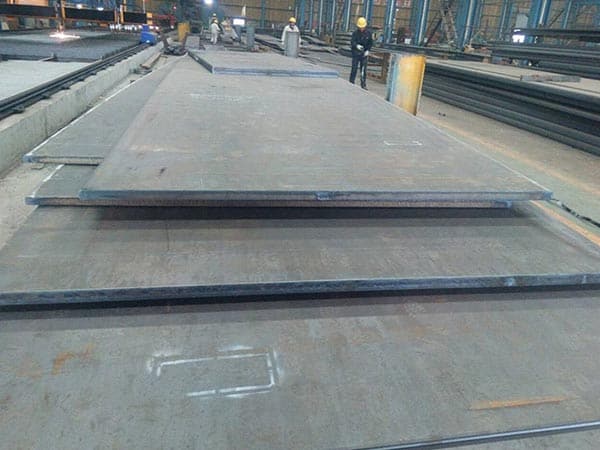
Understanding the Evolution of High-Strength Structural Steel
In the modern manufacturing landscape, the selection of materials determines the lifecycle efficiency and safety of heavy-duty machinery. S900MC represents the pinnacle of thermomechanically rolled high-strength steel, specifically designed for weight reduction and high load-bearing capacity. Unlike traditional medium thick plates, which often rely on thickness to provide strength, S900MC utilizes advanced metallurgical techniques to achieve a yield strength of 900 MPa. This distinction is critical for industries such as automotive manufacturing, mobile crane production, and heavy-duty logistics, where every kilogram saved translates into fuel efficiency and increased payload.
Standard medium thick plates, typically referring to hot-rolled carbon structural steels like Q355B or s355jr, have been the backbone of construction for decades. However, as engineering requirements become more stringent, the limitations of these traditional plates—such as their weight-to-strength ratio and limited cold-forming capabilities—become apparent. S900MC is not just a stronger version of these plates; it is a fundamentally different category of steel produced under the EN 10149-2 standard, optimized for cold forming and superior weldability despite its extreme hardness.
Chemical Composition and the TMCP Process
The primary difference between S900MC and conventional medium thick plates lies in the production process known as Thermomechanical Control Process (TMCP). While standard plates are often produced via simple hot rolling or normalizing, S900MC undergoes controlled rolling at specific temperatures followed by accelerated cooling. This process refines the grain size to a microscopic level, which is the only mechanism that simultaneously increases both strength and toughness.
From a chemical standpoint, S900MC is a low-alloy steel. It maintains a very low carbon content (typically ≤0.12%) to ensure excellent weldability. To reach 900 MPa, it utilizes micro-alloying elements like Niobium (Nb), Vanadium (V), and Titanium (Ti). These elements form fine precipitates that pin grain boundaries during the rolling process. In contrast, standard medium thick plates may require higher carbon or manganese levels to achieve even half the strength of S900MC, which often leads to a higher carbon equivalent (Ceq) and more challenging welding requirements.
Mechanical Performance: Strength vs. Ductility
The most striking difference is found in the mechanical property data. S900MC offers a minimum yield strength of 900 MPa, whereas standard medium thick plates usually hover around 345 to 355 MPa. This means S900MC is nearly three times stronger than conventional structural steel.
- Yield Strength: S900MC (min 900 MPa) vs. S355 (min 355 MPa).
- Tensile Strength: S900MC (930-1200 MPa) vs. S355 (470-630 MPa).
- Elongation: Despite its high strength, S900MC maintains a minimum elongation of 8-10%, allowing for significant deformation before fracture.
- Impact Toughness: S900MC is designed to perform in cold climates, often maintaining high V-notch impact energy at -20°C or -40°C.
Standard medium thick plates are often chosen for their stiffness in static structures, but S900MC is chosen for its dynamic load-bearing capability. In vehicle frames, the ability to absorb energy while maintaining structural integrity is paramount. The high yield-to-tensile ratio of S900MC allows engineers to design thinner sections that can withstand the same forces as much thicker, heavier traditional plates.
Processing Performance: Bending and Welding
A common misconception is that higher strength steel is harder to process. While S900MC requires more powerful equipment due to its high yield point, its cold forming characteristics are exceptional. Because it is produced via TMCP, the steel has a very clean internal structure with minimal inclusions. This allows for tight bending radii without cracking, a feat that traditional high-strength plates often struggle with.
When it comes to welding, S900MC features a low carbon equivalent. This reduces the risk of cold cracking in the heat-affected zone (HAZ). However, users must be cautious with heat input. Excessive heat during welding can cause grain growth in the HAZ, leading to a localized drop in strength (softening). Standard medium thick plates are more forgiving regarding heat input but are more prone to hydrogen-induced cracking if not preheated properly. S900MC generally does not require preheating for thinner sections, which significantly speeds up production cycles.
Weight Reduction and Economic Value
The transition from medium thick plates to S900MC is often driven by the "Lightweighting" trend. By using S900MC, a manufacturer can reduce the thickness of a structural component by 30% to 50% without sacrificing safety. This weight reduction has a cascading effect:
- Reduced Material Consumption: Less steel is needed to build the same structure.
- Lower Transport Costs: Lighter vehicles consume less fuel and can carry more cargo.
- Welding Efficiency: Thinner plates require fewer welding passes and less filler material.
- Environmental Impact: Lower weight means lower CO2 emissions during the vehicle's operational life.
| Property | S900MC (High Strength) | S355JR (Medium Thick Plate) |
|---|---|---|
| Yield Strength (MPa) | ≥ 900 | ≥ 355 | Tensile Strength (MPa) | 930 - 1200 | 470 - 630 | Production Method | TMCP (Thermomechanical) | Hot Rolled / Normalized | Bending Ability | Excellent (Small Radii) | Moderate | Main Application | Truck Chassis, Crane Booms | Buildings, Bridges, General Tanks | Weight Saving Potential | High (up to 50%) | Baseline |
Environmental Adaptability and Fatigue Resistance
In harsh environments, the fine-grained structure of S900MC provides superior fatigue resistance. For mobile machinery like concrete pump trucks or forest harvesters, the steel is subjected to millions of stress cycles. Traditional medium thick plates may develop fatigue cracks earlier due to coarser grain structures and higher impurity levels. S900MC’s refined microstructure inhibits crack initiation and propagation, extending the service life of the equipment.
Furthermore, the atmospheric corrosion resistance of S900MC can be enhanced through specific alloying, making it suitable for outdoor use. Its performance in low-temperature environments is also a major advantage for equipment operating in arctic or high-altitude regions, where standard carbon steel plates might become brittle and prone to sudden failure.
Expanding Application Industries
While the name "automobile frame steel" suggests a narrow use, S900MC is utilized across a vast spectrum of high-end engineering. In the lifting industry, it is the standard material for telescopic crane booms, where reducing the weight of the boom allows for a longer reach and higher lifting capacity. In the trailer industry, S900MC is used for longitudinal beams, allowing for ultra-lightweight trailers that meet strict road weight regulations.
The agricultural sector also benefits from this material. Modern large-scale harvesters and sprayers use S900MC to maintain structural rigidity while minimizing soil compaction caused by heavy machinery. By replacing standard medium thick plates with S900MC, these machines become more agile and efficient. The shift toward S900MC represents a move from "quantity" (thickness) to "quality" (metallurgical sophistication) in structural design.
Leave a message