
What is the difference between S960MC automobile wheels steel sheet & plate steel?
Explore the technical differences between S960MC steel sheets and plates for automotive wheels, covering mechanical properties, chemical composition, and processing advantages.
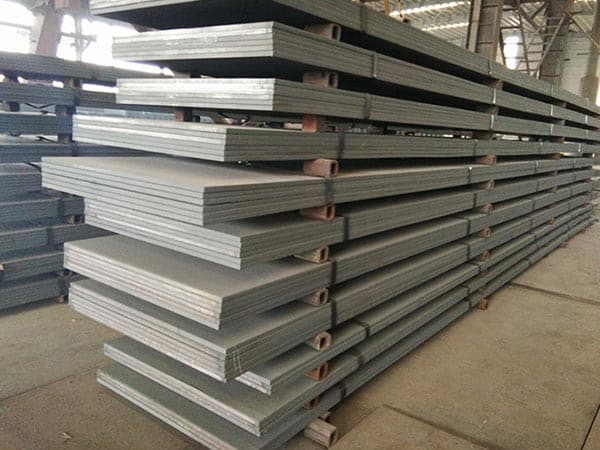
Understanding the Essence of S960MC in Automotive Engineering
S960MC represents the pinnacle of high-strength low-alloy (HSLA) structural steels produced through thermomechanical rolling. Within the automotive industry, particularly in the manufacturing of wheels and chassis components, this grade is selected for its exceptional yield strength and weight-reduction potential. The "S" prefix denotes structural steel, while "960" signifies a minimum yield strength of 960 MPa. The "MC" suffix indicates that the material is thermomechanically rolled (M) and possesses high cold-forming capacity (C). Understanding the distinction between sheet and plate forms requires a deep dive into their manufacturing tolerances, metallurgical consistency, and application-specific performance.
The Metallurgical Profile: Chemical Composition and Microstructure
The performance of S960MC, whether in sheet or plate form, is dictated by its precise chemical composition. Unlike traditional carbon steels, S960MC utilizes micro-alloying elements to achieve its high strength without compromising weldability or toughness. The carbon content is kept strictly low to ensure excellent weldability, typically below 0.20%. Elements such as Niobium (Nb), Vanadium (V), and Titanium (Ti) are added in minute quantities to facilitate grain refinement during the thermomechanical rolling process.
| Element | Maximum Content (%) | Role in S960MC Performance |
|---|---|---|
| Carbon (C) | 0.20 | Ensures basic strength while maintaining weldability. |
| Manganese (Mn) | 2.20 | Enhances hardenability and solid solution strengthening. |
| Silicon (Si) | 0.60 | Deoxidizer and contributes to strength. |
| Niobium (Nb) | 0.09 | Refines grain size and prevents grain growth during welding. |
| Titanium (Ti) | 0.25 | Fixes nitrogen and contributes to precipitation hardening. |
The resulting microstructure is typically a fine-grained mixture of tempered martensite or bainite with ferrite. This ultra-fine grain structure is the primary reason why S960MC can maintain high toughness even at sub-zero temperatures, a critical requirement for automotive wheels operating in diverse climates.
S960MC Sheet vs. Plate: Dimensional and Processing Distinctions
The primary difference between S960MC steel sheet and plate lies in the production process and the resulting thickness ranges. Steel sheet is generally produced in thicknesses ranging from 1.5mm to 8mm, often supplied in coils. In contrast, S960MC plate refers to thicker sections, typically from 8mm up to 20mm or more, often supplied as discrete flat products. For automotive wheels, sheets are predominantly used for the rim and disc of passenger vehicles and light trucks, while plates are reserved for heavy-duty commercial vehicle wheels and structural hubs.
- Surface Quality: Sheets produced in continuous mills often exhibit a more uniform surface finish, which is vital for the aesthetic requirements of visible wheel components and the adhesion of protective coatings.
- Thickness Tolerance: Sheets generally offer tighter dimensional tolerances compared to plates, which is essential for high-speed automated stamping and spinning processes used in wheel manufacturing.
- Flatness: Plate steel, due to its thickness, undergoes more rigorous leveling processes to ensure structural integrity for heavy-load applications.
Mechanical Properties and Fatigue Resistance
The mechanical properties of S960MC are standardized under EN 10149-2. The high yield strength allows engineers to reduce the thickness of wheel components by up to 30% compared to traditional S355 or S700 grades, directly contributing to lower unsprung weight and improved fuel efficiency. However, the high strength also necessitates a thorough understanding of the material's fatigue life.
| Property | Value (Minimum) | Impact on Wheel Design |
|---|---|---|
| Yield Strength (ReH) | 960 MPa | Allows for thinner cross-sections and higher load capacity. |
| Tensile Strength (Rm) | 980 - 1250 MPa | Provides the ultimate resistance against structural failure. |
| Elongation (A5) | 7% - 10% | Ensures the material can be formed without cracking. |
| Impact Energy (KV) | 40J at -20°C | Guarantees safety against brittle fracture in cold environments. |
Fatigue resistance is paramount for wheels, which undergo millions of stress cycles. S960MC exhibits a high fatigue limit, but designers must be cautious of the surface condition. Any scratches or surface defects on the sheet or plate can act as stress concentrators, potentially leading to premature fatigue cracking. Therefore, the superior surface quality of S960MC sheets is often preferred for high-cycle fatigue applications.
Advanced Processing: Cold Forming and Welding
Fabricating S960MC requires specialized knowledge. Despite its extreme strength, the "C" in its designation confirms its suitability for cold forming. However, the minimum bending radius is larger than that of lower-strength steels. For S960MC, the recommended minimum bending radius is typically 3 to 4 times the material thickness (t), depending on the bending direction (longitudinal vs. transverse).
Welding S960MC presents unique challenges. The thermomechanical rolling process creates a metastable microstructure that can be altered by excessive heat input. During welding, the heat-affected zone (HAZ) may experience localized softening, where the hardness drops below the base metal's level. To mitigate this, low heat input welding techniques such as Laser Beam Welding (LBW) or optimized Gas Metal Arc Welding (GMAW) with rapid cooling rates are recommended. Using high-strength filler metals that match the base material's properties is also critical for maintaining the structural integrity of the wheel assembly.
Environmental Adaptation and Industry Evolution
The shift toward S960MC in the automotive sector is driven by the global push for decarbonization. By utilizing S960MC sheet and plate, manufacturers can produce lighter wheels that reduce the rotational inertia of the vehicle. This leads to better acceleration, shorter braking distances, and lower CO2 emissions. Furthermore, the high atmospheric corrosion resistance of modern S960MC variants, often enhanced by advanced galvanizing or E-coating processes, ensures long-term durability in salt-laden winter environments.
The transition from S700MC to S960MC represents a significant leap in engineering. While S700MC was once the industry standard for high-strength wheels, the increasing demands of Electric Vehicles (EVs)—which carry heavy battery packs—require the even higher strength-to-weight ratio provided by S960MC. The ability of S960MC to withstand higher radial and lateral loads without increasing the wheel's mass makes it an indispensable material for the next generation of sustainable transport.
Strategic Implementation in Wheel Manufacturing
Choosing between S960MC sheet and plate involves balancing manufacturing complexity with performance requirements. For complex, deep-drawn wheel discs, the ductility and surface consistency of S960MC sheet are unmatched. For the heavy-duty rims of mining or agricultural machinery, the robust thickness of S960MC plate provides the necessary stiffness to resist deformation under extreme torque. In both cases, the material's high yield strength ensures that the elastic deformation remains within acceptable limits, maintaining the wheel's geometry under load.
Precision in cutting is another factor. S960MC responds exceptionally well to laser and plasma cutting, provided the parameters are adjusted for the high alloy content. The clean edges produced by laser cutting S960MC sheets reduce the need for secondary grinding, further streamlining the production line and reducing costs. As the industry moves toward more complex wheel geometries, the versatility of S960MC in both sheet and plate forms will continue to drive innovation in automotive design.
Leave a message