
What is the difference between S700MC hot rolled coil yield strength sheet & plate steel?
Explore the technical differences between S700MC hot rolled coils, sheets, and plates. Learn about yield strength, chemical composition, processing, and industrial applications.
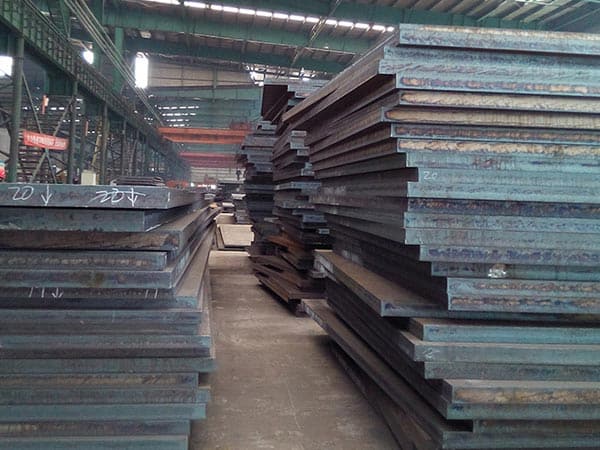
The Core Identity of S700MC: High-Strength Low-Alloy Steel
S700MC is a high-strength low-alloy (HSLA) steel grade specifically designed for cold forming. The designation itself reveals its primary characteristics: 'S' stands for structural steel, '700' represents the minimum yield strength of 700 MPa, and 'MC' indicates that the steel is thermomechanically rolled (M) and intended for cold forming (C). This material is governed by the EN 10149-2 standard, which outlines the requirements for hot-rolled flat products with high yield strength.
The primary advantage of S700MC lies in its ability to offer extreme strength while maintaining a relatively low weight. This makes it a cornerstone material for industries where reducing dead weight is critical for fuel efficiency and payload capacity. Unlike traditional structural steels, S700MC achieves its properties through a sophisticated Thermomechanically Controlled Processing (TMCP) method rather than through high carbon content, which ensures excellent weldability and toughness.
Defining the Physical Forms: Coil, Sheet, and Plate
When discussing the differences between S700MC hot rolled coil, sheet, and plate, the distinctions often lie in the manufacturing process, thickness, and final dimensional accuracy. While the chemical composition remains consistent across these forms, their physical behavior during fabrication can vary.
- Hot Rolled Coil (HRC): This is the raw form of the steel after it passes through the continuous rolling mill. It is wound into large rolls. Coils are typically more cost-effective for high-volume manufacturing but may retain internal stresses from the winding process.
- Steel Sheet: This usually refers to S700MC that has been uncoiled and leveled (cut-to-length) from a hot rolled coil. Sheets are generally thinner (typically up to 12mm or 15mm depending on the mill) and are used for precision components.
- Steel Plate (Quarto Plate): True 'plates' are often produced on a reversing mill (Quarto mill) rather than a continuous strip mill. These are typically thicker, flatter, and have lower internal stress compared to sheets cut from coils. For S700MC, plates are preferred for heavy-duty structural members where flatness and thickness consistency are paramount.
Mechanical Properties and Yield Strength Dynamics
The '700' in S700MC is not just a number; it represents a minimum yield strength of 700 N/mm². This high threshold allows engineers to use thinner sections of steel to support the same loads as thicker, lower-grade steels like S355. This weight reduction is the primary driver for the adoption of S700MC in modern engineering.
| Property | Requirement (EN 10149-2) |
|---|---|
| Minimum Yield Strength (ReH) | 700 MPa |
| Tensile Strength (Rm) | 750 - 950 MPa |
| Minimum Elongation (A80mm) | 10% - 12% (depending on thickness) |
| Impact Strength (Charpy V-notch) | Typically 40J at -20°C or -40°C |
One critical difference between sheet and plate in terms of mechanical behavior is anisotropy. Because sheets are cut from coils that were rolled in one direction, their properties might vary slightly between the longitudinal and transverse directions. Quarto plates, often rolled in multiple directions, tend to have more isotropic properties, which is beneficial for complex stress distributions.
Chemical Composition: The Secret to Performance
S700MC achieves its high strength through micro-alloying rather than high carbon. By keeping carbon levels low (usually below 0.12%), the steel remains highly weldable. The addition of elements like Niobium (Nb), Titanium (Ti), and Vanadium (V) creates a fine-grained microstructure during the TMCP process.
These micro-alloying elements form carbides and nitrides that pin grain boundaries, preventing grain growth during the cooling process. This fine grain structure is the reason why S700MC can be both incredibly strong and remarkably tough at low temperatures. For users, this means the steel is less prone to brittle fracture, even in harsh environments.
Processing and Fabrication: Bending and Welding
Despite its high strength, S700MC is designed for cold forming. However, the difference between sheet and plate becomes apparent during the bending process. Sheets cut from coils may exhibit 'springback'—a tendency for the material to partially return to its original shape after bending. Fabricators must account for this by over-bending the material.
Welding S700MC: Because S700MC is a TMCP steel, it is sensitive to high heat input. If the heat input during welding is too high, the fine-grained structure in the Heat Affected Zone (HAZ) can coarsen, leading to a localized drop in yield strength. Whether you are welding a thin sheet or a thick plate, it is vital to control the cooling rate (t8/5 time) to preserve the mechanical integrity of the joint.
- Laser Cutting: Both S700MC sheet and plate are excellent candidates for laser cutting due to their clean surface and low impurity levels.
- Cold Bending: S700MC allows for tight bending radii, but the radius must be larger than that used for S355 to avoid cracking.
- Surface Quality: Hot rolled coils often have a scale layer that must be pickled (P&O) or shot-blasted before painting or coating.
Environmental Adaptability and Longevity
S700MC is frequently used in mobile equipment that operates in extreme temperatures. Its high impact toughness ensures that the steel does not become brittle in sub-zero conditions, which is essential for crane booms and truck chassis operating in northern climates. Furthermore, the ability to use thinner material reduces the overall carbon footprint of a vehicle by decreasing its weight and increasing its payload capacity.
The fatigue resistance of S700MC is also superior to standard structural steels. Because the material is cleaner with fewer inclusions, there are fewer initiation points for fatigue cracks. This longevity makes it a cost-effective choice over the entire lifecycle of a machine, despite the higher initial cost per ton compared to S355.
Strategic Application: Where to Use Which Form?
Choosing between S700MC coil-cut sheet and Quarto plate depends on the specific engineering requirements. For high-volume automotive parts, such as chassis frames or cross members, hot rolled coils are preferred for their compatibility with automated stamping and longitudinal welding lines.
In contrast, for heavy lifting equipment, telescopic crane booms, and large-scale bridge components, S700MC plates are the standard. The superior flatness of Quarto plates ensures that long telescopic sections slide smoothly without binding, and the tighter thickness tolerances allow for more precise engineering calculations.
The transport industry utilizes S700MC extensively for trailers and tankers. By replacing S355 with S700MC, manufacturers can reduce the weight of a trailer frame by up to 30%, allowing for more cargo to be carried per trip. This optimization is the primary reason why S700MC has become the 'gold standard' for high-performance structural engineering.
Conclusion on Material Selection
Understanding the nuances between S700MC hot rolled coil, sheet, and plate is essential for optimizing both cost and performance. While the yield strength remains a constant 700 MPa, the choice of form affects everything from fabrication ease to the final structural stability of the product. By leveraging the TMCP benefits of S700MC, industries can push the boundaries of what is possible in lightweight, high-strength design.
Leave a message