
What is the best S420MC alloy steel sheet quality
Explore the defining characteristics of high-quality S420MC alloy steel. This guide covers chemical composition, mechanical performance, welding capabilities, and industrial applications.
Understanding the Core Essence of S420MC Steel Quality
When discussing the best quality for S420MC alloy steel sheets, we are looking at a material that balances high yield strength with exceptional cold-forming capabilities. Defined under the European standard EN 10149-2, S420MC is a thermomechanically rolled, high-yield strength steel designed specifically for cold forming. The "S" denotes structural steel, "420" refers to the minimum yield strength of 420 MPa, and "MC" indicates that the steel is thermomechanically rolled (M) and suitable for cold forming (C). Obtaining the best quality means sourcing material that not only meets these baseline numbers but exceeds them in terms of consistency, surface integrity, and microstructural purity.
Chemical Composition: The Foundation of Performance
The superior quality of S420MC is rooted in its precise chemical balance. Unlike traditional carbon steels, S420MC utilizes micro-alloying elements such as Niobium (Nb), Vanadium (V), and Titanium (Ti). These elements facilitate grain refinement during the thermomechanical rolling process. High-quality S420MC maintains extremely low levels of impurities like Sulfur (S) and Phosphorus (P), which is critical for preventing brittleness and ensuring uniform performance across the entire sheet.
| Element | Maximum Content (%) |
|---|---|
| Carbon (C) | 0.12 | Manganese (Mn) | 1.60 | Silicon (Si) | 0.50 | Phosphorus (P) | 0.025 | Sulfur (S) | 0.015 | Aluminium (Al) | 0.015 (min) | Nb + V + Ti | 0.22 |
By keeping the carbon content low (typically below 0.12%), manufacturers ensure that the steel remains highly weldable and ductile. The addition of micro-alloys allows the steel to achieve high strength without the need for heavy alloying, which keeps the material lightweight and cost-effective for large-scale industrial use.
Mechanical Properties and Structural Integrity
The hallmark of premium S420MC quality is its mechanical reliability. While the standard dictates a minimum yield strength, the best quality sheets exhibit a tight distribution of values, ensuring that engineers can design components with high safety margins and minimal weight. The tensile strength typically ranges between 480 and 620 MPa, providing a robust buffer against structural failure.
- Yield Strength: Minimum 420 MPa (for thicknesses ≤ 16mm).
- Tensile Strength: 480 - 620 MPa.
- Elongation: Minimum 16% to 19% depending on thickness, allowing for significant deformation without cracking.
- Impact Toughness: High-quality S420MC often undergoes Charpy V-notch testing to ensure it can withstand sudden loads, especially in cold environments.
The thermomechanical rolling process (TMCP) is what sets S420MC apart. By controlling the temperature and the deformation during rolling, the grain structure is refined to a degree that is impossible with traditional hot rolling. This results in a material that is both stronger and tougher, making it ideal for safety-critical components.
Exceptional Cold Forming and Bending Performance
One of the primary reasons engineers specify S420MC is its ability to be bent and folded into complex shapes. The "best" quality S420MC sheet is characterized by its isotropic properties—meaning it behaves similarly whether it is bent along or across the rolling direction. This is vital for automated manufacturing lines where consistency prevents machine downtime and reduces scrap rates.
The minimum recommended bending radius for S420MC is usually expressed as a factor of the thickness (t). For high-grade material, a 180-degree bend can often be achieved with a radius as small as 0.5t to 1.5t, depending on the specific thickness and the orientation of the bend. This flexibility allows for the creation of intricate chassis components, crane arms, and structural profiles that require sharp angles without the risk of surface tearing or orange-peel effects.
Weldability and Processing Versatility
High-quality S420MC alloy steel is designed with a low carbon equivalent (CEV). This makes it exceptionally easy to weld using standard methods such as MIG, TIG, and submerged arc welding. Because the steel is not reliant on high carbon levels for its strength, it is less prone to cold cracking in the heat-affected zone (HAZ). This eliminates the need for expensive pre-heating or post-weld heat treatments in many applications.
Beyond welding, S420MC excels in laser and plasma cutting. Premium sheets feature a clean surface finish with minimal scale, which ensures that laser beams can penetrate consistently, resulting in smooth edges and high dimensional accuracy. This processing efficiency is a key indicator of steel quality, as it directly impacts the final cost of the fabricated part.
Environmental Adaptability and Fatigue Resistance
In heavy-duty applications, materials are often subjected to cyclic loading and harsh environmental conditions. S420MC offers excellent fatigue resistance due to its fine-grained structure. This makes it a preferred choice for the transportation industry, where vehicle frames must endure constant vibration and stress over hundreds of thousands of miles.
While S420MC is not a stainless steel, its clean chemistry allows for better adhesion of protective coatings such as galvanization or specialized paints. The absence of large inclusions and surface defects ensures that these coatings form a continuous, protective barrier against corrosion, extending the service life of the end product in infrastructure or automotive applications.
Expanding Applications Across Modern Industries
The demand for S420MC is driven by the global push for "lightweighting." By using a higher-strength steel like S420MC instead of standard S235 or S355, manufacturers can reduce the thickness of their components without sacrificing load-bearing capacity. This leads to lighter vehicles, lower fuel consumption, and reduced material costs.
Automotive and Transportation: Used extensively in truck chassis, cross members, and suspension parts where weight reduction is critical for payload efficiency.
Construction and Lifting Equipment: Ideal for crane booms, telescopic arms, and heavy-duty trailers where high strength and weldability are paramount.
Storage and Racking: Utilized in high-density warehouse racking systems that require thin yet incredibly strong profiles to support massive loads.
Energy Sector: Applied in the structural frames of solar tracking systems and wind turbine internal components where environmental resilience and structural integrity are required.
Identifying the Best Quality S420MC Supplier
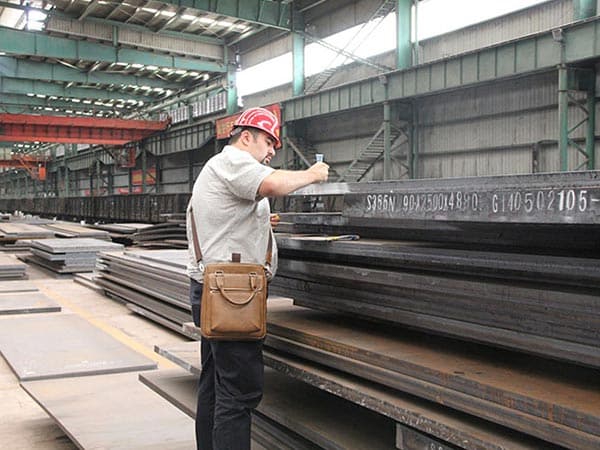
To ensure you are receiving the best S420MC quality, it is essential to look beyond the price per ton. High-quality material is accompanied by comprehensive 3.1 or 3.2 mill test certificates (MTC) according to EN 10204. These documents provide the actual chemical analysis and mechanical test results for the specific heat of steel you are purchasing.
Furthermore, the flatness and thickness tolerances are critical. Premium mills utilize advanced tension leveling and automated thickness control to ensure that every sheet is flat and within tight tolerances. This precision is what allows for high-speed automated welding and assembly, ultimately defining the true value and quality of the S420MC alloy steel sheet.
Leave a message