
What are the advantages and disadvantages of S460MC sheet chemistry
A comprehensive analysis of S460MC steel chemistry, exploring the advantages and disadvantages of its chemical composition, mechanical properties, and industrial applications.
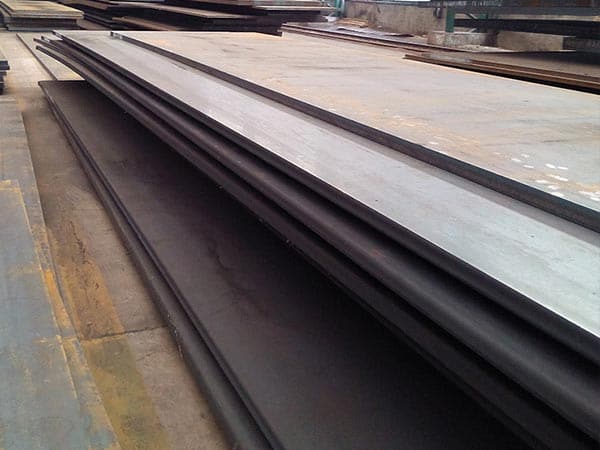
The Chemical Foundation of S460MC High-Strength Steel
S460MC is a high-yield strength steel grade designed specifically for cold forming, governed by the EN 10149-2 standard. Unlike traditional structural steels, S460MC is produced through a thermomechanically rolled (TMCP) process, which allows for a leaner chemical composition while achieving superior mechanical properties. The 'S' denotes structural steel, '460' indicates a minimum yield strength of 460 MPa, and 'MC' signifies it is thermomechanically rolled for cold forming. Understanding the chemistry of S460MC is crucial for engineers and manufacturers who need to balance weight reduction with structural integrity.
The chemical composition of S460MC is characterized by low carbon content and the strategic addition of micro-alloying elements such as Niobium (Nb), Vanadium (V), and Titanium (Ti). This precise balance is what gives the material its unique characteristics. Below is a typical breakdown of the chemical requirements for S460MC according to the EN 10149-2 standard:
| Element | Maximum Content (%) |
|---|---|
| Carbon (C) | 0.12 |
| Manganese (Mn) | 1.60 |
| Silicon (Si) | 0.50 |
| Phosphorus (P) | 0.025 |
| Sulfur (S) | 0.015 |
| Aluminum (Al) | 0.015 (min) |
| Niobium (Nb) | 0.09 |
| Vanadium (V) | 0.20 |
| Titanium (Ti) | 0.15 |
Advantages of S460MC Chemistry
The primary advantage of S460MC chemistry lies in its low carbon equivalent (CEV). Because the yield strength is derived from grain refinement and precipitation hardening rather than high carbon or alloy content, the steel exhibits exceptional weldability. Unlike higher carbon steels, S460MC does not require extensive pre-heating or post-weld heat treatment in most standard thicknesses, significantly reducing production time and costs. This makes it an ideal choice for complex welded assemblies in the transport and lifting industries.
Another significant advantage is the fine-grained microstructure achieved through micro-alloying. The addition of Niobium and Titanium prevents grain growth during the rolling process. This fine grain structure not only increases the yield strength but also enhances the material's toughness, especially at low temperatures. This is particularly beneficial for equipment operating in harsh environments where brittle fracture must be avoided.
The chemistry also facilitates excellent cold formability. S460MC can be bent to tight radii without cracking, provided the bending direction is considered. This allows manufacturers to design complex shapes and profiles that would be impossible with standard S355 grades. The low sulfur content and inclusion shape control further improve the steel's resistance to lamellar tearing and cracking during intensive forming operations.
- Weight Reduction: The high yield strength allows for thinner sections, reducing the overall weight of vehicles and structures.
- Cost Efficiency: Lower weight translates to lower material costs and improved fuel efficiency for the end-user.
- Surface Quality: The TMCP process results in a clean surface with minimal scale, ideal for painting and galvanizing.
- Impact Resistance: High energy absorption capacity makes it suitable for safety-critical components.
Disadvantages and Limitations of S460MC Chemistry
Despite its many benefits, the chemistry of S460MC presents certain challenges. One of the main disadvantages is sensitivity to heat input. Because the strength of S460MC is achieved through thermomechanical rolling and micro-alloying, excessive heat during welding or thermal cutting can lead to "softening" in the Heat Affected Zone (HAZ). If the heat input is too high, the fine-grained structure can coarsen, resulting in a localized loss of strength. This requires strict adherence to welding parameters and specialized knowledge from the fabrication team.
Another limitation is anisotropy, or directionality of properties. Although S460MC is designed for cold forming, its mechanical properties (especially elongation and bending limits) can vary between the longitudinal and transverse rolling directions. Designers must account for this when nesting parts for laser cutting or planning bending operations to ensure the material performs as expected under load.
The thickness range of S460MC is also more limited compared to standard structural steels. While it is widely available in sheets and plates up to 12mm or 16mm, the effectiveness of the TMCP process diminishes as the thickness increases. For very heavy structural applications requiring thicknesses over 20mm, engineers may need to look toward quenched and tempered (Q+T) steels like S460QL, which have a different chemical profile and heat treatment history.
- Price Premium: S460MC is generally more expensive than standard S355MC due to the micro-alloying elements and specialized rolling process.
- Limited Hot Forming: If the material is heated above its transformation temperature (e.g., for hot forming), it loses the properties gained during TMCP and essentially reverts to a lower grade.
- Springback: Due to its high yield strength, S460MC exhibits more springback during bending than softer steels, requiring more precise tooling and compensation.
Optimizing Processing for S460MC
To maximize the advantages of S460MC, specific processing techniques should be employed. When laser cutting, the low impurity levels and consistent chemistry allow for high-speed cutting with very clean edges. However, the nitrogen or oxygen pressure must be carefully calibrated to avoid excessive heat buildup on small contours, which could affect the local hardness.
In terms of welding, using low-hydrogen consumables is essential. While the steel is resistant to cold cracking, maintaining a low heat input (typically between 0.5 and 1.5 kJ/mm) ensures that the HAZ retains its strength. Multi-pass welding with controlled interpass temperatures is often preferred over single-pass welding for thicker sections. Matching or slightly over-matching filler metals are usually recommended to ensure the weld joint is as strong as the base metal.
For cold bending, the minimum mandrel radius is a critical factor. For S460MC, a typical minimum radius for a 90-degree bend is approximately 1.0 to 1.5 times the thickness (t) when bending transverse to the rolling direction, and slightly more when bending parallel. Using high-quality, polished tooling can prevent surface scoring, which can act as a stress concentrator in high-strength applications.
Diverse Industrial Applications
The unique chemistry of S460MC has led to its widespread adoption across several demanding industries. In the automotive and transport sector, it is used for truck chassis, cross members, and trailer frames. The ability to reduce the weight of a trailer by several hundred kilograms directly increases the payload capacity, providing a clear economic advantage for logistics companies.
In the lifting and recycling industry, S460MC is the material of choice for crane booms, telescopic arms, and refuse collection vehicles. These applications require a high strength-to-weight ratio and excellent fatigue resistance. The steel's ability to withstand repeated loading cycles without failure is a testament to its metallurgical integrity.
The energy and infrastructure sector also utilizes S460MC for components such as transmission towers, solar panel mounting systems, and specialized storage racks. In these cases, the environmental adaptability of the steel—specifically its performance in cold climates—makes it a reliable choice for long-term structural stability. By understanding both the chemistry and the mechanical trade-offs, engineers can leverage S460MC to create more efficient, durable, and sustainable products.
Leave a message