
What is the S500MC tensile strength extrusion technology
A comprehensive guide to S500MC steel, exploring its tensile strength, extrusion technology, chemical composition, and industrial applications for weight reduction.
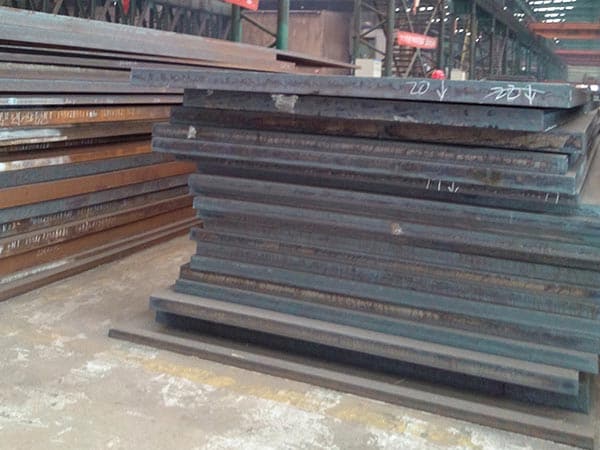
Understanding S500MC and the Evolution of High-Strength Low-Alloy Steel
S500MC is a high-strength low-alloy (HSLA) hot-rolled steel specifically designed for cold forming applications. Governed by the European standard EN 10149-2, this material represents a significant leap in metallurgical engineering, offering a unique balance between high yield strength and excellent ductility. The "S" stands for structural steel, "500" denotes the minimum yield strength of 500 MPa, and "MC" indicates that the material is thermomechanically rolled (M) and suitable for cold forming (C). This steel grade has become a cornerstone in industries where weight reduction is critical without compromising structural integrity.
The Mechanics of Tensile Strength in S500MC
The tensile strength of S500MC typically ranges between 550 and 700 MPa. This property is crucial because it defines the maximum stress the material can withstand while being stretched or pulled before necking, which is the point where the specimen's cross-section starts to significantly contract. Unlike traditional carbon steels, S500MC achieves this high tensile strength through a process called grain refinement. By utilizing thermomechanical controlled processing (TMCP), manufacturers can produce a fine-grained microstructure that resists dislocation movement more effectively than coarser grains.
Mechanical Properties Overview:
| Property | Value Range |
|---|---|
| Yield Strength (ReH) | Min 500 MPa |
| Tensile Strength (Rm) | 550 - 700 MPa |
| Elongation (A80mm) | Min 12% - 14% (depending on thickness) |
| Impact Energy (KV at -20°C) | Typically 40J (optional) |
Extrusion and Cold Forming Technology for S500MC
When discussing extrusion technology in the context of S500MC, it is important to distinguish between traditional aluminum extrusion and the cold forming/pressing techniques used for high-strength steel. For S500MC, "extrusion" often refers to the material's ability to be forced through dies or subjected to heavy deformation during cold pressing and complex bending. The fine-grained structure of S500MC allows for tight bend radii, which is essential for creating complex profiles used in automotive and heavy machinery sectors.
The success of extrusion-like forming with S500MC depends on its low carbon equivalent. This ensures that the material does not work-harden too rapidly, allowing for deeper draws and more intricate shapes than standard S355 grades. Engineers must account for the material's springback, which is more pronounced in S500MC due to its higher yield strength. Advanced CNC folding and pressing technologies are often employed to compensate for this effect, ensuring dimensional accuracy in the final product.
Chemical Composition and Micro-Alloying Elements
The exceptional performance of S500MC is a direct result of its chemical recipe. The steel is killed with aluminum and contains micro-alloying elements such as Niobium (Nb), Vanadium (V), and Titanium (Ti). These elements are added in very small quantities (usually less than 0.22% combined) to promote grain refinement and precipitation hardening.
- Niobium (Nb): Increases yield strength and improves toughness by refining the grain size during the rolling process.
- Titanium (Ti): Prevents grain growth during welding and high-temperature processing, maintaining the steel's strength.
- Vanadium (V): Contributes to precipitation hardening, further enhancing the tensile properties.
- Carbon (C): Kept low (typically ≤ 0.12%) to ensure excellent weldability and cold formability.
| Element | Maximum Content (%) |
|---|---|
| Carbon (C) | 0.12 |
| Manganese (Mn) | 1.60 |
| Silicon (Si) | 0.50 |
| Phosphorus (P) | 0.025 |
| Sulfur (S) | 0.015 |
Environmental Adaptability and Fatigue Resistance
S500MC is frequently used in outdoor and harsh environments. While it is not a weathering steel like Corten, its fine-grained structure provides a better substrate for modern coating systems. Whether it is galvanizing, powder coating, or cataphoretic painting, S500MC holds finishes well, protecting the structural integrity from corrosion. Furthermore, the material exhibits superior fatigue resistance. In dynamic loading scenarios, such as vehicle chassis or crane arms, the ability of S500MC to withstand cyclic stress without crack initiation is a primary reason for its selection.
The low-temperature toughness of S500MC is another critical factor. Many variants are tested for impact strength at -20°C or even -40°C. This makes the material suitable for equipment operating in arctic conditions or high-altitude environments where standard structural steels might become brittle and fail catastrophically.
Industry Applications: Beyond Traditional Construction
The primary driver for using S500MC is weight reduction (lightweighting). By replacing thicker sections of standard S235 or S355 steel with thinner sections of S500MC, manufacturers can reduce the overall weight of a structure by up to 30% while maintaining the same load-bearing capacity.
- Automotive Industry: Used for chassis frames, cross members, and longitudinal beams in trucks and trailers. The high tensile strength allows for thinner walls, increasing payload capacity.
- Lifting Equipment: Telescopic cranes, aerial work platforms, and forklift components benefit from the high strength-to-weight ratio.
- Agricultural Machinery: Plow frames, trailer bodies, and harvesting equipment require the durability and impact resistance that S500MC provides.
- Cold-Rolled Profiles: S500MC is the preferred material for manufacturing complex C and Z profiles used in modern racking systems and solar panel mounting structures.
Weldability and Processing Considerations
Despite its high strength, S500MC is remarkably easy to weld. Because the carbon content is kept low, the heat-affected zone (HAZ) does not suffer from excessive hardening or embrittlement, provided that the heat input is controlled. Standard welding processes such as MIG/MAG, TIG, and submerged arc welding are all applicable. However, it is vital to use filler metals that match the mechanical properties of the base metal to ensure the entire assembly meets the required tensile strength specifications.
When laser cutting or plasma cutting S500MC, the material's consistency is a major advantage. The low level of impurities and uniform grain structure result in clean edges and minimal distortion. This predictability is essential for automated production lines where precision is paramount.
Comparing S500MC with Other High-Strength Grades
Choosing between S500MC and other grades like S355 or S700MC depends on the specific requirements of the project. While S355 is more economical for simple structural applications, S500MC offers a significant performance boost for mobile applications. Conversely, while S700MC provides even higher strength, it requires more specialized forming equipment and is more sensitive to welding parameters. S500MC sits at the "sweet spot" for many manufacturers, offering a massive upgrade in performance without requiring a complete overhaul of existing manufacturing processes.
The transition to S500MC often involves a redesign of the component to take full advantage of the material's properties. Simply swapping materials without adjusting the geometry might lead to over-engineering. By utilizing advanced FEA (Finite Element Analysis), engineers can optimize the shape of the part to utilize the high tensile strength of S500MC, resulting in parts that are both stronger and lighter than their predecessors.
Leave a message