
Which steel grade is equivalent to S355MC hot-rolled steel
Discover the global equivalents of S355MC hot-rolled steel. Compare mechanical properties, chemical composition, and industrial applications across ASTM, JIS, and GB standards.
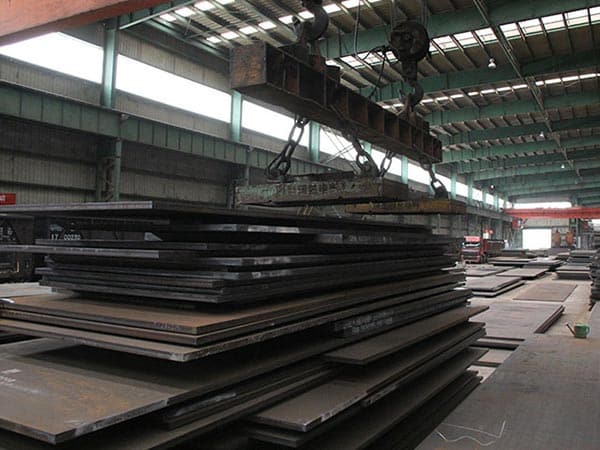
Understanding S355MC: The Benchmark for High-Strength Cold-Forming Steel
S355MC is a thermomechanically rolled, high-yield strength steel designed specifically for cold-forming applications. Governed by the European standard EN 10149-2, this grade represents a sophisticated balance between high load-bearing capacity and excellent ductility. The "S" denotes structural steel, "355" refers to the minimum yield strength of 355 MPa, and "MC" indicates that the material is thermomechanically rolled (M) and intended for cold forming (C).
Engineers and procurement specialists often seek equivalents to S355MC when sourcing materials across different geographical regions or when specific national standards are mandated by local regulations. Identifying a true equivalent requires more than just matching yield strength; it necessitates a deep dive into chemical composition, grain refinement techniques, and processing history.
Direct Global Equivalents to S355MC
While S355MC is a European designation, several international standards offer grades with comparable performance characteristics. However, it is vital to distinguish between "identical" and "equivalent" materials, as subtle differences in alloying elements can affect welding and fatigue life.
| Standard | Equivalent Grade | Similarity Level |
|---|---|---|
| GB/T 1591 (China) | Q355MC | Near Identical |
| ASTM (USA) | A1011 HSLAS Grade 50 Class 1 / A656 Grade 50 | Functional Equivalent |
| JIS G3134 (Japan) | SPFH 540 | Comparable |
| ISO 6930 (International) | ISO 6930-2 Grade 355 | High |
The Chinese Q355MC is perhaps the closest match, as the GB/T 1591 standard was heavily influenced by European metallurgical practices. In the North American market, ASTM A1011 HSLAS Grade 50 is frequently used as a substitute, although the ASTM standard allows for slightly different carbon equivalents which may impact high-speed automated welding processes.
Chemical Composition and Metallurgical Design
The performance of S355MC is rooted in its low carbon content and the strategic use of micro-alloying elements like Niobium (Nb), Vanadium (V), and Titanium (Ti). These elements facilitate grain refinement during the thermomechanical rolling process, resulting in a fine-grained microstructure that resists crack propagation.
- Carbon (C): Typically restricted to ≤ 0.12%, ensuring superior weldability without the need for preheating.
- Manganese (Mn): Ranges up to 1.50%, providing solid solution strengthening and improving toughness.
- Silicon (Si): Kept below 0.50% to maintain surface quality during galvanizing or painting.
- Micro-alloys: The sum of Nb, V, and Ti is usually limited to 0.22%, which is critical for maintaining the high yield point while keeping the material soft enough for complex bending.
When comparing S355MC to ASTM A656 Grade 50, the latter might have slightly higher sulfur limits, which could affect the cleanliness of the steel and its performance in transverse bending tests. S355MC’s strict control over impurities makes it a premium choice for safety-critical structural components.
Mechanical Properties and Bending Performance
The defining characteristic of S355MC is its yield strength, but its elongation and bending radius are what truly set it apart in manufacturing. For thicknesses ≤ 3mm, S355MC typically offers a minimum elongation of 23%, allowing for significant deformation before fracture.
| Property | S355MC (EN 10149-2) | Q355MC (GB/T 1591) |
|---|---|---|
| Yield Strength (MPa) | ≥ 355 | ≥ 355 |
| Tensile Strength (MPa) | 430 - 550 | 430 - 550 |
| Elongation (%) | ≥ 19 - 23 (varies by thickness) | ≥ 19 - 22 |
| 180° Cold Bend (t=thickness) | 0.5t to 1.5t | 0.5t to 1.5t |
One technical nuance often overlooked is the minimum bending radius. S355MC is designed to be bent 180 degrees over a mandrel. For plates thinner than 3mm, the mandrel diameter can be as small as 0.5 times the thickness. This capability is essential for creating complex chassis frames and brackets where space is at a premium and weight reduction is mandatory.
Processing Advantages: Welding and Cutting
From a fabrication perspective, S355MC is exceptionally user-friendly. Due to its low Carbon Equivalent (CEV), it exhibits excellent weldability using all standard methods, including MIG/MAG, TIG, and submerged arc welding. Unlike traditional structural steels like S355J2, S355MC does not require preheating for most common thicknesses, significantly reducing production cycle times.
When it comes to thermal cutting, whether using laser, plasma, or oxy-fuel, S355MC’s low impurity levels and uniform microstructure ensure clean edges with minimal heat-affected zones (HAZ). This is particularly beneficial for manufacturers using high-precision fiber lasers, as the material remains flat and stable during the cutting process, preventing head crashes and ensuring dimensional accuracy.
Industrial Applications and Environmental Adaptability
The transition from standard structural steels to S355MC is often driven by the need for lightweighting. By using a higher-strength material, designers can reduce the gauge of the steel without sacrificing structural integrity, leading to lower fuel consumption in transport sectors and reduced material costs.
- Automotive Industry: Used extensively for truck chassis, longitudinal beams, and cross-members where high fatigue resistance is required.
- Heavy Machinery: Ideal for crane booms, excavator buckets, and agricultural equipment frames that endure high dynamic loads.
- Renewable Energy: Employed in the construction of solar mounting systems and wind turbine internal structures due to its atmospheric corrosion resistance when combined with proper coatings.
- Storage Systems: High-density racking and shelving systems benefit from the material's strength-to-weight ratio.
In terms of environmental adaptability, S355MC performs reliably in temperatures down to -20°C. While it is not a dedicated "low-temperature" steel like S355NL, its fine-grained structure provides a safety margin against brittle fracture in temperate climates. For arctic conditions, however, a grade with guaranteed impact energy at -40°C or -50°C would be more appropriate.
Strategic Selection: Choosing the Right Equivalent
When substituting S355MC with an equivalent like SPFH 540 or A1011 HSLAS 50, technical teams must verify the impact of the substitution on the final product's certification. For instance, if a project is designed under Eurocode 3, using a non-EN standard material might require additional testing or a derogation from the structural engineer.
Furthermore, the surface finish of hot-rolled S355MC (often supplied in pickled and oiled condition) is critical for subsequent painting or galvanizing. Ensure that the equivalent grade meets the same surface quality standards (e.g., EN 10163-2 Class A) to avoid issues with coating adhesion. The choice between S355MC and its equivalents should always be informed by the specific forming requirements—if the part involves extreme deep drawing, S355MC’s consistent elongation values provide a level of predictability that lower-tier equivalents may lack.
Leave a message