
Why is BS700MC cold forming steel more expensive?
Explore the technical factors, metallurgical composition, and manufacturing complexities that contribute to the premium pricing of BS700MC high-strength cold forming steel.
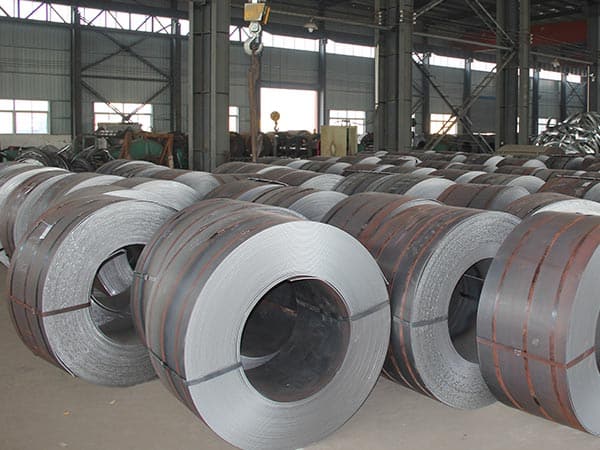
Decoding the Value Proposition of BS700MC High-Strength Steel
In the modern industrial landscape, the drive toward lightweight construction and structural efficiency has positioned BS700MC as a cornerstone material. As a high-strength, low-alloy (HSLA) steel specifically designed for cold forming, its price point often sits significantly higher than standard structural grades like S355 or Q345. This price disparity is not arbitrary; it is a direct reflection of the sophisticated metallurgy, precision manufacturing processes, and the immense performance advantages it offers to end-users. Understanding why BS700MC commands a premium requires a deep dive into its internal structure and the engineering rigor required to produce it.
The Metallurgical Investment: Micro-Alloying Elements
The primary driver of the cost of BS700MC is its chemical composition. Unlike conventional carbon steels that rely on high carbon content for strength—which often compromises weldability and toughness—BS700MC achieves its 700 MPa yield strength through micro-alloying. This process involves the precise addition of elements such as Niobium (Nb), Vanadium (V), and Titanium (Ti).
- Niobium (Nb): Acts as a powerful grain refiner. Even in small quantities, it inhibits grain growth during the rolling process, resulting in a fine-grained microstructure that enhances both strength and toughness.
- Vanadium (V): Contributes to precipitation hardening, allowing the steel to maintain high strength without becoming brittle.
- Titanium (Ti): Used for nitrogen binding and further grain stabilization at high temperatures.
These alloying elements are significantly more expensive than iron or carbon. Furthermore, the precision required to balance these elements—often measured in hundredths of a percent—increases the cost of raw material sourcing and the complexity of the melting process in the Electric Arc Furnace (EAF) or Basic Oxygen Furnace (BOF).
| Element | Typical Content (%) | Primary Function |
|---|---|---|
| Carbon (C) | ≤ 0.12 | Ensures excellent weldability and ductility. |
| Manganese (Mn) | ≤ 2.10 | Increases hardenability and strength. |
| Silicon (Si) | ≤ 0.50 | Deoxidation and solid solution strengthening. |
| Nb + V + Ti | ≤ 0.22 | Grain refinement and precipitation hardening. |
The Complexity of TMCP (Thermo-Mechanical Controlled Processing)
The "MC" in BS700MC stands for Thermomechanically Rolled. This is not a standard hot-rolling process. TMCP involves a strictly controlled temperature and deformation schedule during the rolling mill phase, followed by accelerated cooling. This process is energy-intensive and requires state-of-the-art rolling mills equipped with advanced automation systems.
During TMCP, the steel is rolled at specific temperatures where recrystallization is suppressed. This creates a highly deformed austenite structure which, upon rapid cooling, transforms into an exceptionally fine ferrite-bainite microstructure. The equipment required to maintain these tight temperature tolerances across a 1500mm wide coil is massive and expensive to operate. Any deviation in the cooling rate can result in uneven mechanical properties, leading to high scrap rates during production, which is factored into the final market price.
Superior Mechanical Performance and Consistency
BS700MC is engineered to provide a specific balance of high yield strength (minimum 700 MPa) and sufficient elongation (typically 10-13% for thin gauges). Achieving this "sweet spot" is technically challenging. Standard steels often become brittle as they get stronger, but BS700MC maintains excellent impact toughness even at low temperatures (often tested at -20°C or -40°C).
For manufacturers, the consistency of these properties is vital. BS700MC offers tight tolerances on thickness and flatness, which is essential for automated laser cutting and robotic welding. The cost of ensuring that every square meter of a 20-ton coil behaves identically during a 90-degree bend is a significant part of the price premium. This reliability reduces downtime and rework in the factory, providing a lower "total cost of ownership" despite the higher initial purchase price.
Processing Advantages: Cold Forming and Welding
One of the standout features of BS700MC is its cold formability. Despite its extreme strength, it can be bent to tight radii without cracking. This allows for the design of complex, single-piece structural components that would otherwise require multiple parts and extensive welding.
- Reduced Springback: While high-strength steel naturally has more springback than mild steel, the consistent microstructure of BS700MC allows for predictable compensation in CNC folding machines.
- Excellent Weldability: Due to its low carbon equivalent (CEV), BS700MC can be welded using standard MAG/MIG processes without the need for expensive pre-heating, which is often required for other high-strength materials.
- Clean Surface: The descaled or pickled and oiled surface typical of BS700MC ensures that laser cutting is faster and cleaner, extending the life of expensive cutting nozzles and optics.
Economic Impact: Weight Reduction and Down-Gauging
The most compelling reason for the higher price of BS700MC is the ability to down-gauge. Because the steel is significantly stronger than traditional S355 steel, engineers can use thinner sections to achieve the same structural integrity. For example, replacing an 8mm S355 plate with a 5mm BS700MC plate can reduce the weight of a component by nearly 40%.
In the transportation industry, this weight reduction translates directly into:
- Higher Payload Capacity: Trucks and trailers can carry more goods per trip.
- Fuel Efficiency: Lighter vehicles consume less fuel and produce fewer emissions.
- Lower Shipping Costs: More raw material can be transported within weight limits.
When calculated over the lifecycle of a vehicle or a crane, the initial investment in BS700MC is often recouped within the first year of operation. The price per kilogram is higher, but the price per unit of performance is often lower.
Industry Applications and Market Demand
The demand for BS700MC is driven by industries where the strength-to-weight ratio is critical. This includes the manufacturing of telescopic crane booms, where weight at the tip must be minimized to maximize lifting capacity. It is also widely used in the chassis of heavy-duty trailers, agricultural machinery, and automotive safety components.
Environmental regulations are also pushing the market toward BS700MC. As global standards for CO2 emissions tighten, the only way for heavy machinery manufacturers to comply is by reducing the unladen weight of their equipment. This structural shift in demand ensures that BS700MC remains a premium, high-demand commodity.
Environmental Adaptability and Longevity
BS700MC exhibits remarkable environmental adaptability. Its fine-grained structure provides better resistance to fatigue compared to coarser-grained steels. In dynamic applications—such as the vibrating frames of mining equipment or the fluctuating loads on a trailer—this fatigue resistance extends the service life of the equipment. Furthermore, the chemical stability provided by the micro-alloying elements offers a slight improvement in atmospheric corrosion resistance compared to basic carbon steel, although it is still typically painted or coated for maximum protection.
Summary of Cost Drivers
To summarize, the higher price of BS700MC is a result of a cumulative value chain. It begins with the cost of noble alloys, continues through the technological complexity of TMCP rolling, and is justified by the stringent quality control required to meet international standards like EN 10149-2. For the end-user, the expense is an investment in engineering freedom, allowing for the creation of lighter, stronger, and more efficient products that define the next generation of industrial design.
Leave a message