
What are the effects of phosphorus in S700MC steel for cranes structure
A comprehensive technical analysis of how phosphorus content influences the mechanical properties, weldability, and structural integrity of S700MC high-strength steel used in the crane manufacturing industry.
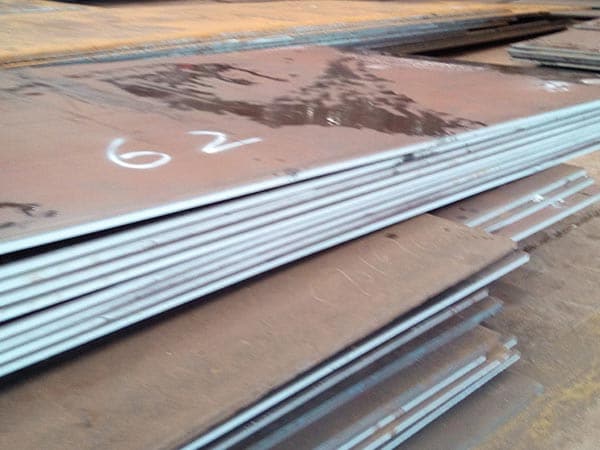
The Critical Role of S700MC in Modern Lifting Engineering
S700MC is a high-strength, thermomechanically rolled (TMCP) steel grade that has revolutionized the design of mobile cranes, truck-mounted cranes, and heavy-duty lifting equipment. As an advanced high-strength low-alloy (HSLA) steel, it offers a minimum yield strength of 700 MPa, allowing engineers to reduce the dead weight of crane booms while increasing lifting capacity. However, the performance of this material is not solely dependent on its carbon content or the TMCP process; trace elements like phosphorus play a pivotal role in determining its final structural reliability. Understanding the dual nature of phosphorus is essential for manufacturers who aim to balance material strength with long-term safety in demanding environments.
The Chemical Profile of S700MC: Where Phosphorus Fits In
According to the EN 10149-2 standard, S700MC is designed with a very low carbon footprint to ensure excellent weldability. The chemical composition is strictly controlled to maintain a fine-grained microstructure. Phosphorus (P) is typically limited to a maximum of 0.025%. While often viewed as an impurity, its presence is a result of the iron ore and the steelmaking process. In the context of S700MC, phosphorus is a double-edged sword. It acts as a potent solid-solution strengthener, but its tendency to segregate at grain boundaries can lead to detrimental effects if not managed within precise limits. The following table outlines the typical chemical requirements for S700MC to provide a baseline for comparison.
| Element | Maximum Content (%) |
|---|---|
| Carbon (C) | 0.12 |
| Manganese (Mn) | 2.10 |
| Silicon (Si) | 0.60 |
| Phosphorus (P) | 0.025 |
| Sulfur (S) | 0.015 |
| Aluminium (Al) | 0.015 |
Strengthening Mechanisms and Hardness Enhancement
Phosphorus is one of the most effective solid-solution strengtheners in ferrite. For every 0.01% increase in phosphorus, the yield strength of the steel can increase significantly. In S700MC, this contribution helps in achieving the high 700 MPa threshold without the need for excessive alloying elements that might impair weldability. Phosphorus atoms occupy interstitial sites in the iron lattice, creating local strain fields that impede dislocation movement. This increases the hardness and tensile strength of the crane boom sections, which is vital for resisting the massive compressive forces encountered during heavy lifts. However, this strengthening comes at a cost to the material's ductility, making the precise control of P levels a critical quality control metric for steel mills.
The Impact of Phosphorus on Low-Temperature Toughness
Cranes often operate in extreme climates, from arctic construction sites to offshore platforms. The most significant risk associated with phosphorus in S700MC is "cold shortness" or low-temperature brittleness. Phosphorus has a high segregation coefficient; during the cooling phase of the TMCP process, it tends to migrate to the austenite grain boundaries. This concentration weakens the cohesive strength of the boundaries, promoting intergranular fracture. For crane structures, which require high Charpy V-notch impact energy values (often specified at -20°C or -40°C), excessive phosphorus can cause a dramatic shift in the ductile-to-brittle transition temperature (DBTT). If the P content exceeds the safety threshold, the crane boom could suffer catastrophic brittle failure under shock loading in cold weather.
| Mechanical Property | Value (S700MC) |
|---|---|
| Yield Strength (ReH) | min. 700 MPa |
| Tensile Strength (Rm) | 750 - 950 MPa |
| Elongation (A5) | min. 12% |
| Impact Energy (KV) | Typically 40J at -20°C |
Weldability and the Risk of Hot Cracking
The structural integrity of a crane depends on the quality of its welded joints. S700MC is prized for its low carbon equivalent (CEV), which facilitates welding without extensive preheating. However, phosphorus significantly influences the solidification range of the weld metal. When phosphorus levels are high, it forms low-melting-point eutectics (such as Fe3P) that remain liquid even after the bulk of the weld pool has solidified. As the weld cools and shrinks, these liquid films are pulled apart, resulting in solidification cracks or "hot cracks." In the high-stress regions of a telescopic crane boom, even microscopic cracks can propagate into major structural failures under cyclic loading. Therefore, maintaining P levels well below 0.020% is often preferred by premium crane manufacturers to ensure a robust welding window.
Atmospheric Corrosion Resistance in Harsh Environments
One of the less discussed but positive effects of phosphorus is its ability to improve the atmospheric corrosion resistance of steel. In the presence of copper and chromium, phosphorus helps form a dense, protective patina layer on the surface of the steel, which slows down the rate of oxidation. While S700MC is not a true "weathering steel" like Corten, the controlled presence of phosphorus contributes to the longevity of the crane structure when exposed to rain, humidity, and industrial pollutants. This is particularly beneficial for the lattice structures of tower cranes and the exterior surfaces of mobile crane chassis, where traditional paint systems might be chipped or worn away over time.
Synergy with Other Alloying Elements
The behavior of phosphorus in S700MC cannot be viewed in isolation. It interacts dynamically with elements like Manganese (Mn) and Sulfur (S). For instance, a high Mn/P ratio is often maintained to mitigate the negative effects of phosphorus on toughness. Furthermore, S700MC utilizes micro-alloying elements such as Niobium (Nb), Vanadium (V), and Titanium (Ti) to achieve grain refinement. These elements help to create a fine-grained structure that can "dilute" the concentration of phosphorus at any single grain boundary, thereby partially offsetting the risk of embrittlement. The sophisticated TMCP process ensures that these elements work together to provide a balance of strength, toughness, and weldability that traditional quenched and tempered steels struggle to match.
Manufacturing Challenges and Quality Assurance
Producing S700MC with optimal phosphorus levels requires advanced steelmaking techniques, such as basic oxygen furnace (BOF) processing and secondary refining (ladle metallurgy). Dephosphorization occurs under oxidizing conditions in the presence of a basic slag. For the crane industry, sourcing steel from mills that employ vacuum degassing and calcium treatment is vital. These processes not only control the phosphorus content but also modify the shape of remaining inclusions, ensuring that the steel remains isotropic—meaning it has consistent properties in both the longitudinal and transverse directions. This isotropy is crucial for crane booms that experience complex multi-axial stresses during operation.
Strategic Considerations for Crane Boom Design
When designing a crane boom, the choice of S700MC allows for thinner plates, which reduces the overall weight of the boom. This weight reduction directly translates to a lower center of gravity for the vehicle and a higher lifting capacity at longer radii. However, the designer must account for the sensitivity of high-strength steels to impurities. By specifying lower phosphorus limits than the standard maximum (e.g., requesting P ≤ 0.015%), manufacturers can enhance the fatigue life of the structure. Fatigue is the primary failure mode for cranes, and phosphorus-induced segregations can act as initiation sites for fatigue cracks. High-purity S700MC ensures that the crane can withstand hundreds of thousands of load cycles over its service life without structural degradation.
- Weight Reduction: Lowering P-related risks allows for confident use of thinner S700MC sections.
- Safety Margins: Reduced phosphorus ensures better performance in sub-zero temperatures.
- Processing Efficiency: Low P levels minimize the need for expensive post-weld heat treatments.
- Durability: Enhanced resistance to atmospheric corrosion and fatigue crack initiation.
Optimizing Performance Through Material Science
The evolution of S700MC has been driven by the need for more efficient and safer lifting solutions. While phosphorus is a minor component by weight, its influence on the microstructure and macroscopic properties of the steel is profound. By understanding that phosphorus increases strength but threatens toughness and weldability, crane manufacturers can make informed decisions about material sourcing and fabrication techniques. The goal is not necessarily to eliminate phosphorus entirely—which is economically unfeasible—but to control its presence and leverage its benefits while neutralizing its risks through advanced metallurgy and precise thermomechanical processing. This balance is what makes S700MC the backbone of the modern lifting industry, providing the strength to reach higher and the reliability to keep operators safe.
Leave a message