
Will s700 mild steel price continue rising
Analyze the factors influencing S700 steel prices, including raw material costs and global demand. This guide covers S700MC mechanical properties, welding, and industrial applications for lightweight engineering.
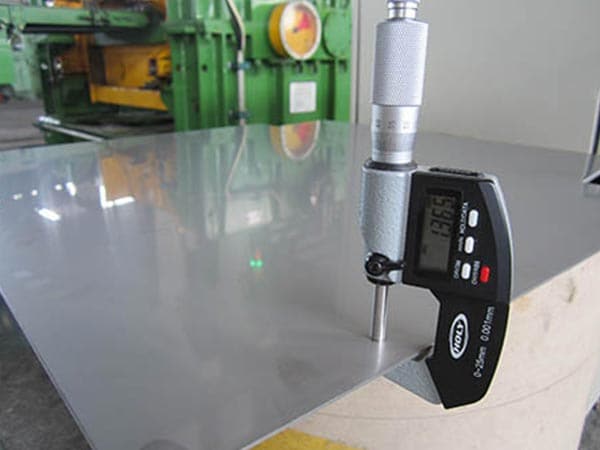
The Current Trajectory of S700 High-Strength Steel Pricing
Global industrial markets are closely monitoring the price fluctuations of S700 high-strength steel. As a premium grade within the thermo-mechanically rolled structural steel category, S700 (often referred to as S700MC) represents a critical balance between extreme yield strength and weight-saving potential. Whether the price will continue to rise depends on a complex interplay of raw material availability, energy costs, and the rapid shift toward lightweight construction in the automotive and heavy machinery sectors.
Unlike standard carbon steels, the production of S700 requires precise micro-alloying and controlled rolling processes. The inclusion of elements such as Niobium (Nb), Vanadium (V), and Titanium (Ti) adds to the production cost. As these alloying elements face supply chain constraints, the base price of S700 often moves independently of common mild steel grades. Understanding the technical superiority of this material helps explain why its market value remains resilient even during broader economic shifts.
Technical Specifications and Mechanical Superiority of S700
The primary driver for S700 adoption is its exceptional mechanical profile. With a minimum yield strength of 700 MPa, it allows engineers to design components that are significantly thinner than those made from S355 or S235 steel, without sacrificing structural integrity. This weight reduction is the cornerstone of modern fuel-efficient vehicle design and high-capacity lifting equipment.
| Property | Value (S700MC) | Unit |
|---|---|---|
| Minimum Yield Strength | 700 | MPa |
| Tensile Strength | 750 - 950 | MPa |
| Minimum Elongation (A5) | 12 - 13 | % |
| Impact Strength (-20°C) | 40 (Typical) | J |
The S700MC grade is specifically designed for cold-forming applications. Its fine-grained microstructure ensures that despite its high strength, the material retains sufficient ductility for complex bending and folding operations. This combination of properties is achieved through thermo-mechanical rolling (TM), where the temperature and deformation are strictly controlled to refine the grain size at a microscopic level.
Processing Performance: Welding and Fabrication
A significant factor in the total cost of ownership for S700 steel is its ease of processing. While the material price per ton might be higher than lower-grade steels, the reduction in labor and processing time can lead to overall project savings. S700 exhibits excellent weldability due to its low carbon equivalent (CEV) value.
- Welding Compatibility: S700 can be welded using standard methods such as MAG, TIG, and submerged arc welding. Because of its low alloy content, preheating is often unnecessary for thinner sections, which reduces energy consumption and production time.
- Cold Forming: The material is optimized for tight bending radii. This allows for the creation of complex structural profiles that would be impossible with traditional high-strength steels that are more brittle.
- Laser Cutting: The clean surface and consistent microstructure of S700MC make it ideal for high-precision laser cutting, resulting in minimal dross and high-quality edges.
Fabricators must ensure that the heat input during welding is carefully managed. Excessive heat can lead to softening in the heat-affected zone (HAZ), which might compromise the 700 MPa yield strength. Using high-quality filler metals that match the strength of the base material is essential for maintaining the structural performance of the assembly.
Environmental Adaptability and Sustainability
The push for Green Steel and carbon neutrality is a major factor influencing the future price of S700. High-strength steel is inherently more sustainable because it promotes material efficiency. By using S700, manufacturers can reduce the total weight of a structure by up to 40% compared to traditional steel. This leads to lower CO2 emissions during the transport of the steel and, more importantly, lower fuel consumption throughout the operational life of the final product, such as a truck trailer or a mobile crane.
Furthermore, S700 is 100% recyclable. The energy required to recycle high-strength steel is significantly lower than that needed for primary production from iron ore. As carbon taxes and environmental regulations become more stringent, the demand for S700 is expected to grow, potentially putting upward pressure on prices as industries scramble to meet sustainability targets.
Industrial Applications Driving Demand
The versatility of S700 steel allows it to serve a wide range of demanding industries. Its high strength-to-weight ratio is particularly valued where every kilogram of self-weight saved translates into increased payload or improved safety.
- Transport and Logistics: Chassis for trailers, semi-trailers, and heavy-duty trucks benefit from S700's ability to withstand high dynamic loads while remaining lightweight.
- Lifting Equipment: Telescopic booms for cranes and structural components of aerial work platforms require the extreme yield strength of S700 to reach greater heights safely.
- Agricultural Machinery: Modern harvesters and soil preparation tools use S700 to improve durability in harsh environments without adding excessive weight that could compact the soil.
- Construction and Mining: Wear-resistant components and structural frames in mining equipment leverage S700's toughness and resistance to impact.
The expansion of these industries, particularly in emerging markets, creates a consistent demand floor for S700. When infrastructure projects surge, the availability of high-strength structural grades often tightens, leading to the price increases seen in recent quarters.
Market Dynamics: Will the Upward Trend Persist?
Several macro-economic factors suggest that the price of S700 may remain on an elevated plateau or continue to rise modestly. First, the cost of energy-intensive manufacturing remains high. Steel mills are facing increased costs for electricity and natural gas, which are vital for the thermo-mechanical rolling process. Second, the global shortage of specific micro-alloying elements like Ferro-Niobium can create supply bottlenecks.
However, the "mild steel" label sometimes applied to S700 is a misnomer; it is a sophisticated engineered product. Buyers should monitor the spread between iron ore prices and the finished S700MC price. Often, when raw material prices stabilize, the premium for high-strength grades remains due to limited specialized production capacity among global steel mills.
Strategic procurement involves looking at the total lifecycle cost. Even if the price per ton of S700 rises, the ability to use less steel to achieve the same structural goal often makes it the more economical choice. For instance, replacing 10 tons of S355 with 6.5 tons of S700 can result in a net cost saving even if the S700 is 20-30% more expensive per ton.
Optimizing S700 Usage for Cost Efficiency
To mitigate the impact of rising prices, companies are focusing on design optimization. Advanced Finite Element Analysis (FEA) allows engineers to place S700 exactly where the stress concentrations are highest, while using lower-cost grades in less critical areas. This hybrid approach to material selection is becoming a standard practice in the automotive and heavy machinery industries.
Additionally, maintaining strong relationships with specialized steel service centers can provide better price stability. These centers often have the inventory and processing capabilities to provide S700 in custom sizes, reducing scrap rates and further improving the cost-effectiveness of the material. As the market evolves, the focus will likely shift from "price per ton" to "performance per dollar," where S700 continues to lead the industry.
Monitoring global trade policies and import duties is also vital. As many high-quality S700MC producers are located in specific regions (such as Europe and parts of Asia), changes in trade agreements can have an immediate impact on local market pricing. Staying informed about these geopolitical shifts is as important as understanding the metallurgical properties of the steel itself.
Leave a message