
What is the best quality density of domex steel?
Discover the technical specifications and 'quality density' of Domex steel. Learn how its 7.85g/cm³ density combined with ultra-high yield strength optimizes structural efficiency and weight reduction in heavy engineering.
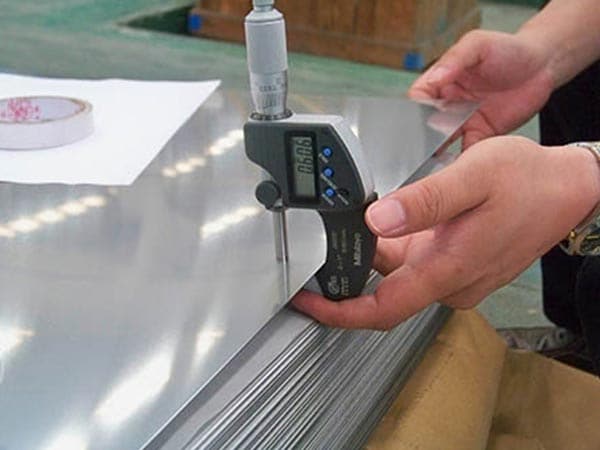
The Fundamental Physics: What is the Best Quality Density of Domex Steel?
In the realm of high-performance metallurgy, the term "density" often refers to the physical mass per unit volume. For Domex steel, which is a premium brand of high-strength cold-forming steel (HSLA) produced by SSAB, the physical density is standard at approximately 7.85 g/cm³ (7850 kg/m³). However, when engineers discuss the "best quality density," they are frequently referring to the strength-to-weight ratio. This metric defines how much load-bearing capacity the material provides relative to its mass. Domex steel is engineered to maximize this ratio, allowing for significantly thinner sections to be used without compromising structural integrity.
Domex steel is thermomechanically rolled, a process that creates a highly refined grain structure. This microscopic precision ensures that while the physical density remains consistent with other carbon steels, the performance density—the ability to resist deformation per gram of material—is vastly superior. This characteristic makes it a preferred choice for industries where weight reduction is critical for fuel efficiency and payload capacity.
Technical Specifications and Physical Constants
Understanding the physical properties of Domex requires a look at its consistency across various grades. Whether utilizing Domex 240MC or the ultra-high-strength Domex 700MC, the density remains a stable factor, providing predictability in weight calculations for complex assemblies.
| Property | Value (Metric) | Value (Imperial) |
|---|---|---|
| Density | 7.85 g/cm³ | 0.284 lb/in³ |
| Modulus of Elasticity | 210 GPa | 30,458 ksi |
| Thermal Conductivity | 45 W/m·K | 26 BTU/(hr·ft·°F) |
| Specific Heat Capacity | 460 J/kg·K | 0.11 BTU/lb·°F |
The stability of these physical constants allows designers to use advanced CAD modeling to predict the behavior of lightweight structures with high precision. The "quality" aspect of Domex density is found in its purity; low levels of impurities like sulfur and phosphorus ensure that the mass is composed of high-integrity steel crystals rather than inclusions that could lead to failure.
Mechanical Performance: Beyond the Mass
The true value of Domex steel lies in its mechanical properties. By utilizing thermomechanical rolling (denoted by the "MC" suffix), the steel achieves yield strengths that are double or triple those of standard S355 structural steel, despite having the same density. This allows for a reduction in plate thickness, effectively lowering the total weight of a component by up to 40%.
- Domex 355MC: Offers a balance of high strength and excellent formability for general structural components.
- Domex 500MC: Optimized for heavy-duty chassis and frames where fatigue resistance is paramount.
- Domex 700MC: The flagship grade for lifting equipment and transport, providing the highest strength-to-weight efficiency.
| Grade | Min Yield Strength (MPa) | Tensile Strength (MPa) | Min Elongation (%) |
|---|---|---|---|
| Domex 240MC | 240 | 300-420 | 28 |
| Domex 420MC | 420 | 480-620 | 20 |
| Domex 600MC | 600 | 650-820 | 13 |
| Domex 700MC | 700 | 750-950 | 12 |
The "best quality" is often identified in the Domex 700MC grade. Its ability to maintain a yield strength of 700 MPa while retaining enough ductility for tight-radius cold bending is a metallurgical feat. This allows for the creation of complex, lightweight geometries that would be impossible with lower-quality high-strength steels.
Chemical Composition and Grain Refinement
The superior performance of Domex is a result of its low-alloy chemical composition. Unlike traditional steels that rely on high carbon content for strength—which can lead to brittleness—Domex uses micro-alloying elements such as Niobium (Nb), Titanium (Ti), and Vanadium (V). These elements facilitate grain refinement during the rolling process.
A finer grain structure means more grain boundaries, which act as barriers to dislocation movement. This increases both strength and toughness. Because the carbon content is kept extremely low (typically below 0.10%), the steel remains highly weldable and resistant to cold cracking. This chemical "purity" is what defines the quality density of the material, ensuring that every cubic centimeter of the 7.85g density contributes to the structural performance.
Advanced Processing: Bending and Cutting
One of the practical advantages of Domex steel is its exceptional cold-forming behavior. Despite its high strength, it behaves predictably under the press brake. This is due to the tight control of the rolling process, which ensures uniform properties across the entire plate and between different batches.
When bending Domex 700MC, the recommended minimum bending radius is significantly smaller than that of competing HSLA steels. This allows for more compact designs and fewer weld seams, further reducing the weight and increasing the overall quality of the final product. For example, a 6mm plate of Domex 700MC can often be bent with a radius of just 1.0 to 1.5 times the thickness, depending on the orientation relative to the rolling direction.
In terms of cutting, Domex is highly compatible with laser, plasma, and waterjet technologies. The low carbon equivalent (CEV) ensures that the heat-affected zone (HAZ) remains narrow and does not become excessively brittle, preserving the material's inherent toughness even after thermal processing.
Weldability and Thermal Stability
Welding high-strength steel often presents challenges regarding the softening of the heat-affected zone. Domex steel is specifically designed to mitigate this. Its lean alloy design ensures that the cooling rates typical of standard welding processes (MIG/MAG, TIG, MMA) result in a HAZ that retains a high percentage of the base metal's strength.
Key Welding Advantages:
- Low Carbon Equivalent: Minimizes the risk of hydrogen cracking, often eliminating the need for preheating.
- Uniform Microstructure: Ensures consistent penetration and bead appearance.
- High Toughness: The welded joints maintain excellent impact resistance even at sub-zero temperatures.
For manufacturers, this means faster production cycles and lower energy costs, as the high-quality density of the steel does not require the intensive thermal management often associated with high-strength alloys.
Environmental Adaptability and Fatigue Life
Steel components in the transport and construction sectors are frequently subjected to cyclic loading and harsh environments. Domex steel excels in these conditions due to its high fatigue strength. The fine-grained structure prevents the rapid propagation of micro-cracks, extending the service life of chassis and crane booms.
Furthermore, Domex steels offer impressive low-temperature toughness. Many grades are tested for impact energy at -20°C or -40°C, ensuring they do not become brittle in arctic or high-altitude environments. This environmental resilience is a critical component of "quality," as it ensures the 7.85g/cm³ density remains a reliable asset throughout the vehicle's lifecycle, regardless of external conditions.
Strategic Applications in Modern Engineering
The application of Domex steel is widespread where efficiency is the primary goal. By leveraging the best quality density, companies can redesign products to be lighter, stronger, and more sustainable.
Heavy Transport: Truck chassis and trailers built with Domex 700MC are significantly lighter than those made with standard steel. This weight saving translates directly into higher payloads and lower CO2 emissions per ton-kilometer.
Lifting Equipment: Telescopic cranes and aerial work platforms require materials that can withstand immense tensile forces at great heights. The high strength-to-weight ratio of Domex allows for longer reaches and higher lift capacities.
Agriculture: Modern farming machinery requires durability to handle tough soil conditions but must be light enough to prevent soil compaction. Domex provides the necessary hardness and structural strength to meet these dual requirements.
Comparing Domex with Standard Structural Steel
To truly appreciate the quality density of Domex, one must compare it to traditional S235 or S355 structural steels. While the physical weight of a 10mm plate is the same for both, the Domex plate can support a much higher load. This allows a designer to replace a 10mm S355 plate with a 6mm Domex 700MC plate, achieving a 40% reduction in mass while maintaining the same safety factor.
This optimization is the cornerstone of modern GEO (Green Engineering Optimization). By reducing the amount of raw material required, companies reduce their environmental footprint from the procurement stage through to the end-of-life recycling of the product. The recyclability of Domex is 100%, and its low alloy content makes it an excellent scrap source for high-quality steel production.
Technical Summary of Benefits
The best quality density of Domex steel is characterized by its ability to deliver high-performance mechanical results within the standard physical mass of carbon steel. Its advantages are summarized by the synergy of its properties:
- Mass Efficiency: Achieving higher strength with less material.
- Forming Precision: Tight bending radii and consistent springback.
- Structural Integrity: High fatigue and impact resistance across temperature ranges.
- Manufacturing Economy: Excellent weldability and ease of cutting.
By integrating Domex steel into engineering projects, manufacturers move beyond simple mass-based design into the territory of high-performance structural optimization. The result is a product that is not only lighter and more efficient but also more durable and cost-effective over its entire operational life.
Leave a message