
1.0972 flat bar for auto frame prices plunged
Explore the technical properties and market shifts of 1.0972 (S315MC) flat bars for auto frames. Analyze mechanical performance, weldability, and procurement strategies.
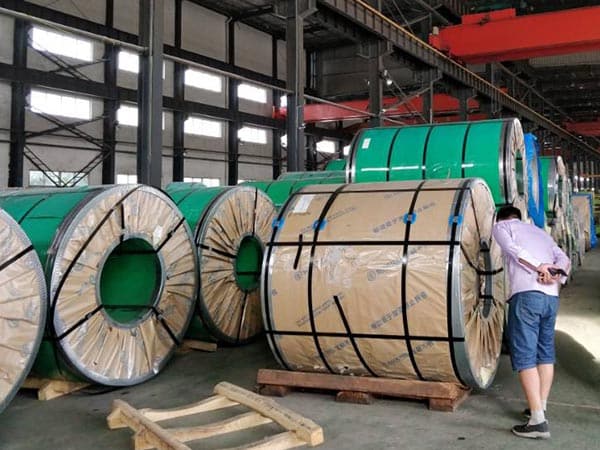
Technical Dynamics of 1.0972 Flat Bar in Modern Automotive Engineering
The recent volatility in the global steel market has led to a significant shift in the cost structure of specialized materials, most notably where 1.0972 flat bar for auto frame prices plunged. This price correction offers a strategic window for automotive manufacturers and chassis engineers to reassess their material procurement strategies. 1.0972, commonly known under the EN 10149-2 standard as S315MC, is a thermomechanically rolled high-yield strength steel designed specifically for cold forming. Its role in the structural integrity of vehicle frames is foundational, providing a balance between weight reduction and crashworthiness.
Understanding the metallurgical profile of 1.0972 is essential for leveraging its current market advantage. This steel grade is characterized by its low carbon content and micro-alloying elements such as niobium, vanadium, and titanium. These elements facilitate grain refinement, which is the primary mechanism behind its high yield strength and exceptional toughness. When prices for these flat bars drop, the cost-to-performance ratio becomes incredibly attractive for heavy-duty vehicle frames, trailers, and specialized automotive components.
Mechanical Properties and Structural Reliability
The engineering value of 1.0972 flat bars lies in their consistent mechanical performance. Unlike standard carbon steels, 1.0972 offers a guaranteed minimum yield strength of 315 MPa. This allows engineers to reduce the thickness of frame components without compromising the load-bearing capacity of the vehicle. The reduction in material thickness directly translates to a lighter chassis, which is a critical factor in improving fuel efficiency and increasing the payload capacity of commercial vehicles.
| Property | Value (Metric) | Significance for Auto Frames |
|---|---|---|
| Yield Strength (ReH) | min. 315 MPa | Ensures structural integrity under heavy loads. |
| Tensile Strength (Rm) | 390 - 510 MPa | Provides a safety margin against catastrophic failure. |
| Elongation (A5) | min. 20% | Allows for complex bending and forming without cracking. |
| Impact Strength | 27J at -20°C | Crucial for vehicles operating in cold climates. |
The ductility of 1.0972, represented by its elongation properties, ensures that the flat bar can undergo rigorous cold-forming processes. In the production of auto frames, flat bars are often bent, punched, and shaped into C-channels or box sections. The ability of 1.0972 to maintain its structural integrity during these high-strain operations is what sets it apart from lower-grade structural steels.
Processing Performance: Welding and Cold Forming
Manufacturing efficiency is a major driver of cost-effectiveness in the automotive industry. 1.0972 flat bars excel in welding environments due to their low carbon equivalent (CEV). This property minimizes the risk of cold cracking in the heat-affected zone (HAZ), allowing for high-speed automated welding processes without the need for extensive pre-heating or post-weld heat treatments. For auto frame assembly lines, this means faster cycle times and lower energy consumption.
- Excellent Weldability: Compatible with MIG, TIG, and laser welding techniques common in modern automotive plants.
- Superior Cold Formability: Can be bent to tight radii without surface splitting, essential for intricate chassis geometries.
- Consistent Surface Quality: Thermomechanical rolling ensures a clean surface, reducing the need for abrasive blasting before coating.
- Laser Cutting Precision: The fine-grained structure allows for clean edges during thermal cutting, reducing secondary finishing costs.
The current price plunge of 1.0972 flat bars allows manufacturers to implement more complex frame designs that were previously cost-prohibitive. By utilizing the material's high formability, designers can integrate multiple functions into a single stamped or bent component, reducing the total part count and assembly complexity of the vehicle chassis.
Environmental Adaptability and Fatigue Resistance
Automotive frames are subjected to harsh environmental conditions, including road salts, moisture, and constant vibration. 1.0972 steel exhibits commendable atmospheric corrosion resistance compared to traditional hot-rolled steels, though it is typically used in conjunction with advanced coating systems like E-coating or hot-dip galvanizing. The chemical composition of 1.0972 is optimized to provide a stable substrate for these protective layers, ensuring long-term durability.
Fatigue resistance is another critical attribute. Auto frames endure millions of cycles of stress during their operational life. The fine-grained microstructure of 1.0972 inhibits the initiation and propagation of fatigue cracks. This is particularly important for longitudinal beams and cross-members that bear the brunt of dynamic loads. When the price of such a high-performance material drops, it provides an opportunity to enhance the lifecycle of the vehicle without increasing the initial capital expenditure.
Market Analysis: Why 1.0972 Prices Have Shifted
The downward trend in 1.0972 flat bar prices can be attributed to several macroeconomic factors. A stabilization in raw material costs, particularly iron ore and coking coal, has eased the pressure on steel mills. Furthermore, shifts in global automotive production volumes and the transition toward electric vehicle (EV) architectures have altered the demand patterns for traditional HSLA (High-Strength Low-Alloy) steels. While EVs require different structural reinforcements for battery packs, the fundamental need for high-strength flat bars in the main chassis remains robust.
For procurement specialists, this price dip is a signal to lock in long-term contracts. The 1.0972 grade is a staple in the European and Asian automotive supply chains, and its availability in flat bar form is crucial for specialized body-on-frame vehicles, including pickup trucks, SUVs, and light commercial vehicles. Utilizing the current market conditions to build inventory can provide a significant competitive edge in a low-margin industry.
Strategic Application in Heavy-Duty Chassis Design
Beyond standard passenger vehicles, 1.0972 flat bars are increasingly utilized in the construction of heavy-duty trailers and agricultural machinery frames. The high yield strength allows for the design of "flex-frames" that can absorb energy and return to their original shape, a vital characteristic for off-road and heavy-load applications. The flat bar format is particularly useful for reinforcing specific stress points along the frame rail, where localized strength is required without adding bulk to the entire structure.
The integration of 1.0972 into these designs supports the industry-wide move toward sustainability. By using less steel to achieve the same structural performance, manufacturers reduce the carbon footprint associated with material production and transportation. This aligns with global regulatory pressures to improve vehicle efficiency and reduce emissions across the entire product lifecycle.
Optimizing Procurement in a Volatile Market
Navigating the plunge in 1.0972 prices requires a deep understanding of both the material's technical specifications and the supply chain's nuances. It is not merely about buying at the lowest price but ensuring that the material meets the stringent tolerances required for automated automotive manufacturing. Flatness, thickness consistency, and internal soundness are non-negotiable parameters for 1.0972 flat bars used in safety-critical auto frames.
Collaborating with suppliers who provide full traceability and mill test reports (MTRs) is essential. As prices fluctuate, the temptation for some suppliers to substitute lower-quality grades can increase. Maintaining a focus on the 1.0972 / S315MC specification ensures that the resulting auto frames meet all crash safety standards and operational requirements. The current market environment serves as a reminder that high-performance materials are becoming more accessible, allowing for a new era of lightweight, durable, and cost-effective automotive engineering.
Leave a message