
What is difference auto steel S420MC, S500MC, S700MC and s235
Detailed comparison of S420MC, S500MC, S700MC, and S235 steel grades. Explore mechanical properties, chemical composition, weldability, and automotive application differences.
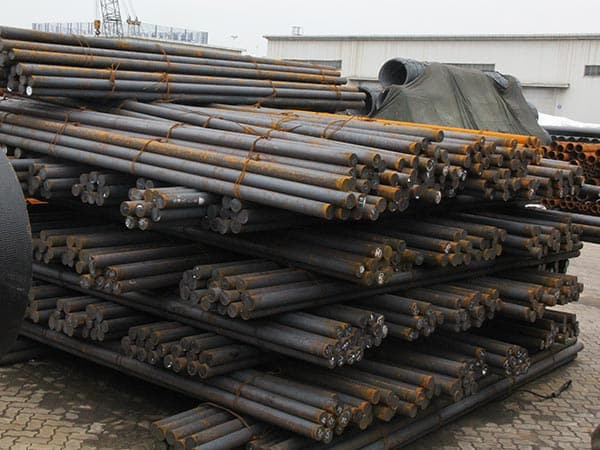
Understanding the Fundamental Standards: EN 10025 vs. EN 10149-2
When selecting steel for automotive or structural applications, the primary distinction lies in the governing standards. S235 is a non-alloy structural steel governed by the EN 10025-2 standard. It is the baseline for general construction, known for its versatility and cost-effectiveness. In contrast, S420MC, S500MC, and S700MC belong to the EN 10149-2 standard, which specifies hot-rolled high-yield strength steels for cold forming. The 'MC' suffix indicates that these steels are thermomechanically rolled (M) and designed for cold forming (C). This metallurgical process creates a fine-grained structure that offers a superior strength-to-weight ratio compared to traditional structural steels like S235.
Chemical Composition and Micro-alloying Strategies
The performance gap between S235 and the high-strength low-alloy (HSLA) grades is rooted in their chemistry. S235 relies on a basic carbon-manganese balance, often with higher carbon content (up to 0.17-0.20%) to achieve its modest strength. However, this higher carbon can negatively impact weldability and toughness at low temperatures.
S420MC, S500MC, and S700MC utilize micro-alloying elements such as Niobium (Nb), Vanadium (V), and Titanium (Ti). These elements, combined with the thermomechanical rolling process, facilitate grain refinement. For instance, S700MC contains precise amounts of these elements to pin grain boundaries during rolling, preventing grain growth and resulting in an ultra-fine microstructure. This allows the steel to achieve a yield strength of 700 MPa while maintaining a remarkably low carbon content (often less than 0.12%), which significantly enhances weldability and impact resistance.
Mechanical Property Comparison: Strength vs. Ductility
The most visible difference is the yield strength, which is the numerical value following the 'S'. The following table highlights the critical mechanical differences:
| Steel Grade | Min. Yield Strength (MPa) | Tensile Strength (MPa) | Min. Elongation (%) | Standard |
|---|---|---|---|---|
| S235JR | 235 | 360 - 510 | 24 - 26 | EN 10025-2 |
| S420MC | 420 | 480 - 620 | 16 - 19 | EN 10149-2 |
| S500MC | 500 | 550 - 700 | 12 - 14 | EN 10149-2 |
| S700MC | 700 | 750 - 950 | 10 - 12 | EN 10149-2 |
As the yield strength increases from S235 to S700MC, there is a natural trade-off in elongation (ductility). While S235 offers high elongation, making it very forgiving for simple bending, S700MC provides nearly triple the load-bearing capacity. This allows engineers to use thinner plates to support the same load, a concept known as lightweighting.
Cold Forming and Processing Performance
Despite their high strength, the 'MC' series steels are specifically engineered for cold forming. S235 is highly ductile but lacks the consistency required for high-precision automated stamping. S420MC and S500MC are the workhorses of the automotive chassis industry, offering a perfect balance between strength and the ability to be bent into complex shapes without cracking.
S700MC, while incredibly strong, requires careful consideration during processing. It has a higher springback effect compared to S235. When bending S700MC, the internal stresses are much higher, requiring more powerful pressing equipment and sophisticated die designs that account for the material's tendency to return toward its original shape after the load is removed. The minimum bending radius for S700MC is also larger than that of S235 or S420MC to prevent surface micro-cracking.
Weldability and Heat Affected Zone (HAZ)
Weldability is a critical factor in automotive assembly. S235 is easily weldable using standard methods, but its relatively high carbon equivalent (CEV) can sometimes lead to issues in thick sections. The HSLA grades (S420MC to S700MC) are designed with very low CEV values, making them exceptionally suitable for modern welding techniques, including robotic MAG welding and laser welding.
However, a key technical nuance for S700MC is the sensitivity of its grain-refined structure to heat. Excessive heat input during welding can cause grain coarsening in the Heat Affected Zone (HAZ), which locally reduces the yield strength and toughness. Therefore, when welding S700MC, it is vital to control the cooling rate and limit the heat input to preserve the mechanical advantages provided by the thermomechanical rolling process.
Environmental Adaptability and Fatigue Life
In automotive applications, parts are subjected to cyclic loading and varying environmental conditions. S235 is prone to atmospheric corrosion if not coated and has a lower fatigue limit due to its lower tensile strength. The MC series steels, particularly S500MC and S700MC, offer superior fatigue resistance. Their fine-grained structure inhibits the initiation and propagation of fatigue cracks, which is essential for components like truck longitudinal beams and crane arms.
Furthermore, these high-strength steels often exhibit better low-temperature toughness. While S235JR is only guaranteed for impact energy at room temperature (20°C), many MC grades can be specified with guaranteed impact values at -20°C or -40°C, making them safer for vehicles operating in arctic or high-altitude environments.
Industry Applications and Economic Impact
The choice between these grades often comes down to a balance of material cost, weight, and manufacturing complexity.
- S235: Used for non-critical brackets, simple supports, and general hardware where weight is not a primary concern.
- S420MC: Frequently found in truck frames, cross members, and cold-pressed parts where a significant strength upgrade from S235 is needed without a massive cost jump.
- S500MC: The standard for heavy-duty automotive structural parts, including suspension components and chassis parts that require high durability.
- S700MC: Reserved for high-performance applications such as telescopic cranes, trailer frames, and safety-critical automotive reinforcements where maximum weight reduction is mandatory to increase payload or fuel efficiency.
By moving from S235 to S700MC, a manufacturer can potentially reduce the weight of a structural component by up to 40-50% while maintaining the same structural integrity. Although the price per ton of S700MC is higher than S235, the reduction in material volume and the resulting fuel savings over the vehicle's lifecycle often provide a superior total cost of ownership (TCO).
Leave a message