
What harm does the excessive weld height of 1.0972 automobile structure steel sheet bring
Analysis of the negative impacts of excessive weld reinforcement on 1.0972 (S315MC) automobile structural steel, covering stress concentration, fatigue life, and assembly issues.
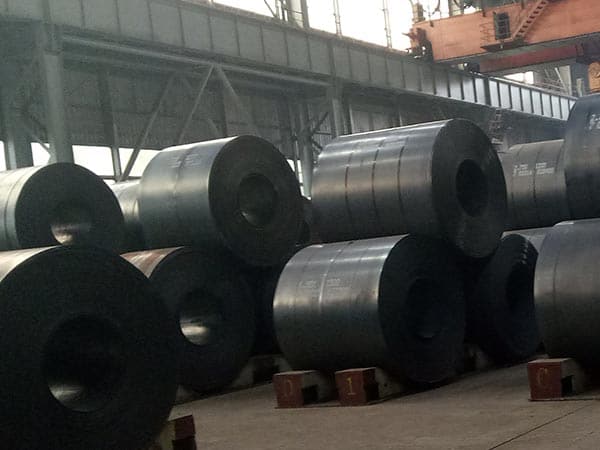
The Critical Role of 1.0972 Steel in Modern Vehicle Engineering
In the pursuit of lightweighting and high safety standards, the automotive industry relies heavily on high-strength low-alloy (HSLA) steels. 1.0972 steel, commonly known under the EN 10149-2 standard as S315MC, is a thermomechanically rolled steel designed for cold forming. Its fine-grained microstructure provides an optimal balance of yield strength, ductility, and weldability. However, the integrity of a vehicle's chassis or frame is not solely dependent on the base metal; the quality of the welded joints is paramount.
A common misconception in manual and even some automated welding processes is that a larger weld bead—specifically excessive weld height or reinforcement—equates to a stronger joint. For 1.0972 steel, which is often used in thicknesses ranging from 2mm to 8mm for structural components, excessive weld height introduces significant technical risks that can compromise the entire vehicle's structural longevity.
Understanding 1.0972 (S315MC) Material Properties
Before examining the harms of improper welding, it is essential to understand the material being joined. 1.0972 is characterized by its low carbon content and micro-alloying elements like niobium, titanium, or vanadium. These elements refine the grain size during the thermomechanical rolling process.
| Chemical Element | C (max) | Mn (max) | Si (max) | P (max) | S (max) | Al (min) |
|---|---|---|---|---|---|---|
| Content (%) | 0.12 | 1.30 | 0.50 | 0.025 | 0.020 | 0.015 |
The mechanical properties of 1.0972 make it ideal for parts that require high load-bearing capacity without excessive weight. Its yield strength (minimum 315 MPa) and tensile strength (390-510 MPa) are carefully calibrated for energy absorption during impacts.
The Phenomenon of Stress Concentration at the Weld Toe
The most immediate harm of excessive weld height in 1.0972 steel structures is the creation of a severe stress concentration point. The weld toe—the junction where the face of the weld meets the base metal—becomes a geometric notch. When the weld reinforcement is too high, the angle between the weld face and the base plate becomes steeper.
In structural mechanics, this sharp transition increases the Stress Concentration Factor (Kt). For 1.0972 steel used in automotive longitudinal beams, which are subject to constant vibration and fluctuating loads, these stress risers are the primary sites for crack initiation. Instead of the load being distributed evenly across the S315MC sheet, it clusters at the toe, exceeding the local yield strength even when the nominal load is low.
Degradation of Fatigue Life in Dynamic Environments
Automobile structures are rarely under static load. They experience millions of cycles of tension, compression, and torsion. 1.0972 steel is prized for its fatigue resistance, but excessive weld height effectively nullifies this advantage. Research indicates that increasing the weld reinforcement height from 10% of the plate thickness to 30% can reduce the fatigue life of the joint by more than 50%.
- Crack Propagation: Once a micro-crack forms at the stressed weld toe, it propagates through the Heat Affected Zone (HAZ) of the 1.0972 steel.
- Vibration Sensitivity: Higher weld beads add unnecessary mass at specific points, potentially altering the local resonant frequency and leading to localized harmonic failures.
- Notch Sensitivity: High-strength steels like S315MC are more sensitive to geometric notches than lower-grade mild steels, making the weld profile critical.
Impact on the Heat Affected Zone (HAZ) and Grain Growth
Achieving an excessive weld height usually requires higher heat input or slower travel speeds during the welding process (MIG/MAG or Laser welding). For thermomechanically rolled steels like 1.0972, heat management is vital. Excessive heat input leads to grain coarsening in the HAZ.
The fine-grained structure that gives S315MC its toughness is destroyed when kept at high temperatures for too long. This results in a localized softening of the material, known as the "soft zone." When you combine a high-stress concentration (due to the bead height) with a weakened metallurgical structure (due to grain growth), the probability of a catastrophic failure during a collision increases significantly.
Assembly Interference and Dimensional Accuracy
In modern automotive manufacturing, tolerances are measured in tenths of a millimeter. 1.0972 steel sheets are often stamped and then welded into complex assemblies like subframes or pillar reinforcements. Excessive weld height creates several physical obstacles:
1. Fitment Issues: Components that must sit flush against the welded 1.0972 part will be pushed out of alignment by a protruding weld bead. This leads to "stack-up" errors in the final assembly.
2. Interference with Robotic Grippers: Automated assembly lines use precision sensors and grippers. Unexpected weld heights can cause sensor errors or physical crashes in the production cell.
3. Obstruction of Coating Layers: High weld beads can lead to uneven application of E-coat (electrophoretic deposition) or powder coatings. The sharp peak of an excessive weld is often the first place where the coating thins out, leading to premature corrosion.
Increased Susceptibility to Corrosion
While 1.0972 steel has decent atmospheric corrosion resistance, the geometry of the weld plays a role in environmental degradation. An excessively high weld bead often creates a "shelf" or a pocket where moisture, road salt, and debris can accumulate. This creates a localized micro-environment conducive to crevice corrosion.
Furthermore, the high residual stresses associated with large weld volumes can lead to Stress Corrosion Cracking (SCC). In the presence of corrosive agents common on winter roads, the combination of high residual tensile stress at the weld toe and the S315MC base metal can lead to sudden, brittle failure without prior warning.
Non-Destructive Testing (NDT) Complications
Quality control for 1.0972 structural components often involves Ultrasonic Testing (UT) or X-ray inspection. Excessive weld reinforcement acts as a source of "noise" in these inspections. The steep angle of the reinforcement can reflect ultrasonic waves prematurely, masking internal defects like lack of fusion or porosity. For X-ray imaging, the varying thickness caused by the high bead makes it difficult to achieve the correct exposure for the base metal and the weld center simultaneously, potentially allowing dangerous internal flaws to pass inspection.
Economic Inefficiency and Material Waste
From a manufacturing standpoint, producing excessive weld height on 1.0972 steel is economically wasteful. It requires more filler wire and higher energy consumption. Over thousands of chassis units, the cost of the extra welding wire adds up significantly without providing any functional benefit. Furthermore, if the design requires a flush surface, the cost of grinding down the excess reinforcement is substantial, involving labor, abrasives, and the risk of inducing mechanical damage to the S315MC surface.
Optimizing Weld Profiles for 1.0972 Steel
To ensure the safety and performance of 1.0972 automobile structures, welding parameters must be strictly controlled. The goal is a "flat" or slightly convex profile where the transition to the base metal is as smooth as possible. Standard industry guidelines usually suggest a reinforcement height (h) where h ≤ 1mm + 0.1b (where b is the width of the weld), and never exceeding 3mm for heavy sections.
| Property | Requirement for 1.0972 | Effect of Excessive Height |
|---|---|---|
| Yield Strength | ≥ 315 MPa | Localized yielding at toe |
| Elongation (A80) | ≥ 20% | Reduced due to HAZ softening |
| Fatigue Limit | High | Drastically lowered |
| Weld Angle | Smooth transition (< 30°) | Sharp transition (> 60°) |
Controlling the shielding gas flow, using pulsed arc welding, and optimizing the travel speed are effective ways to maintain the ideal bead profile on S315MC. By focusing on the quality of the fusion rather than the volume of the deposit, engineers can fully leverage the advanced properties of 1.0972 steel, ensuring vehicles are both light and exceptionally durable.
Leave a message