
What is the 1.0986 weldable structural steel application
Discover the technical specifications and industrial applications of 1.0986 (S500MC) steel. This guide covers mechanical properties, weldability, and processing advantages for heavy machinery and automotive engineering.
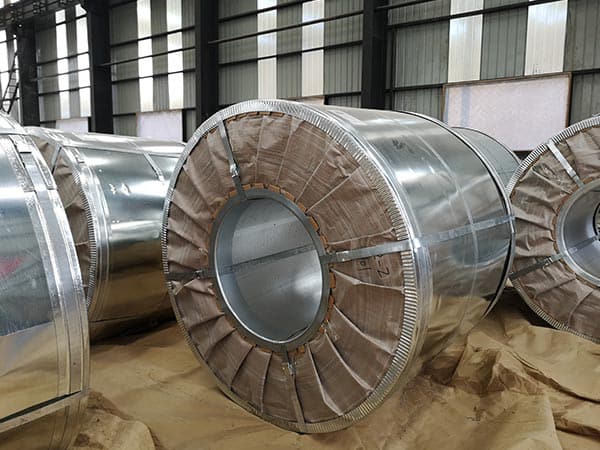
Understanding the Core Identity of 1.0986 Structural Steel
The material 1.0986, widely recognized under the EN 10149-2 standard as S500MC, represents a pinnacle in the evolution of thermomechanically rolled high-yield strength steels. This grade is specifically engineered for cold forming operations where weight reduction and structural integrity are paramount. Unlike traditional hot-rolled steels, 1.0986 achieves its superior mechanical properties through a precise combination of chemical micro-alloying and controlled cooling during the rolling process. This methodology results in a fine-grained microstructure that offers an exceptional balance between high strength and ductility.
The "S" in its designation stands for structural steel, while "500" denotes its minimum yield strength of 500 MPa. The "M" indicates its thermomechanical rolling delivery condition, and "C" signifies its suitability for cold forming. For engineers and manufacturers, 1.0986 is not just a piece of metal; it is a strategic solution for modernizing heavy-duty equipment and reducing carbon footprints through lightweighting.
Chemical Composition and the Science of Micro-alloying
The performance of 1.0986 is rooted in its sophisticated chemical profile. By keeping the carbon content extremely low, the steel maintains excellent weldability and toughness. The strength is primarily derived from the addition of micro-alloying elements such as Niobium (Nb), Vanadium (V), and Titanium (Ti). These elements form stable carbides and nitrides that inhibit grain growth during processing, leading to a refined grain structure.
| Element | Maximum Content (%) |
|---|---|
| Carbon (C) | 0.12 |
| Manganese (Mn) | 1.60 |
| Silicon (Si) | 0.50 |
| Phosphorus (P) | 0.025 |
| Sulfur (S) | 0.015 |
| Aluminium (Al) | 0.015 (min) |
This lean chemistry ensures a low Carbon Equivalent Value (CEV), which is the primary reason why 1.0986 is classified as a highly weldable structural steel. It minimizes the risk of cold cracking in the heat-affected zone (HAZ), even when using high-speed welding processes.
Mechanical Properties and Structural Reliability
The mechanical prowess of 1.0986 allows designers to use thinner sections without compromising the safety or load-bearing capacity of a structure. This transition from standard S355 grades to S500MC (1.0986) can result in weight savings of up to 25-30% in specific applications.
- Yield Strength (ReH): Minimum 500 MPa for thicknesses ≤ 16mm.
- Tensile Strength (Rm): Ranges between 550 and 700 MPa.
- Elongation (A80mm): Typically minimum 12% to 14%, ensuring the material can withstand significant deformation before fracture.
- Impact Toughness: Often tested at -20°C or -40°C to ensure performance in harsh climates.
The high yield-to-tensile ratio of 1.0986 makes it particularly effective for components subjected to high static and dynamic loads. Its consistent performance across different batches ensures that automated manufacturing processes, such as robotic bending and laser cutting, remain stable and predictable.
Advanced Processing: Cold Forming and Weldability
One of the standout features of 1.0986 is its cold forming capability. Despite its high strength, the material exhibits excellent bendability. This is crucial for manufacturing complex longitudinal beams, cross members, and cold-pressed profiles. When bending 1.0986, it is essential to respect the minimum recommended inside bend radii to prevent surface cracking, typically ranging from 1.0 to 1.5 times the plate thickness depending on the orientation relative to the rolling direction.
Regarding weldability, 1.0986 is compatible with all conventional welding methods, including GMAW (MIG/MAG), SMAW, and Laser welding. Because of its low alloy content, preheating is generally unnecessary for standard thicknesses. However, to maintain the high-strength properties of the base metal in the weld joint, it is vital to control the heat input. Excessive heat can lead to grain coarsening in the HAZ, slightly reducing the local yield strength. Using high-quality filler metals that match or exceed the strength of S500MC is standard practice for ensuring joint integrity.
Strategic Applications in Heavy Transport and Automotive
The automotive and transportation industries are the largest consumers of 1.0986 steel. The push for fuel efficiency and higher payload capacities has made this grade indispensable. In truck chassis construction, 1.0986 is used for side rails and reinforcement plates. Its ability to absorb energy also makes it a preferred choice for safety-critical components like underrun protection devices and bumper brackets.
In the trailer industry, using 1.0986 for the main longitudinal beams allows for a lighter frame, which translates directly into higher cargo capacity for the end-user. The material's fatigue resistance ensures that these vehicles can endure hundreds of thousands of kilometers of vibration and stress without structural failure.
Expansion into Construction Machinery and Lifting Equipment
Beyond the road, 1.0986 finds extensive use in the manufacturing of lifting and mobile equipment. Crane booms, telescopic arms, and excavator components benefit from the high strength-to-weight ratio. By reducing the dead weight of a crane arm using S500MC, the operating radius and lifting capacity can be significantly extended.
Agricultural machinery also utilizes 1.0986 for plow frames, trailer hitches, and harvester structures. These machines operate in abrasive and high-stress environments where the durability of the steel directly impacts the equipment's service life. The fine-grained structure of 1.0986 provides a level of wear resistance that exceeds that of standard carbon steels, although it is not a dedicated wear-resistant grade like Hardox.
Environmental Adaptability and Sustainability
Modern engineering demands materials that perform reliably in diverse environmental conditions. 1.0986 demonstrates excellent low-temperature toughness, making it suitable for equipment operating in arctic or high-altitude environments. Furthermore, the use of 1.0986 contributes to environmental sustainability. By enabling lighter designs, it reduces the raw material consumption during manufacturing and lowers the fuel consumption of vehicles during their operational phase.
The recyclability of 1.0986 is another advantage. As a low-alloy steel, it can be easily integrated into the steel recycling stream without the need for complex separation processes, supporting the circular economy goals of the modern industrial sector.
Technical Comparison: 1.0986 vs. Conventional Grades
When compared to standard S355J2 steel, 1.0986 offers a nearly 40% increase in yield strength. This allows for significant thickness reduction. For instance, a component originally designed with 8mm S355 could potentially be redesigned with 6mm 1.0986, maintaining the same safety factor while reducing weight. Compared to higher grades like S700MC (1.0989), 1.0986 offers better formability and is more cost-effective for applications where the extreme strength of 700 MPa is not strictly required.
The choice of 1.0986 is often a balanced decision based on the required mechanical performance, the complexity of the cold forming required, and the total cost of ownership. Its versatility makes it a "workhorse" grade in the high-strength steel category.
Optimizing Production with 1.0986 Steel
To maximize the benefits of 1.0986, manufacturers should focus on precision in their cutting and forming departments. Laser cutting is highly recommended for this grade as it produces clean edges with a minimal heat-affected zone, which is ideal for subsequent welding or painting. During the bending process, using high-quality tooling and ensuring the material is at room temperature will yield the most consistent results.
Surface treatment is also straightforward. 1.0986 usually comes with a pickled and oiled surface or a light tight-scale finish, both of which are excellent bases for powder coating or wet painting. The absence of heavy mill scale reduces the need for aggressive shot blasting, further lowering production costs and improving the surface aesthetics of the final product.
Leave a message