
How to get the 1.0976 hot-rolled steel price
A comprehensive guide on sourcing 1.0976 (S355MC) hot-rolled steel, covering pricing factors, technical specifications, and industrial applications for optimal procurement.
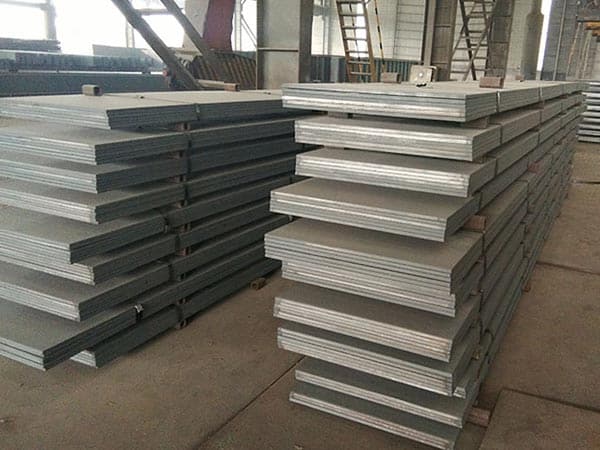
Understanding the Value Proposition of 1.0976 Hot-Rolled Steel
Securing a competitive 1.0976 hot-rolled steel price requires more than just calling a few vendors. To truly optimize your procurement strategy, you must understand that 1.0976, often referred to by its EN 10149-2 designation as S355MC, is a high-yield strength steel specifically engineered for cold forming. This material represents a critical balance between weight reduction and structural integrity, making it a staple in modern engineering projects where efficiency is paramount.
The price of 1.0976 is influenced by its sophisticated micro-alloying process. Unlike standard carbon steels, 1.0976 utilizes precise additions of niobium, vanadium, or titanium to refine the grain structure. This metallurgical precision ensures that the steel maintains high strength without sacrificing ductility. When you request a quote, you are not just paying for raw iron; you are investing in a material that allows for thinner wall thicknesses and lower overall vehicle or structure weights, which translates to long-term fuel and material savings.
Technical Specifications: The Foundation of 1.0976 Pricing
When discussing the 1.0976 hot-rolled steel price with suppliers, the technical specifications are the primary drivers of cost. Understanding these parameters ensures you are comparing like-for-like quotes and not compromising on quality for a lower price point.
| Property | Value (Metric) | Significance for Buyers |
|---|---|---|
| Yield Strength (ReH) | Min. 355 MPa | Determines the load-bearing capacity without permanent deformation. |
| Tensile Strength (Rm) | 430 - 550 MPa | The maximum stress the material can withstand before failing. |
| Elongation (A80mm) | Min. 19% (t < 3mm) | Indicates the material's ability to be stretched or formed without cracking. |
| Bending Radius (180°) | 0.5t to 1.5t | Crucial for complex cold-forming operations in automotive parts. |
The chemical composition also plays a vital role. The low carbon content (typically below 0.12%) and controlled manganese levels (up to 1.50%) are what give 1.0976 its exceptional weldability. If a supplier offers a significantly lower price, verify that the trace elements like Phosphorus (P) and Sulfur (S) are kept below 0.025% and 0.020% respectively, as higher impurities can lead to brittle failure during processing.
Key Factors Influencing the 1.0976 Hot-Rolled Steel Price
To get the best 1.0976 hot-rolled steel price, you must navigate several market variables that fluctuate daily. Being aware of these factors allows procurement managers to time their purchases effectively.
- Raw Material Volatility: The cost of iron ore, coking coal, and steel scrap forms the baseline. Since 1.0976 requires specific micro-alloys (Nb, Ti, V), the price of these rare earth elements also impacts the final surcharge.
- Surface Condition Requirements: Are you looking for "Black" (as-rolled) or "Pickled and Oiled" (P&O)? Pickled and oiled 1.0976 commands a premium because the acid wash removes mill scale, protecting the steel from corrosion and making it ready for immediate painting or welding.
- Dimensional Tolerances: Standard EN 10051 tolerances are common, but if your automated laser cutting or robotic welding systems require restricted tolerances, expect the price to reflect the additional processing time and precision.
- Order Volume and Logistics: Full truckloads or container loads significantly reduce the per-ton price. Additionally, the proximity of the service center to your manufacturing facility can swing the landed cost by 5-10% based on current freight rates.
Expanding Applications: Where 1.0976 Excels
The versatility of 1.0976 extends far beyond basic construction. Its high strength-to-weight ratio makes it the preferred choice for industries aiming for decarbonization and efficiency. By using 1.0976, engineers can design lighter components that perform as well as thicker, heavier standard grades.
Automotive and Transportation: Within the automotive sector, 1.0976 is used for chassis components, cross members, and longitudinal beams. Its ability to absorb energy during impact while remaining lightweight is essential for meeting safety standards without increasing vehicle mass.
Construction and Lifting Equipment: For mobile cranes, telescopic booms, and agricultural machinery, the material must withstand immense stress. 1.0976 provides the necessary toughness and fatigue resistance to ensure equipment longevity in harsh outdoor environments.
Storage and Racking Systems: In high-density warehouse environments, the uprights and beams of racking systems benefit from the cold-forming capabilities of 1.0976. This allows for complex profiles that maximize load capacity while minimizing the footprint of the steel itself.
How to Request an Accurate Quote for 1.0976
To ensure you receive a precise 1.0976 hot-rolled steel price, your Request for Quotation (RFQ) should be as detailed as possible. Vague requests often lead to higher safety margins added by the supplier.
- Specify the Standard: Always mention EN 10149-2 to ensure the supplier understands the exact metallurgical requirements.
- Define the Format: Do you need mother coils, slit coils, or cut-to-length sheets? Processing costs vary significantly between these formats.
- State the Surface Finish: Clearly indicate if the material needs to be pickled and oiled or if the standard mill scale is acceptable for your process.
- Quantity and Delivery Schedule: Providing a forecast or a bulk quantity allows the mill to optimize their production run, which often leads to better pricing tiers.
- Certification Needs: Most high-end projects require a 3.1 or 3.2 material test certificate (MTC) according to EN 10204. Ensure this is included in the initial quote to avoid hidden administrative fees.
Processing Performance and Environmental Adaptability
Beyond the initial 1.0976 hot-rolled steel price, the "total cost of ownership" is influenced by how the material behaves on your shop floor. 1.0976 is renowned for its excellent weldability. Due to its low carbon equivalent value (CEV), it can be welded using all standard methods (MIG, TIG, Laser) without the need for pre-heating, which significantly reduces labor costs and energy consumption.
In terms of environmental adaptability, 1.0976 performs admirably in various climates. While it is not a stainless steel, its fine-grain structure provides a slightly better resistance to atmospheric corrosion compared to traditional S235JR grades. When paired with modern coating technologies like galvanization or powder coating, 1.0976 structures can achieve a service life of several decades, even in moderately corrosive industrial environments.
Furthermore, the cold-forming properties of 1.0976 allow for tighter bend radii. This means fewer welds are needed in complex assemblies, as parts can be folded from a single sheet rather than being pieced together. This not only improves the structural integrity but also reduces the time spent on non-destructive testing (NDT) of weld seams.
Strategic Sourcing in a Global Market
The global steel market is currently experiencing a shift toward "Green Steel." Many Tier 1 suppliers are now offering 1.0976 produced via Electric Arc Furnaces (EAF) powered by renewable energy, rather than traditional Blast Furnaces (BF). While the 1.0976 hot-rolled steel price for these low-carbon versions might be higher today, they help manufacturers meet Scope 3 emission targets and may be exempt from certain carbon border taxes in the future.
Monitoring regional price spreads is also beneficial. Prices in Southeast Asia, Europe, and North America can diverge based on local demand and trade barriers. Working with a global distributor who has diversified sourcing channels can help hedge against localized price spikes or supply chain disruptions. Always verify that the material originates from a mill with ISO 9001 and IATF 16949 certifications if you are supplying the automotive or aerospace industries.
Optimizing Your Procurement Outcome
Finding the right 1.0976 hot-rolled steel price is a balancing act between technical requirements, market timing, and supplier relationships. By focusing on the high-yield strength and superior forming characteristics of S355MC, you can design more efficient products that justify the material cost. Engaging with suppliers who offer value-added services—such as precision slitting, just-in-time delivery, and technical support—can often yield more significant savings than simply chasing the lowest price per ton.
As the industry moves toward more complex and lightweight designs, 1.0976 will remain a cornerstone material. Staying informed about metallurgical trends and global market dynamics will ensure your procurement process remains robust and cost-effective in the long term.
Leave a message