
Application advantages of S500MC high yield strength alloy steel
Explore the technical superiority of S500MC high yield strength steel. This guide covers mechanical properties, cold forming, welding, and industry-specific advantages for automotive and structural engineering.
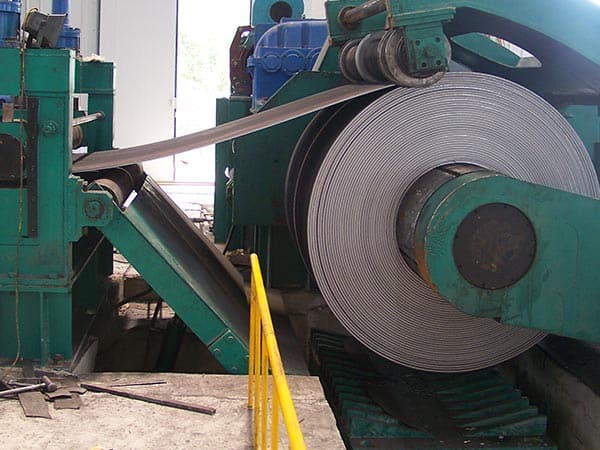
Core Metallurgy and Thermomechanical Processing of S500MC
S500MC stands as a pinnacle of high-strength low-alloy (HSLA) steel engineering, specifically governed by the EN 10149-2 standard. The nomenclature itself reveals its identity: 'S' denotes structural steel, '500' represents a minimum yield strength of 500 MPa, 'M' signifies its thermomechanically rolled origin, and 'C' indicates its suitability for cold forming. Unlike traditional normalized steels, S500MC achieves its remarkable strength-to-weight ratio through a precise thermomechanical control process (TMCP). This involves controlled rolling at specific temperature ranges followed by accelerated cooling, which refines the grain structure to a microscopic level. The resulting fine-grained ferrite-pearlite or bainitic microstructure provides a unique combination of high yield strength and exceptional toughness, even at sub-zero temperatures.
The chemical composition of S500MC is meticulously balanced to ensure performance without compromising processability. By maintaining a low carbon content (typically below 0.12%), the material avoids the brittleness often associated with high-strength steels. Micro-alloying elements such as Niobium (Nb), Vanadium (V), and Titanium (Ti) play a critical role. These elements form fine precipitates that pin grain boundaries during the rolling process, preventing grain growth and enhancing the dislocation density. This metallurgical strategy allows S500MC to offer a yield strength significantly higher than standard S355 grades while remaining highly ductile.
Mechanical Superiority and Structural Integrity
The primary advantage of S500MC lies in its mechanical profile. Engineers favor this grade because it allows for significant thickness reduction in structural components without sacrificing load-bearing capacity. This is the cornerstone of lightweight design in modern engineering. When comparing S500MC to conventional structural steels, the increase in yield strength translates directly into a higher safety margin or the ability to carry heavier payloads in mobile equipment.
| Property | S500MC Specification (EN 10149-2) | Typical Values |
|---|---|---|
| Yield Strength (ReH MPa) | Min 500 | 520 - 580 |
| Tensile Strength (Rm MPa) | 550 - 700 | 580 - 660 |
| Elongation (A5 %) | Min 12 - 14 (depending on thickness) | 16 - 20 |
| Impact Energy (KV J) | Optional (usually 40J at -20°C) | Verified per heat |
Beyond the raw numbers, the yield-to-tensile ratio of S500MC is optimized to provide predictable deformation behavior. This predictability is vital for crash-relevant components in the automotive sector, where energy absorption is as important as structural rigidity. The material's high fatigue resistance also ensures that structures subjected to cyclic loading, such as crane booms or truck chassis, maintain their integrity over long operational lifecycles.
Exceptional Cold Forming and Bending Precision
One of the most distinctive features of S500MC is its 'C' designation, highlighting its superior cold forming capabilities. High-strength steels often struggle with cracking during tight bending operations, but S500MC is engineered to overcome this. The fine grain structure ensures that the material can flow plastically without localized necking or fracture. This allows manufacturers to utilize complex geometries and tight bend radii, which are often required to increase the moment of inertia in structural profiles.
For thicknesses up to 3mm, S500MC can often be bent with a radius as small as 0.5 times the material thickness (0.5t), and for thicker plates up to 6mm, a radius of 1.0t to 1.5t is typically achievable. This flexibility reduces the need for hot forming or complex multi-stage stamping, significantly lowering production costs and energy consumption. Furthermore, the material exhibits minimal springback compared to other high-strength grades, ensuring high dimensional accuracy in mass-produced components. This precision is essential for automated assembly lines where tight tolerances are non-negotiable.
Welding Performance and Fabrication Efficiency
In industrial fabrication, weldability is often the bottleneck for high-strength materials. S500MC excels here due to its low Carbon Equivalent (CEV). A low CEV means the steel is less susceptible to cold cracking in the heat-affected zone (HAZ) during welding. Most standard welding processes, including MIG/MAG (GMAW), TIG (GTAW), and submerged arc welding (SAW), are highly effective with S500MC.
- No Preheating: In most thickness ranges, S500MC does not require preheating, which accelerates production cycles and reduces energy costs.
- HAZ Stability: The fine-grained structure is relatively stable under the heat input of welding, although care must be taken to manage heat input to avoid excessive grain coarsening in the HAZ.
- Filler Metal Compatibility: It can be welded using standard high-strength consumables that match the 500 MPa yield class, ensuring the weld joint is as strong as the base metal.
This ease of fabrication makes S500MC an ideal choice for large-scale structural projects where hundreds of meters of welding are required. The consistency of the material's surface quality, often achieved through pickling and oiling (P&O), also ensures that welding robots can operate with high reliability and minimal spatter interference.
Strategic Advantages in Automotive and Heavy Machinery
The automotive industry is perhaps the largest beneficiary of S500MC's properties. In the quest for CO2 reduction and fuel efficiency, reducing the curb weight of vehicles is paramount. By replacing traditional S350 or S355 grades with S500MC, manufacturers can reduce the thickness of chassis frames, cross members, and suspension parts by 15% to 25% while maintaining the same structural performance. This weight saving directly translates into higher payload capacities for commercial vehicles and better fuel economy for passenger cars.
In the heavy machinery and lifting sector, S500MC is used extensively for telescopic cranes, agricultural machinery, and earthmoving equipment. The high yield strength allows for longer crane reach and higher lifting capacities without increasing the overall weight of the machine. This not only improves operational efficiency but also reduces the transportation costs of the machinery itself. The environmental adaptability of S500MC, particularly its toughness at low temperatures, ensures that these machines can operate safely in harsh climates, from Siberian oil fields to high-altitude construction sites.
Economic Impact and Sustainability
Adopting S500MC is not just a technical decision but a strategic economic move. While the per-ton price of HSLA steel might be higher than commodity carbon steel, the total cost of ownership is often lower. Reduced material usage means fewer tons need to be purchased, transported, and processed. The ability to use thinner sections leads to faster welding times and less filler material consumption. Additionally, the lightweight nature of the final product contributes to a lower carbon footprint throughout its lifecycle.
Sustainability is further enhanced by the material's recyclability. S500MC is fully compatible with existing steel recycling streams. Because it achieves its properties through thermomechanical processing rather than heavy alloying with expensive or rare elements, it remains a highly sustainable choice for the circular economy. The longevity provided by its fatigue resistance also means that products made from S500MC have a longer service life, reducing the frequency of replacement and the associated environmental impact.
Advanced Applications in Energy and Infrastructure
The utility of S500MC extends into the energy sector, particularly in the construction of wind turbine towers and solar tracking systems. These structures are subjected to constant wind loads and environmental stressors. The high strength of S500MC allows for taller, more slender towers that can capture higher wind speeds, while its excellent weldability ensures the structural integrity of the massive joints. In solar tracking frames, the stiffness and strength of S500MC allow for larger arrays to be supported by fewer structural posts, optimizing the land use and reducing installation costs.
Infrastructure projects, such as modular bridges and high-load shelving systems in logistics centers, also leverage S500MC. The material's ability to be cold-rolled into complex C and Z profiles makes it a favorite for cold-formed steel (CFS) construction. These profiles offer an incredible strength-to-weight ratio, allowing for rapid assembly and reduced foundation requirements. As global urbanization continues, the demand for such efficient, high-performance materials is set to grow, positioning S500MC as a critical component in the future of sustainable infrastructure.
Leave a message