
How much do you know about automobile structure steel S355MC
Discover the technical specifications, mechanical properties, and industrial applications of S355MC automobile structural steel in this expert guide.
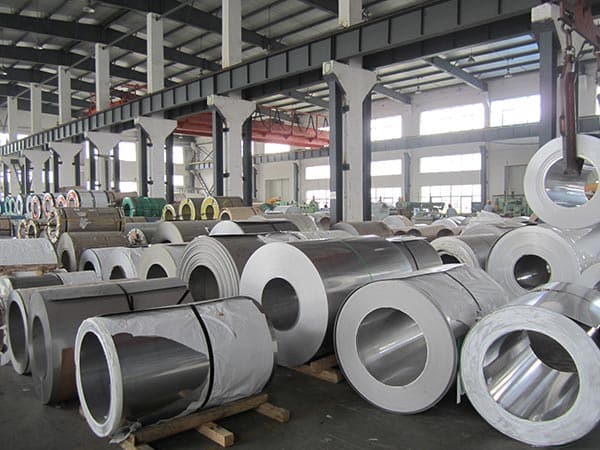
Understanding the Essence of S355MC Structural Steel
S355MC is a high-strength, hot-rolled steel specifically engineered for cold forming, governed by the EN 10149-2 standard. The alphanumeric designation reveals its core characteristics: 'S' stands for structural steel, '355' denotes a minimum yield strength of 355 MPa, 'M' indicates its thermomechanically rolled condition, and 'C' signifies its suitability for cold forming. Unlike traditional structural steels, S355MC is designed to offer a superior strength-to-weight ratio, making it an indispensable material in the modern automotive and heavy machinery industries.
Chemical Composition and the Role of Micro-alloying
The exceptional performance of S355MC stems from its precise chemical balance. It is characterized by a low carbon content, typically below 0.12%, which is fundamental for its excellent weldability and ductility. However, the true strength is derived from micro-alloying elements such as Niobium (Nb), Vanadium (V), and Titanium (Ti). These elements facilitate grain refinement during the thermomechanical rolling process.
| Element | Maximum Content (%) |
|---|---|
| Carbon (C) | 0.12 |
| Manganese (Mn) | 1.50 |
| Silicon (Si) | 0.50 |
| Phosphorus (P) | 0.025 |
| Sulfur (S) | 0.020 |
| Aluminum (Al) | 0.015 |
The inclusion of Manganese enhances hardenability and tensile strength, while Aluminum acts as a deoxidizer. The strict control over Phosphorus and Sulfur levels ensures that the steel maintains high toughness and reduces the risk of hot cracking during welding processes.
Mechanical Properties and Engineering Advantages
Engineers favor S355MC because it bridges the gap between standard mild steels and ultra-high-strength alloys. Its mechanical profile is optimized for components that require both structural integrity and complex shaping.
- Yield Strength: Minimum 355 MPa, providing a robust safety margin for load-bearing structures.
- Tensile Strength: Ranges between 430 and 550 MPa, ensuring the material can withstand significant stress before failure.
- Elongation: Typically exceeds 19% (for thicknesses < 3mm), allowing for significant deformation without fracture.
- Impact Toughness: Maintains reliability even in low-temperature environments, which is critical for vehicles operating in diverse climates.
The Superiority of Thermomechanical Rolling (M)
The 'M' in S355MC refers to thermomechanical rolling, a process where the final deformation is carried out in a specific temperature range that leads to a material state with properties that cannot be achieved by heat treatment alone. This process creates a fine-grained microstructure. Fine grains are the only mechanism in metallurgy that simultaneously increases both strength and toughness. This allows S355MC to be thinner and lighter than traditional s355jr steel while maintaining the same structural load capacity, directly contributing to vehicle weight reduction and fuel efficiency.
Cold Forming and Processing Performance
The 'C' designation highlights the steel's exceptional cold-forming capabilities. S355MC can be bent, pressed, and folded into intricate shapes without developing surface cracks. This is particularly vital for automotive chassis components where complex geometries are the norm. When processing S355MC, the minimum bending radius is a critical factor. For a plate thickness (t), the recommended internal bending radius is often as low as 0.5t to 1.5t, depending on the orientation relative to the rolling direction.
In addition to bending, S355MC exhibits excellent laser cutting characteristics. Due to its low silicon content and clean internal structure, laser cuts are precise with minimal dross, reducing the need for secondary finishing operations. This efficiency is a significant cost-driver in high-volume automotive production lines.
Weldability and Joining Technologies
One of the primary reasons S355MC is dominant in the automobile structure sector is its weldability. Because the Carbon Equivalent (CEV) is kept low, the steel is not prone to cold cracking in the heat-affected zone (HAZ). It can be welded using all standard methods, including MIG/MAG, TIG, and submerged arc welding. The fine-grained structure remains relatively stable during the thermal cycles of welding, ensuring that the joints do not become brittle failure points in the vehicle frame.
Diverse Applications in Modern Industry
While the name emphasizes "automobile structure," the utility of S355MC extends far beyond passenger cars. Its high strength and formability make it a preferred choice for various demanding sectors.
- Truck Chassis and Frames: S355MC provides the necessary rigidity to handle heavy payloads while minimizing the dead weight of the vehicle.
- Agricultural Machinery: Used in the construction of plows, trailers, and harvester frames where durability and resistance to vibration are paramount.
- Crane Arms and Lifting Equipment: The high yield strength allows for longer reach and higher lifting capacities in telescopic booms.
- Cold Pressed Parts: Ideal for brackets, cross members, and longitudinal beams that require precise tolerances.
Environmental Adaptability and Sustainability
S355MC is designed to perform in harsh environments. Its fine-grained structure provides a natural resistance to atmospheric corrosion compared to coarser steels, although it is typically coated or galvanized for long-term exposure. From a sustainability perspective, the ability to use thinner sections of S355MC to replace thicker sections of lower-grade steel results in significant raw material savings. This "lightweighting" effect is a cornerstone of reducing the carbon footprint in the transportation sector, as lighter vehicles consume less energy.
Technical Comparison: S355MC vs. S355JR
A common point of confusion is the difference between S355MC and S355JR. While both share a similar yield strength, their processing and performance characteristics differ vastly. S355JR is a general-purpose structural steel with higher carbon content and is typically normalized or as-rolled. It lacks the fine-grain structure of S355MC, making it less suitable for complex cold forming and high-vibration automotive environments. S355MC is specifically refined for the manufacturing floor, offering tighter thickness tolerances and better surface quality for painting and coating.
Strategic Sourcing and Quality Control
When specifying S355MC for production, it is essential to verify the material certifications against the EN 10149-2 standard. Quality control should focus on grain size consistency and the absence of non-metallic inclusions. For high-stress applications, ultrasonic testing and Charpy V-notch impact tests are recommended to ensure the material meets the specific safety requirements of the automotive industry. Selecting the right supplier involves looking for mills that utilize advanced thermomechanical control processes (TMCP) to ensure uniformity across the entire coil width and length.
Leave a message