
1.8976 special steel for automobiles price is threatened by economic slowdown
Comprehensive analysis of 1.8976 (S700MC) special steel for the automotive industry, exploring price volatility under economic pressure, mechanical attributes, and processing advantages.
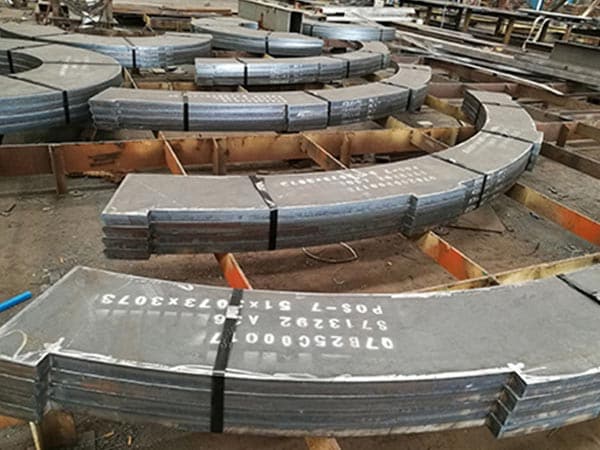
The Economic Landscape and 1.8976 Steel Price Volatility
The global automotive supply chain is currently navigating a complex economic environment where the price of 1.8976 special steel—often recognized by its EN 10149-2 designation S700MC—is facing significant downward pressure. As central banks maintain high interest rates and industrial output slows in major manufacturing hubs, the demand for high-strength low-alloy (HSLA) steels has fluctuated. This volatility is not merely a reflection of raw material costs like iron ore or coking coal; it is deeply tied to the capital expenditure cycles of major automotive OEMs. When the economy slows, the transition to premium materials like 1.8976 becomes a balancing act between the necessity for vehicle lightweighting and the immediate need for cost containment.
Despite these pricing threats, 1.8976 remains a cornerstone for structural integrity in modern vehicles. The material's value proposition lies in its ability to reduce vehicle weight without compromising safety. However, during an economic downturn, the 'green premium' associated with advanced materials is often scrutinized. Manufacturers are forced to optimize their procurement strategies, looking for ways to leverage the high yield strength of 1.8976 to use less total tonnage, thereby offsetting the higher per-ton price compared to standard carbon steels.
Technical Profile: Why 1.8976 is Indispensable
1.8976 is a thermomechanically rolled, high-yield-strength steel designed specifically for cold forming. Its micro-alloyed composition is the secret behind its exceptional performance. By incorporating trace amounts of niobium, vanadium, and titanium, the steel achieves a fine-grained microstructure that provides a unique combination of high strength and excellent ductility. This makes it particularly suitable for components that must withstand high stress while remaining light enough to meet stringent fuel efficiency and emission standards.
The following table outlines the typical chemical composition of 1.8976 steel, which dictates its metallurgical behavior during welding and forming:
| Element | C (max %) | Mn (max %) | Si (max %) | P (max %) | S (max %) | Al (min %) | Nb+Ti+V (max %) |
|---|---|---|---|---|---|---|---|
| 1.8976 (S700MC) | 0.12 | 2.10 | 0.60 | 0.025 | 0.015 | 0.015 | 0.22 |
Mechanical Performance and Structural Reliability
The primary reason 1.8976 is favored in automotive engineering is its minimum yield strength of 700 MPa. This attribute allows engineers to design thinner sections for chassis frames, cross members, and longitudinal beams. In the context of an economic slowdown, the focus shifts to 'material efficiency.' If a designer can replace a 6mm standard steel plate with a 4mm 1.8976 plate, the total cost of the component may actually decrease despite the higher material grade price.
Beyond yield strength, the impact toughness of 1.8976 is critical for crash safety. It maintains its structural integrity even at low temperatures, which is a vital requirement for vehicles operating in diverse climatic conditions. The elongation properties ensure that during a collision, the steel absorbs energy through plastic deformation rather than brittle fracture, protecting the vehicle's occupants.
| Property | Value (Metric) |
|---|---|
| Yield Strength (ReH) | Min 700 MPa |
| Tensile Strength (Rm) | 750 - 950 MPa |
| Elongation (A5) | Min 12% |
| Bending Radius (90°) | Min 2.0 x thickness |
Advanced Processing: Cold Forming and Welding
The processing characteristics of 1.8976 are highly optimized for high-volume automotive production lines. Its low carbon equivalent makes it exceptionally weldable using standard industrial methods such as MAG (Metal Active Gas), TIG (Tungsten Inert Gas), and laser welding. Unlike some ultra-high-strength steels that require pre-heating or complex post-weld heat treatments, 1.8976 can be integrated into existing assembly workflows with minimal adjustments.
Cold forming is another area where 1.8976 excels. The steel's fine-grain structure allows for tight bending radii without the risk of edge cracking. This is particularly important for complex geometries in truck frames and heavy-duty vehicle chassis. Precision in the rolling process ensures that the material has consistent thickness tolerances and flatness, which reduces scrap rates and enhances the efficiency of automated stamping and laser cutting operations.
- Excellent cold flanging and folding properties.
- Minimal springback compared to other 700 MPa class steels.
- Superior surface quality suitable for various coating and painting processes.
- High resistance to fatigue under cyclic loading conditions.
Environmental Adaptability and Lifecycle Sustainability
As the automotive industry pivots toward electrification, the role of 1.8976 steel is evolving. Electric vehicles (EVs) carry heavy battery packs, necessitating a significant reduction in the weight of the rest of the vehicle to maintain range. 1.8976 provides the necessary strength-to-weight ratio to facilitate this transition. Furthermore, the environmental footprint of 1.8976 is lower than that of aluminum or carbon fiber composites when considering the entire lifecycle—from production and manufacturing to end-of-life recycling.
The economic slowdown has actually accelerated the push for 'circular economy' initiatives within the steel industry. Manufacturers are increasingly looking at the scrap value and recyclability of high-performance steels. 1.8976 is 100% recyclable, and its alloying elements can be efficiently recovered in the electric arc furnace (EAF) process, making it a sustainable choice for the next generation of 'green' vehicles.
Market Outlook: Navigating the Slowdown
The current threat to 1.8976 steel prices is a double-edged sword. While reduced demand from the construction and heavy machinery sectors (which also use S700MC) might lead to short-term price drops, the long-term trend is driven by the mandatory shift toward lighter, safer, and more efficient vehicles. Smart procurement officers are using this period of economic cooling to lock in long-term supply contracts, anticipating a sharp rebound in demand as the global economy stabilizes and the automotive sector fully commits to its electrification goals.
Strategic stockpiling and technical optimization are the keys to surviving the current price volatility. By understanding the deep technical attributes of 1.8976—from its 700 MPa yield strength to its superior weldability—manufacturers can continue to innovate even when the economic forecast is cloudy. The resilience of this steel grade in the face of economic pressure proves its fundamental value to the future of mobility.
Leave a message