
Alloy steel S315MC hot-rolled pickled strip 50mm thick plate
Comprehensive analysis of S315MC alloy steel, focusing on mechanical properties, pickling advantages, and heavy-duty applications for 50mm thick plates.
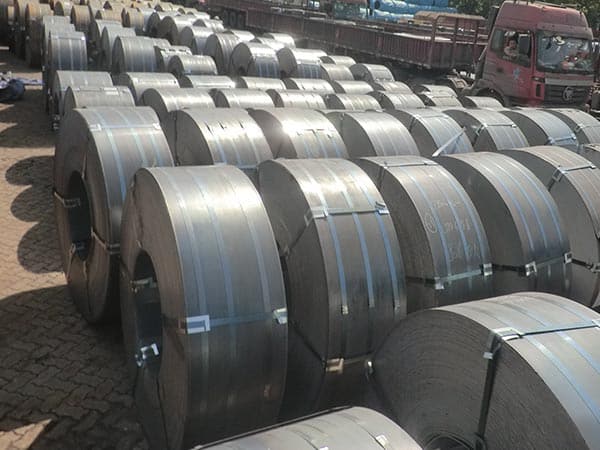
Technical Core of S315MC High-Strength Steel
S315MC belongs to the category of high-yield-strength steels for cold forming, governed by the EN 10149-2 standard. The designation 'S' identifies it as structural steel, while '315' represents the minimum yield strength of 315 MPa. The 'MC' suffix indicates that the material is thermomechanically rolled (M) and specifically designed for cold forming (C). When we discuss a 50mm thick plate variant, we are looking at a specialized heavy-duty product that maintains the fine-grained structure typically associated with thinner strips.
The metallurgical foundation of S315MC relies on a low carbon content combined with micro-alloying elements such as niobium (Nb), vanadium (V), and titanium (Ti). These elements facilitate grain refinement during the thermomechanical rolling process, ensuring that even at a thickness of 50mm, the steel retains excellent toughness and weldability without the need for excessive alloying.
The Value of Hot-Rolled Pickling in Heavy Plates
Pickling is a chemical surface treatment that removes the iron oxide scale formed during the hot-rolling process. For a 50mm thick plate, the pickling process (usually involving hydrochloric acid) offers several distinct advantages over standard black plates:
- Enhanced Surface Quality: The removal of abrasive scale results in a clean, metallic surface, which is essential for precision laser cutting and high-quality painting or coating.
- Extended Tool Life: During subsequent machining or bending, the absence of hard scale reduces wear on tools and dies, significantly lowering maintenance costs.
- Improved Weld Integrity: Welding directly on a pickled surface eliminates the risk of scale inclusions in the weld pool, leading to stronger, more reliable joints.
- Corrosion Protection: Pickled plates are typically oiled to provide a temporary barrier against oxidation during transport and storage.
Mechanical Performance and Chemical Composition
The reliability of S315MC in structural applications is dictated by its precise chemical balance and mechanical consistency. Below is a detailed breakdown of the standard requirements for this grade.
| Element/Property | Specification (Max %) | Mechanical Property | Value |
|---|---|---|---|
| Carbon (C) | 0.12% | Yield Strength (ReH) | min. 315 MPa |
| Manganese (Mn) | 1.30% | Tensile Strength (Rm) | 390 - 510 MPa |
| Silicon (Si) | 0.50% | Elongation (A5) | min. 20% |
| Phosphorus (P) | 0.025% | Bending Radius (180°) | 0.5t (t=thickness) |
| Sulfur (S) | 0.020% | Impact Energy (Charpy V) | -20°C / 40J (Optional) |
For 50mm plates, the cooling rate during production is carefully controlled to ensure that the core of the plate achieves the same fine-grained structure as the surface, preventing internal stresses and ensuring uniform strength throughout the cross-section.
Processing and Fabrication Excellence
One of the primary reasons engineers select S315MC is its superior fabricability. Despite its high strength, it behaves predictably during various manufacturing stages.
Cold Forming and Bending
The 'C' in S315MC signifies its aptitude for cold forming. For a 50mm plate, bending requires high-tonnage hydraulic presses. The fine-grain structure prevents cracking at the outer radius of the bend, provided the minimum bending radius guidelines are followed. This makes it ideal for manufacturing large-scale structural U-beams and chassis components.
Advanced Welding Capabilities
The low carbon equivalent (CEV) of S315MC ensures that it can be welded using all standard methods, including MAG, MIG, and submerged arc welding (SAW). Unlike traditional high-carbon steels, S315MC does not typically require extensive preheating for thicknesses up to 50mm, although a moderate preheat may be used in extremely cold environments to prevent hydrogen-induced cracking.
Laser and Plasma Cutting
The pickled surface of S315MC is particularly beneficial for automated cutting processes. The absence of scale allows for higher cutting speeds and a much cleaner edge finish, which often eliminates the need for secondary grinding before welding or assembly.
Expanding Industrial Applications
The combination of 315 MPa yield strength and a 50mm thickness profile opens doors to demanding engineering environments where weight reduction and structural integrity must be balanced.
- Heavy Machinery Manufacturing: Used in the frames of excavators, cranes, and mining equipment where high load-bearing capacity is mandatory.
- Transportation Infrastructure: Ideal for longitudinal beams in heavy-duty trailers and specialized transport vehicles that endure constant vibration and dynamic loads.
- Renewable Energy: Applied in the base structures of wind turbine components and large-scale solar tracking frames.
- Agricultural Equipment: Essential for high-stress components in large plows and harvesting machinery that operate in abrasive soil conditions.
Environmental Adaptability and Longevity
S315MC demonstrates excellent resilience in diverse climatic conditions. The thermomechanical rolling process imparts a level of low-temperature toughness that is superior to standard hot-rolled structural steels like S235JR. This makes it suitable for equipment operating in northern latitudes or high-altitude environments where brittle fracture is a concern.
Furthermore, the clean surface provided by the pickling process ensures that protective coatings—such as galvanization or high-performance epoxy paints—adhere more effectively. This superior adhesion significantly extends the service life of the steel in corrosive environments, such as coastal regions or industrial zones with high chemical exposure.
Strategic Selection: Why Choose S315MC 50mm Pickled Plate?
Choosing S315MC over traditional mild steels offers a strategic advantage in material efficiency. By utilizing the higher yield strength of S315MC, designers can often reduce the thickness of components without sacrificing safety, leading to lighter structures and lower fuel consumption in mobile machinery. The 50mm thickness variant specifically addresses the needs of the heavy-duty sector where 'standard' strip products fall short in terms of sheer mass and rigidity. When combined with the benefits of a pickled surface, S315MC stands out as a premium choice for modern, high-efficiency manufacturing.
Leave a message