
How to deal with iron oxide residual problem of S460MC hot rolled flat
Comprehensive expert guide on managing iron oxide residuals in S460MC hot rolled flat steel, covering chemical mechanisms, mechanical descaling, and industrial solutions.
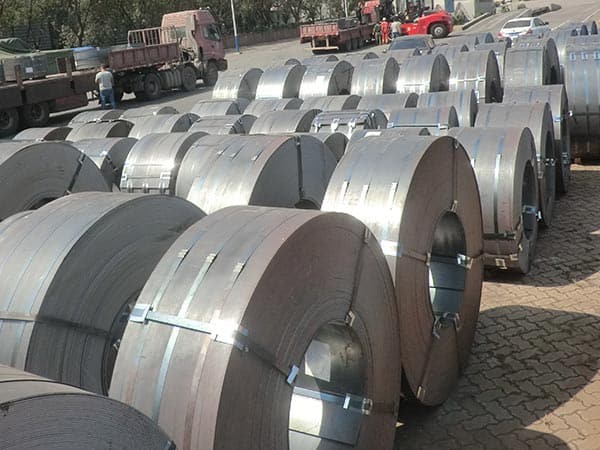
Understanding the Nature of Iron Oxide on S460MC Hot Rolled Flats
S460MC is a high-strength low-alloy (HSLA) steel specifically designed for cold forming, governed by the EN 10149-2 standard. During the thermomechanical rolling process, the interaction between the high-temperature steel surface and atmospheric oxygen leads to the formation of a complex oxide layer, commonly known as scale. For S460MC, this scale layer is not merely a surface aesthetic issue; it significantly impacts the material's performance in downstream manufacturing processes such as laser cutting, welding, and painting.
The scale on S460MC hot rolled flat products typically consists of three distinct layers: wustite (FeO) closest to the substrate, magnetite (Fe3O4) in the middle, and hematite (Fe2O3) on the outer surface. Because S460MC contains specific alloying elements like Niobium (Nb), Vanadium (V), and Titanium (Ti) to achieve its 460 MPa yield strength, the adhesion and composition of this scale can be more tenacious compared to standard carbon steels. Dealing with residuals requires a deep understanding of how these elements influence the interface between the metal and the oxide.
The Impact of Residual Scale on Material Performance
Leaving iron oxide residuals on S460MC can lead to several technical failures. In high-precision industries like automotive chassis manufacturing or heavy machinery, surface integrity is paramount. Residual scale acts as an abrasive, significantly increasing the wear rate of stamping dies and forming tools. Furthermore, during welding, these oxides can become trapped in the weld pool, leading to inclusions, porosity, and reduced fatigue strength of the joint.
From an environmental adaptability perspective, residual scale is non-uniform. It can create micro-galvanic cells on the surface, accelerating localized corrosion (pitting) when exposed to humid environments. For companies applying powder coatings or liquid paints, the presence of loose scale ensures a high probability of delamination, as the coating bonds to the oxide rather than the structural steel itself.
Chemical Composition and Its Role in Scale Adhesion
The chemical makeup of S460MC plays a critical role in how easily scale can be removed. The following table outlines the typical chemical constraints that influence surface characteristics:
| Element | Maximum Content (%) | Effect on Scale/Surface |
|---|---|---|
| Silicon (Si) | 0.50 | Promotes the formation of fayalite (Fe2SiO4), which increases scale tenacity. |
| Manganese (Mn) | 1.60 | Influences the thickness and porosity of the oxide layer. |
| Aluminum (Al) | 0.015 (min) | Refines grain but can form alumina clusters near the surface. |
| Nb + Ti + V | 0.22 | Micro-alloying elements that can slightly alter the oxidation kinetics. |
Higher silicon content, even within the 0.50% limit, can lead to the formation of a "red scale" or a sticky scale layer that is notoriously difficult to remove through hydraulic descaling alone. This necessitates more aggressive post-rolling treatments.
Mechanical Descaling Strategies for S460MC
The first line of defense against iron oxide residuals is High-Pressure Water Descaling during the rolling process. For S460MC, the water pressure must typically exceed 180-200 bar to effectively shatter the primary scale. However, secondary scale forms during cooling on the run-out table. To address this, many processors utilize Shot Blasting.
Shot blasting uses centrifugal wheels to propel steel grit or shot at the surface. For S460MC flats, a Sa 2.5 cleanliness level is often targeted. This process not only removes the oxide but also provides a slight compressive stress to the surface, which can be beneficial for fatigue resistance. The challenge with shot blasting high-strength steel like S460MC is ensuring the abrasive media is hard enough to remove the scale without embedding particles into the relatively ductile surface of the HSLA steel.
Chemical Pickling: The Gold Standard for Surface Purity
For applications requiring a pristine surface, such as high-end laser cutting or electroplating, chemical pickling is the most effective method. This involves immersing the S460MC flat in an acid bath, usually Hydrochloric Acid (HCl), to dissolve the oxide layers.
- Acid Concentration: Maintaining an HCl concentration between 8% and 15% is optimal for S460MC.
- Temperature Control: The bath should be kept between 50°C and 70°C. Excessive heat can lead to "over-pickling," where the acid attacks the grain boundaries of the steel, potentially leading to hydrogen embrittlement.
- Inhibitors: Using high-quality chemical inhibitors is essential to protect the base metal once the scale is dissolved, especially given the fine-grained structure of S460MC.
After pickling, the steel must be thoroughly rinsed and oiled (P&O - Pickled and Oiled) to prevent flash rusting. The resulting surface is smooth, grey, and provides the ideal substrate for subsequent processing.
Optimizing Laser Cutting and Welding of Scaled S460MC
If pickling or shot blasting is not feasible, fabricators must adjust their processes to handle residual scale. When laser cutting S460MC with intact scale, the oxide can interfere with the laser beam's absorption, causing dross and irregular edges. Nitrogen cutting at higher pressures or using specialized "scale-compatible" laser parameters can mitigate these effects.
In welding scenarios, if scale cannot be removed, using a filler wire with higher deoxidizers (such as increased Silicon or Manganese content) can help manage the oxygen introduced by the iron oxide. However, for structural components in the crane or trailer industry, mechanical grinding of the weld zone remains the safest practice to ensure joint integrity.
Advanced Process Control: Preventing Scale at the Source
Modern steel mills are increasingly using Controlled Atmosphere Cooling and Ultra-Fast Cooling (UFC) systems to minimize scale growth. By rapidly dropping the temperature of the S460MC flat through the 900°C to 600°C range, the time available for thick magnetite and hematite layers to grow is drastically reduced. This results in a thinner, more uniform scale that is much easier for the end-user to manage or remove.
Furthermore, the use of "Roughness Control" on the work rolls in the finishing stand can influence how the scale adheres. A specific surface topography can encourage the scale to flake off more easily during the final hydraulic descaling pass.
Industry-Specific Applications and Surface Requirements
The strategy for dealing with iron oxide residuals often depends on the final application of the S460MC steel. Different sectors have varying tolerance levels for surface imperfections:
- Automotive Industry: Requires Pickled and Oiled (P&O) surfaces for complex chassis components to ensure weld consistency and paint adhesion.
- Construction Machinery: Often uses shot-blasted surfaces for crane booms and telescopic arms, where the surface is immediately primed after cleaning.
- Agricultural Equipment: May tolerate some residual scale if the components are heavy-duty and the coating system is robust enough to encapsulate the oxide.
Understanding these requirements allows suppliers to provide S460MC in the most cost-effective surface condition for the specific task at hand.
Storage and Environmental Management
Even after successful scale removal or management, S460MC is susceptible to environmental degradation. Because it is a hot-rolled product, its surface is more reactive than cold-rolled alternatives. Proper storage in climate-controlled warehouses with low humidity is vital. If the steel is stored outdoors, even with a protective oil film, the thermal cycling can cause condensation, leading to "white rust" or under-film corrosion. For long-term storage, VCI (Volatile Corrosion Inhibitor) packaging is recommended for high-value S460MC flat products.
Technical Specifications Summary
To assist engineers in selecting the right treatment, the following table summarizes the mechanical properties of S460MC which must be preserved during any descaling process:
| Property | Value (Typical) | Descaling Precaution |
|---|---|---|
| Yield Strength (ReH) | ≥ 460 MPa | Avoid excessive heat during chemical cleaning. |
| Tensile Strength (Rm) | 520 - 670 MPa | Maintain surface integrity to avoid stress concentrators. |
| Elongation (A5) | ≥ 14% | Ensure no hydrogen embrittlement during pickling. |
| Impact Strength | 40J at -20°C (optional) | Avoid surface notches from aggressive shot blasting. |
By integrating these mechanical considerations with surface treatment protocols, manufacturers can ensure that S460MC hot rolled flats perform to their maximum potential without the interference of iron oxide residuals.
Leave a message