
How to protect the S355MC tensile test from cracking
Comprehensive guide on preventing premature cracking in S355MC steel tensile tests. Explore metallurgical factors, specimen preparation, and testing parameters for accurate results.
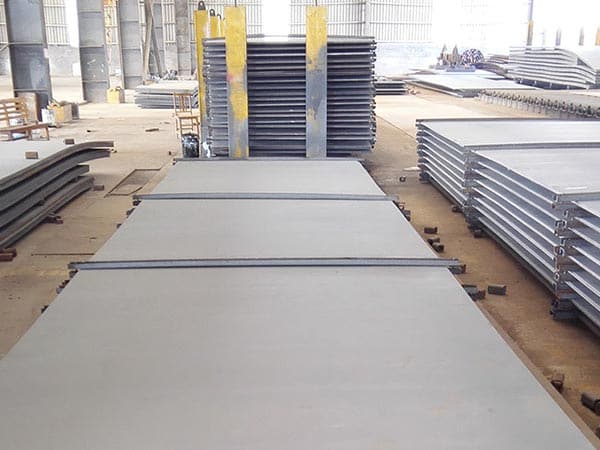
The Metallurgical Foundation of S355MC High-Strength Steel
S355MC is a high-strength, low-alloy (HSLA) steel grade specifically designed for cold forming and thermomechanical rolling processes. Governed by the EN 10149-2 standard, this material is characterized by its refined grain structure and a minimum yield strength of 355 MPa. The 'MC' designation indicates that the steel has undergone thermomechanical rolling (M) and is intended for cold forming (C). This process allows the material to maintain high strength while offering superior ductility compared to traditional structural steels. However, the very properties that make S355MC desirable—its fine-grained ferrite-pearlite or bainitic microstructure—also make it sensitive to specific conditions during mechanical testing. Protecting the S355MC tensile test from cracking requires a deep understanding of its anisotropic behavior and the influence of micro-alloying elements like Niobium (Nb), Vanadium (V), and Titanium (Ti).
Critical Factors Leading to Tensile Cracking in S355MC
Tensile test cracking in S355MC often manifests as premature fracture or edge tearing before the material reaches its theoretical elongation limit. This phenomenon is frequently misunderstood as a material defect, when in reality, it is often a result of specimen preparation or testing environment variables. One of the primary causes is the presence of micro-cracks or work-hardened layers on the edges of the test specimen. S355MC is highly sensitive to edge quality. If the specimen is prepared using mechanical shearing or low-quality plasma cutting without subsequent machining, the heat-affected zone (HAZ) or the strain-hardened edge becomes a site for stress concentration. During the tensile pull, these localized areas of low ductility initiate cracks that propagate rapidly across the gauge length, leading to a false 'brittle' failure profile.
The Role of Chemical Composition and Inclusion Control
The chemical integrity of S355MC is paramount in ensuring consistent tensile performance. The standard mandates strict limits on impurities such as Sulfur (S) and Phosphorus (P), which are known to form non-metallic inclusions. Manganese Sulfide (MnS) inclusions, if elongated during the rolling process, can create planes of weakness that contribute to delamination or cracking during transverse tensile tests. Modern steelmaking for S355MC often employs calcium treatment for inclusion shape control, transforming elongated sulfides into spherical shapes that do not act as stress risers. Understanding the balance of micro-alloying elements is also essential. Niobium, for instance, provides grain refinement that enhances toughness, but excessive amounts can lead to precipitation hardening that reduces local ductility if not managed correctly during the cooling phase of production.
| Element | Max % (EN 10149-2) | Impact on Tensile Testing |
|---|---|---|
| Carbon (C) | 0.12 | Maintains weldability and prevents excessive hardness. |
| Manganese (Mn) | 1.50 | Enhances strength and hardenability. |
| Silicon (Si) | 0.50 | Deoxidizer; contributes to solid solution strengthening. |
| Phosphorus (P) | 0.025 | High levels increase brittleness and cracking risk. |
| Sulfur (S) | 0.020 | Key factor in inclusion-induced cracking. |
| Aluminium (Al) | 0.015 | Grain refinement; binds nitrogen. |
Specimen Preparation: The Gold Standard for S355MC
To protect the S355MC tensile test from cracking, the preparation of the specimen must be executed with precision. Standard ISO 6892-1 provides the framework, but for HSLA steels, additional care is required. CNC milling is the preferred method for shaping the gauge length. Unlike shearing, milling removes the cold-worked layer and provides a smooth surface finish (Ra < 0.8 µm) that eliminates potential crack initiation sites. If laser cutting is used, at least 2-3mm of material must be removed from the cut edge through grinding or milling to eliminate the hardened edge. Furthermore, the transition radius between the parallel length and the gripped ends must be generous. A sharp transition creates a notch effect, which is particularly dangerous for S355MC due to its high yield-to-tensile ratio, often leading to failure outside the gauge marks.
Optimizing Testing Parameters and Equipment Alignment
The mechanics of the tensile testing machine itself play a significant role in preventing cracking. Misalignment of the grips is a common yet overlooked cause of premature failure. If the upper and lower grips are not perfectly coaxial, the specimen is subjected to bending moments in addition to axial tension. For a high-strength material like S355MC, this parasitic bending induces high stress on one side of the specimen, causing a crack to initiate at the edge. Regular calibration using a strain-gauged alignment cell is recommended. Additionally, the strain rate must be controlled. S355MC exhibits strain-rate sensitivity. Testing at excessively high speeds can lead to localized heating and adiabatic shear banding, which promotes cracking. Following ISO 6892-1 Method A (strain rate control) rather than Method B (stress rate control) provides more stable results for these high-performance grades.
Environmental and Surface Integrity Considerations
Surface integrity extends beyond the edges of the specimen. Any surface defects, such as heavy scale, pits, or scratches from handling, can act as stress concentrators. For S355MC, which is often used in the as-rolled condition, ensuring that the surface is free from decarburization is vital. A decarburized layer has lower strength than the core, leading to uneven strain distribution during the test. Furthermore, the temperature of the testing environment should be stabilized. While S355MC has good low-temperature toughness, testing in extremely cold environments can shift the material toward its ductile-to-brittle transition zone, increasing the likelihood of cleavage-type cracking. Maintaining a standard laboratory temperature of 23°C ± 5°C ensures that the ductility measured is representative of the material's true potential.
Interpreting Results and Identifying Failure Modes
When a crack does occur, a forensic approach to the fracture surface can provide insights into the prevention strategy. A healthy S355MC tensile failure should exhibit a classic 'cup and cone' geometry, indicating significant plastic deformation and necking. If the fracture is flat and perpendicular to the loading axis with little necking, it suggests brittle failure potentially caused by hydrogen embrittlement or extreme inclusion density. If the crack starts at a corner and moves diagonally, it is almost certainly an edge preparation issue. By analyzing these failure modes, engineers can adjust the production or testing parameters. For instance, if delamination is observed, it may indicate that the rolling reduction ratio or the finishing temperature during thermomechanical processing needs optimization to improve the mid-thickness toughness of the plate.
Advanced Applications and the Necessity of Accurate Testing
The demand for S355MC is growing in industries such as automotive chassis manufacturing, heavy machinery, and crane construction, where weight reduction and structural integrity are critical. In these applications, the material is often subjected to complex stress states and dynamic loading. An inaccurate tensile test that shows premature cracking can lead to the rejection of perfectly good material or, worse, the use of material that does not meet the safety factors required for structural components. Protecting the tensile test from cracking is not just about passing a laboratory requirement; it is about validating the safety and reliability of the final product. By implementing rigorous specimen preparation, ensuring machine alignment, and understanding the metallurgical nuances of HSLA steels, manufacturers can guarantee that S355MC performs to its full engineering potential, supporting the transition toward lighter and stronger industrial designs.
Leave a message