
How to optimize quality of ZQS700L automobile structure steel plate
Explore professional strategies to optimize ZQS700L automobile structural steel plate quality, focusing on chemical composition, mechanical properties, and processing techniques.
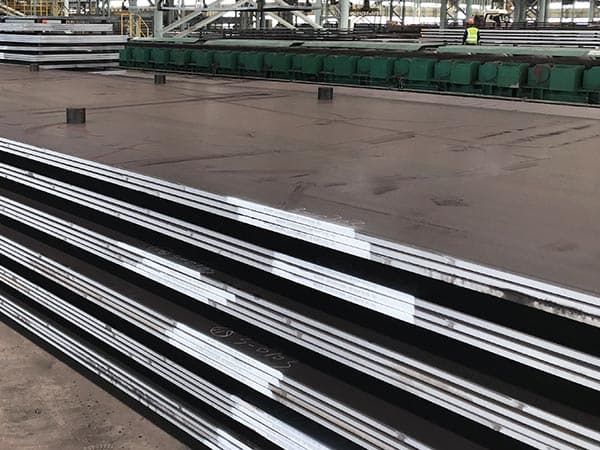
The Evolution of ZQS700L in Modern Automotive Engineering
The automotive industry is undergoing a radical transformation driven by the dual demands of fuel efficiency and enhanced passenger safety. ZQS700L automobile structure steel plate has emerged as a critical material in this landscape. As a high-strength low-alloy (HSLA) steel produced through the Thermo-Mechanical Controlled Process (TMCP), ZQS700L offers a unique combination of high yield strength, excellent formability, and superior weldability. Optimizing its quality requires a deep understanding of its metallurgical foundation and the precise control of manufacturing variables.
Achieving the 700MPa yield strength threshold while maintaining ductility is not merely a matter of chemistry; it is an orchestration of microstructural engineering. Manufacturers and engineers must focus on grain refinement and precipitation hardening to ensure the material performs reliably under the dynamic loads of vehicle operation. The optimization process spans from the initial melting stage to the final surface treatment, ensuring that every square millimeter of the plate meets the rigorous standards of the global automotive supply chain.
Chemical Composition Optimization and Micro-Alloying Strategies
The core of ZQS700L quality lies in its chemical recipe. Unlike traditional carbon steels, ZQS700L relies on a low-carbon design to enhance weldability and toughness. The optimization of its chemical composition focuses on the synergistic effects of micro-alloying elements such as Niobium (Nb), Vanadium (V), and Titanium (Ti).
- Carbon Content Control: Keeping carbon levels typically below 0.10% ensures that the steel maintains a low carbon equivalent (Ceq), which is vital for preventing cold cracking during welding and improving the Heat Affected Zone (HAZ) toughness.
- Niobium and Titanium Synergy: Niobium is instrumental in raising the recrystallization temperature, allowing for effective grain refinement during the rolling process. Titanium, on the other hand, forms stable nitrides that prevent grain growth during high-temperature reheating phases.
- Manganese and Silicon Balance: Manganese provides solid solution strengthening, while Silicon helps in deoxidation and improves the strength-ductility balance without significantly compromising the surface quality during pickling.
| Element | Optimized Range (%) | Primary Function |
|---|---|---|
| Carbon (C) | 0.06 - 0.10 | Strength and Weldability Balance |
| Manganese (Mn) | 1.50 - 1.80 | Solid Solution Strengthening |
| Niobium (Nb) | 0.04 - 0.06 | Grain Refinement |
| Titanium (Ti) | 0.01 - 0.03 | Nitride Formation / Grain Stability |
| Sulfur (S) | ≤ 0.005 | Inclusion Control / Ductility |
Precision in TMCP: The Key to Microstructural Integrity
The Thermo-Mechanical Controlled Process (TMCP) is the defining manufacturing stage for ZQS700L. Optimization here involves the meticulous control of the slab reheating temperature, the rolling reduction ratios in the non-recrystallization zone, and the ultra-fast cooling rates. The goal is to produce a fine-grained ferrite and pearlite (or bainite) microstructure that maximizes strength without the brittleness associated with traditional quenching.
Rolling Temperature Control: The finish rolling temperature must be strictly maintained within the dual-phase region or just above the Ar3 temperature. This ensures that the austenite grains are flattened and contain a high density of deformation bands, which act as nucleation sites for fine ferrite grains during cooling. Cooling Rate Optimization: Implementing laminar cooling or accelerated cooling immediately after the final pass prevents grain coarsening. A cooling rate of 20-50°C/s is often targeted to achieve the desired phase transformation, ensuring the ZQS700L plate reaches its 700MPa yield strength consistently across the entire width and length.
Mechanical Performance and Formability Enhancement
For automotive manufacturers, the mechanical properties of ZQS700L must be predictable. Optimization focuses on minimizing the yield strength spread and maximizing the hole expansion ratio (λ), which is a critical indicator of the steel's ability to withstand edge stretching during complex stamping operations.
The Yield-to-Tensile Ratio is another vital metric. A lower ratio generally indicates better work-hardening capability, which is beneficial for energy absorption during a collision. However, for structural components like chassis frames, a higher yield strength is prioritized to prevent permanent deformation under load. Quality optimization involves balancing these conflicting requirements through precise alloying and cooling strategies. Furthermore, the inclusion of Calcium treatment (Ca-treatment) for sulfide shape control is essential. By transforming elongated MnS inclusions into spherical CaS particles, the transverse toughness and bending performance are significantly improved, reducing the risk of cracking during tight-radius bending.
Welding Performance: Maintaining Structural Integrity
ZQS700L is frequently used in welded assemblies. The optimization of its welding performance centers on maintaining the strength of the joint while ensuring the HAZ does not become excessively brittle or soft. Due to the low carbon equivalent of ZQS700L, it exhibits excellent resistance to cold cracking, often eliminating the need for preheating.
However, high heat input during welding can lead to grain coarsening in the HAZ, resulting in a localized drop in hardness and toughness. To optimize this, welding parameters such as current, voltage, and travel speed must be calibrated to minimize heat input. The use of matched strength welding consumables is critical. Advanced techniques like Laser-Arc Hybrid Welding are increasingly being adopted for ZQS700L components to achieve deeper penetration with minimal thermal distortion, thereby preserving the high-strength properties of the base metal.
Environmental Adaptation and Fatigue Resistance
Automotive structural components are exposed to harsh environments, including road salts, moisture, and cyclic loading. Optimizing ZQS700L involves enhancing its atmospheric corrosion resistance and fatigue life. The fine-grained structure inherently provides better fatigue resistance than coarser-grained steels because it hinders the initiation and propagation of micro-cracks.
Surface Quality Management: The presence of scale or surface decarburization can severely degrade fatigue performance. Optimization includes high-pressure descaling during rolling and controlled atmosphere annealing if secondary heat treatment is required. For components exposed to corrosive environments, ZQS700L is often used in conjunction with advanced coating systems (such as electro-galvanizing or hot-dip galvanizing). The steel's chemistry must be compatible with these coating processes to ensure strong adhesion and prevent issues like hydrogen embrittlement during the pickling or plating stages.
Expanding Applications: From Heavy Trucks to Electric Vehicles
The application of ZQS700L is no longer limited to simple longitudinal beams. Its superior strength-to-weight ratio makes it an ideal candidate for a variety of demanding roles. In the heavy truck sector, it is used for cross-members, bumper reinforcements, and crane arms, where reducing the dead weight directly translates to increased payload capacity.
In the burgeoning Electric Vehicle (EV) sector, ZQS700L is finding new roles in battery pack enclosures and sub-frames. The need to protect heavy battery modules while offsetting their weight makes 700MPa structural steel a cost-effective alternative to aluminum. By optimizing the design through CAD/CAE simulations, engineers can utilize thinner ZQS700L plates to achieve the same structural rigidity as thicker, lower-grade steels, contributing significantly to the overall vehicle range and safety performance.
Future-Proofing ZQS700L Production
The future of ZQS700L quality optimization lies in digitalization and Smart Manufacturing. Integrating real-time monitoring systems on the rolling mill allows for the immediate adjustment of parameters based on the specific chemistry of each heat. Artificial Intelligence (AI) models can predict the final mechanical properties based on the rolling and cooling history, allowing for non-destructive quality assurance.
Furthermore, the industry is moving towards "Green Steel." Optimizing ZQS700L now involves reducing the carbon footprint of its production. Utilizing Electric Arc Furnaces (EAF) powered by renewable energy and increasing the scrap steel ratio in the charge are becoming essential components of quality, as "quality" now encompasses environmental sustainability. As standards evolve, ZQS700L will continue to be refined, ensuring it remains at the forefront of automotive structural materials, providing the strength, safety, and efficiency required for the next generation of mobility.
Leave a message