
What are the precautions for use of S700MC automobile structure steel coil
A comprehensive guide for engineers and manufacturers on the technical precautions, processing requirements, and metallurgical properties of S700MC high-strength steel coils for automotive structures.
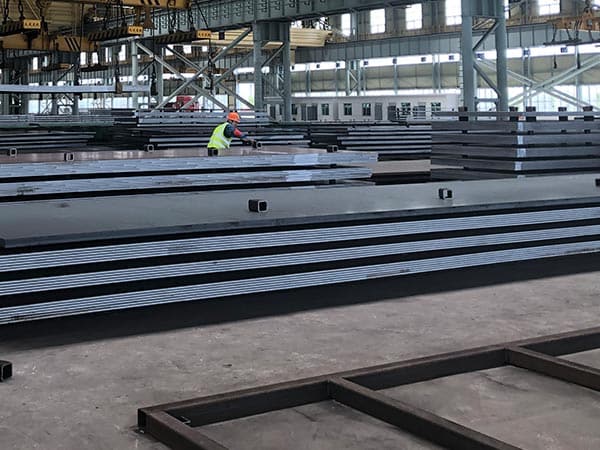
The Metallurgical Foundation of S700MC High-Strength Steel
S700MC is a high-strength, thermomechanically rolled (TMCP) steel specifically designed for cold forming. According to the EN 10149-2 standard, the 'S' stands for structural steel, '700' represents the minimum yield strength of 700 MPa, and 'MC' indicates a thermomechanically rolled material suitable for cold forming. The unique microstructure of S700MC is achieved through a combination of controlled rolling and accelerated cooling, which results in an extremely fine-grained ferrite-pearlite or bainitic structure. This fine grain size is the primary reason for its high strength and excellent toughness at low temperatures. When utilizing S700MC in automotive structures, it is imperative to understand that its properties are derived from this specific thermal-mechanical history. Any subsequent processing that involves high heat can potentially alter this microstructure, leading to a significant loss in mechanical integrity. Manufacturers must prioritize maintaining the grain refinement achieved during the steelmaking process to ensure the final component meets safety and performance standards.
Critical Precautions in Cold Forming and Bending
One of the most significant advantages of S700MC is its cold-forming capability despite its high yield strength. However, this high strength necessitates specific precautions to avoid cracking and springback issues. The minimum bending radius is a critical parameter that must be strictly followed. For S700MC, the minimum bending radius is generally larger than that of lower-strength steels like S355MC. If the radius is too small, the outer fibers of the bend will exceed the material's ductility limits, resulting in micro-cracks that may not be visible to the naked eye but will act as stress concentrators during the vehicle's service life.
Furthermore, springback is a major concern when working with 700 MPa yield strength materials. Because the elastic modulus of S700MC is similar to that of standard carbon steel, but its yield strength is much higher, the ratio of elastic strain to total strain is significantly greater. This means that after the forming pressure is released, the material will attempt to return to its original shape more aggressively than lower-strength grades. Precision tooling and advanced CNC press brakes with springback compensation systems are essential. Engineers should also consider the rolling direction; S700MC exhibits slight anisotropy, meaning its bending performance is typically better when the bend axis is perpendicular to the rolling direction. If longitudinal bending is unavoidable, the bending radius should be increased to compensate for the reduced ductility in that orientation.
| Nominal Thickness (mm) | Min. Bending Radius (90° Bend) | Springback Estimation (Degrees) |
|---|---|---|
| t ≤ 3 | 1.0t | 5° - 8° |
| 3 < t ≤ 6 | 1.5t | 8° - 12° |
| t > 6 | 2.0t | 12° - 15° |
Welding Precautions: Protecting the Heat-Affected Zone (HAZ)
Welding S700MC requires a sophisticated approach to heat management. Because the strength of S700MC is derived from thermomechanical rolling and micro-alloying (typically with Niobium, Vanadium, and Titanium), the Heat-Affected Zone (HAZ) is particularly sensitive to thermal cycles. Excessive heat input can lead to grain coarsening in the HAZ, which significantly reduces the yield strength and toughness of the joint. This phenomenon, often referred to as 'softening,' can result in the weld area becoming the weakest point of the structural assembly.
To mitigate this risk, low heat input welding techniques such as MAG (Metal Active Gas) or laser welding are preferred. The cooling rate (t8/5 time) must be carefully controlled. If the cooling is too slow, the grains coarsen; if it is too fast, there is a risk of hydrogen-induced cracking, although S700MC has a very low carbon equivalent (CEV), which inherently improves its weldability. It is highly recommended to use filler materials that match the strength of the base metal, but in some cases, slightly under-matched filler metals are used to increase the ductility of the weld seam, provided the design allows for it. Preheating is generally not required for S700MC unless the ambient temperature is below 5°C or the plate thickness is exceptionally high, as preheating increases the total heat input and risks softening the material.
- Limit Heat Input: Keep heat input between 0.5 and 1.5 kJ/mm to maintain grain structure.
- Interpass Temperature: Ensure the interpass temperature does not exceed 150°C to prevent cumulative heat buildup.
- Hydrogen Control: Use low-hydrogen consumables to eliminate the risk of delayed cracking.
- Edge Preparation: Clean the welding edges thoroughly to remove oil, rust, or scale, which can cause porosity.
Cutting and Edge Quality Management
The method used to cut S700MC coils into blanks can influence the subsequent forming and fatigue life of the part. Thermal cutting methods, such as plasma or laser cutting, introduce a small heat-affected zone along the edge. For S700MC, laser cutting is the superior choice due to its concentrated heat and narrow HAZ. If plasma cutting is used, it is vital to ensure the cutting speed is optimized to minimize the duration of heat exposure. Mechanical shearing is also common, but it can cause work hardening at the edge. For components subject to high dynamic loads, such as truck chassis rails, the sheared edges should be ground or deburred to remove micro-fissures and work-hardened layers that could initiate fatigue cracks.
Environmental Adaptation and Surface Protection
While S700MC provides exceptional mechanical performance, its corrosion resistance is similar to that of standard carbon steel. In the automotive industry, where exposure to road salt, moisture, and varying temperatures is constant, surface protection is non-negotiable. S700MC coils are often supplied in a pickled and oiled state to prevent oxidation during transport and storage. However, during the manufacturing process, this oil must be removed before welding or painting. For long-term durability, S700MC structures are typically treated with E-coating (electrophoretic deposition) or hot-dip galvanizing. If hot-dip galvanizing is chosen, engineers must be aware of the potential for liquid metal embrittlement or distortion due to the high temperature of the zinc bath. The chemical composition of S700MC, particularly the silicon and phosphorus content, should be checked against the Sandelin curve to ensure a high-quality galvanized finish.
Strategic Implementation in Vehicle Lightweighting
The adoption of S700MC is a strategic move for manufacturers aiming to reduce vehicle weight without compromising structural safety. By replacing thicker sections of S355MC with thinner S700MC, a weight reduction of up to 30% can be achieved in specific components like cross members, longitudinal beams, and crane booms. This weight saving translates directly into increased payload capacity and improved fuel efficiency. However, the transition to S700MC requires a holistic redesign of the component. Simply reducing the thickness may lead to issues with global or local buckling, as the stiffness (determined by the Young's Modulus) remains unchanged despite the higher strength. Incorporating stiffening ribs or altering the geometry of the section is often necessary to fully exploit the high-strength properties of S700MC.
Storage and Handling Protocols
Proper handling of S700MC coils is essential to maintain their premium quality. These coils should be stored in a dry, temperature-controlled environment to prevent 'white rust' or oxidation. Due to the high tension within the coils, specialized handling equipment should be used to avoid edge damage. Any physical dent or scratch on the surface of an S700MC coil can act as a stress riser during the cold-forming process, leading to premature failure. Furthermore, when uncoiling and leveling, the leveling machine must have sufficient power and a specific roll configuration to handle the high yield strength of the material, ensuring the flat sheets are free from residual stresses that could cause distortion after cutting.
Applying S700MC effectively requires a deep understanding of the synergy between metallurgy and manufacturing. By strictly adhering to the precautions regarding heat input, bending radii, and edge preparation, manufacturers can produce robust, lightweight automotive structures that meet the rigorous demands of modern transportation. The technical integrity of the final product depends on respecting the delicate balance of micro-alloying and thermomechanical processing that gives S700MC its world-class performance characteristics.
Leave a message