
What are the suppliers of B750L structure steel for cold forming in Austria?
Explore the technical specifications, mechanical properties, and top suppliers of B750L structural steel for cold forming in Austria. Learn about its applications and procurement strategies.
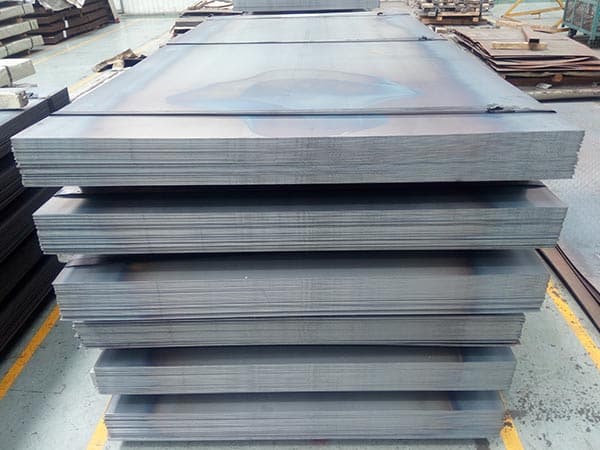
The Technical Essence of B750L High-Strength Structural Steel
B750L is a high-strength, low-alloy (HSLA) structural steel specifically engineered for cold forming applications. Its designation reflects a minimum yield strength of 750 MPa, making it a critical material for industries where weight reduction and structural integrity are paramount. While the 'B' prefix often originates from specific manufacturer standards (such as Baosteel), its performance characteristics align closely with European standards like EN 10149-2, specifically the S700MC or S750MC grades. In the context of the Austrian industrial landscape, which is heavily oriented toward high-end automotive engineering and heavy machinery, B750L serves as a cornerstone for lightweighting strategies.
The micro-alloying process used to create B750L involves the precise addition of elements like niobium (Nb), vanadium (V), and titanium (Ti). These elements facilitate grain refinement, which is the primary mechanism for achieving high strength without sacrificing toughness or weldability. For engineers in Austria, understanding the metallurgical nuances of B750L is essential for optimizing the cold forming process, as the material's behavior during deformation is significantly different from conventional mild steels.
Mechanical Properties and Performance Benchmarks
The mechanical profile of B750L is defined by its exceptional yield-to-tensile ratio. This allows for the design of components that can withstand high stress while remaining relatively thin. Below is a detailed breakdown of the typical mechanical properties associated with this grade:
| Property | Value (Typical) | Unit |
|---|---|---|
| Yield Strength (Re) | ≥ 750 | MPa |
| Tensile Strength (Rm) | 800 - 950 | MPa |
| Elongation (A80mm) | ≥ 10 | % |
| Bending Radius (180°) | ≥ 2.0t (t=thickness) | mm |
The ductility of B750L, despite its high strength, is its most valuable asset. The elongation values ensure that the steel can undergo complex cold forming operations, such as deep drawing or tight-radius bending, without developing micro-cracks. This is particularly relevant for Austrian manufacturers of commercial vehicle frames and agricultural equipment, where durability under cyclic loading is non-negotiable.
Cold Forming Capabilities and Process Optimization
Cold forming B750L requires a deep understanding of springback and tool wear. Because of the high yield strength, the material exhibits significant elastic recovery after the forming load is removed. Engineers must compensate for this in the die design. Furthermore, the high contact pressure between the sheet and the tool necessitates the use of advanced lubricants and hardened tool steels to prevent galling.
- Bending Precision: Achieving a tight bend radius requires consistent material thickness and uniform grain structure. B750L excels here due to its thermomechanically rolled production process.
- Hole Expansion: The edge ductility of B750L is superior to many other high-strength grades, allowing for punched holes to be expanded or flanged without edge splitting.
- Surface Quality: Typically supplied in a pickled and oiled or cold-rolled state, the surface is optimized for subsequent coating processes like galvanizing or KTL (cathodic dip painting).
In Austria's precision-driven manufacturing sector, the ability to maintain tight tolerances with B750L is a competitive advantage. The material's predictable deformation behavior allows for highly automated production lines with minimal scrap rates.
Top Suppliers and Distribution Networks in Austria
Austria is home to some of the world's most advanced steel producers and distributors. When sourcing B750L or its direct equivalents, several key players dominate the market. While B750L is a specific grade often associated with Asian mills, the Austrian market primarily accesses this performance class through local production and specialized steel service centers.
1. voestalpine AG: Headquartered in Linz, voestalpine is the premier supplier of high-strength steels in Central Europe. Their alform® series includes grades that meet and exceed the specifications of B750L. Their S700MC and S900MC products are the industry standard for cold forming in the region, offering localized technical support and rapid delivery.
2. ThyssenKrupp Materials Austria: As a major international distributor, ThyssenKrupp provides a bridge between global production and local demand. They often stock high-strength grades that are interchangeable with B750L, catering to the automotive and mechanical engineering sectors in Vienna, Graz, and beyond.
3. Klöckner & Co SE: With a strong presence in the Austrian market, Klöckner offers extensive processing services, including decoiling and slitting of high-strength structural steels. They are a reliable source for manufacturers who require B750L-equivalent materials in specific dimensions.
4. Specialized Steel Service Centers: Numerous smaller, specialized distributors across Austria (such as those in the Steiermark region) focus on the automotive supply chain. These entities often provide just-in-time delivery of B750L-equivalent sheets and coils, pre-processed to the customer's exact requirements.
Environmental Adaptability and Sustainability
The shift toward green steel is particularly pronounced in Austria. Suppliers like voestalpine are leading the way with carbon-reduced production methods. B750L contributes to environmental goals through 'lightweighting.' By using thinner, stronger steel, manufacturers can reduce the overall weight of vehicles and structures, leading to lower fuel consumption and reduced CO2 emissions during the product's lifecycle.
Moreover, B750L is fully recyclable. The alloying elements, while providing strength, do not interfere with the steel's ability to be melted down and repurposed into new high-quality products. This circularity is a key requirement for Austrian companies adhering to strict ESG (Environmental, Social, and Governance) criteria.
Application Sectors for B750L in the Austrian Economy
The demand for B750L in Austria is driven by several high-tech industries. The material's versatility makes it suitable for a wide range of demanding environments:
- Automotive Chassis Components: Used for longitudinal beams, cross members, and reinforcement parts where high energy absorption and low weight are required.
- Heavy Machinery and Cranes: The high yield strength allows for the construction of lighter crane arms and telescopic booms, increasing lifting capacity and reach.
- Agricultural Technology: Soil cultivation equipment and trailer frames benefit from the wear resistance and structural strength of B750L, especially in the rugged Alpine terrain.
- Renewable Energy: Structural components for solar tracking systems and wind turbine internals utilize high-strength cold-forming steel to ensure long-term stability against wind loads.
Procurement Strategies for Austrian Manufacturers
When purchasing B750L or its equivalents in Austria, it is vital to verify the certification. Most reputable suppliers will provide an EN 10204 3.1 inspection certificate, detailing the chemical heat analysis and mechanical test results. Given the high-stress applications of this steel, traceability is paramount.
Another consideration is the lead time. While local stockists may have standard thicknesses available, custom dimensions or specific surface treatments might require direct mill orders. Partnering with a supplier that offers technical consulting can also help in selecting the most cost-effective equivalent grade that meets the specific cold forming requirements of the project. Austria's robust logistics network ensures that even if a specific grade like B750L is sourced internationally, it can be efficiently integrated into local production schedules.
Comparative Analysis: B750L vs. S700MC
Many procurement officers in Austria encounter the question of whether to stick with the B750L designation or switch to the more common European S700MC. The following table highlights the subtle differences and areas of overlap:
| Feature | B750L (Typical) | S700MC (EN 10149-2) |
|---|---|---|
| Standardization | Manufacturer/GB-based | European Standard |
| Yield Strength | ≥ 750 MPa | ≥ 700 MPa |
| Cold Formability | Excellent | Excellent |
| Weldability | High (Low CEV) | High (Low CEV) |
| Availability in AT | Import/Special Order | Widely Available |
While B750L offers a slightly higher yield floor, S700MC is often preferred in the Austrian market due to its alignment with local building codes and automotive standards. However, for global projects or specific OEM requirements, B750L remains a highly sought-after specification.
Future Trends in High-Strength Cold Forming Steels
The evolution of structural steel is moving toward even higher strengths, such as 900 MPa and 1100 MPa, while maintaining the cold forming properties of B750L. Austrian research institutions and steel producers are at the forefront of this development, experimenting with new cooling techniques and alloying strategies to push the boundaries of what is possible in cold forming. As the industry moves toward more complex geometries and even stricter weight targets, B750L serves as the reliable foundation upon which these future innovations are built.
Leave a message