
Alloy steel S355MC hot-rolled steel to manufacture steel pipes
A comprehensive guide to S355MC hot-rolled steel for pipe manufacturing. Explore its micro-alloyed composition, mechanical properties, and processing advantages for industrial applications.
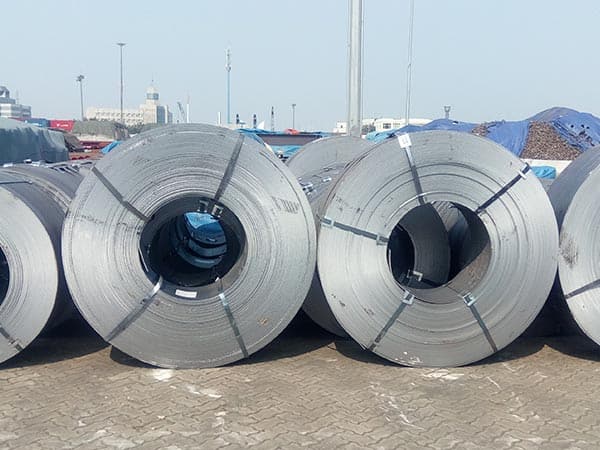
The Evolution of S355MC in Modern Pipe Manufacturing
The global demand for high-strength, lightweight materials has transformed the landscape of industrial steel production. S355MC hot-rolled steel, governed by the EN 10149-2 standard, stands as a pinnacle of High-Strength Low-Alloy (HSLA) technology. Unlike traditional structural steels, S355MC is produced through a meticulous thermomechanical rolling process. This method allows manufacturers to achieve a minimum yield strength of 355 MPa while maintaining exceptional ductility. For pipe manufacturers, this balance is critical. It enables the creation of thinner-walled pipes that do not compromise on structural integrity, effectively reducing the overall weight of the final assembly and lowering logistics costs.
Metallurgical Excellence: The Power of Micro-Alloying
The secret to the superior performance of S355MC lies in its chemical composition. By incorporating precise amounts of micro-alloying elements such as Niobium (Nb), Vanadium (V), and Titanium (Ti), the steel achieves a fine-grained microstructure. These elements act as grain refiners during the cooling process, preventing grain growth and enhancing the toughness of the material. This refined structure is what allows S355MC to outperform standard carbon steels in both strength and impact resistance. The low carbon content (typically below 0.12%) is equally important, as it ensures that the steel remains highly weldable and resistant to cold cracking, a common issue in higher-strength materials.
| Element | Max Content (%) | Function in S355MC |
|---|---|---|
| Carbon (C) | 0.12 | Ensures weldability and prevents brittleness. |
| Manganese (Mn) | 1.50 | Increases hardness and tensile strength. |
| Silicon (Si) | 0.50 | Acts as a deoxidizer and strengthens the ferrite. |
| Niobium (Nb) | 0.09 | Refines grain size and improves yield strength. |
| Titanium (Ti) | 0.15 | Provides high-temperature stability during welding. |
Mechanical Properties and Structural Reliability
When manufacturing steel pipes, the mechanical consistency of the raw material is paramount. S355MC provides a reliable yield point that is essential for calculating load-bearing capacities in engineering designs. The tensile strength typically ranges between 430 and 550 MPa, providing a safety margin that is necessary for high-pressure or high-stress environments. Furthermore, the elongation properties (minimum 19% for thicknesses under 3mm) ensure that the material can undergo significant deformation before failure. This property is particularly beneficial for pipes that must endure seismic activity or dynamic loads in heavy machinery.
- Yield Strength: Minimum 355 MPa for optimal load distribution.
- Tensile Strength: 430-550 MPa for structural safety.
- Impact Toughness: Excellent performance even at low temperatures.
- Ductility: High elongation allows for complex forming operations.
Advanced Processing: From Coil to High-Precision Pipe
The transition from a hot-rolled S355MC coil to a finished steel pipe involves several high-precision steps. Because S355MC is designed for cold forming, it is exceptionally well-suited for longitudinal welding processes, such as Electric Resistance Welding (ERW). The material’s consistent thickness and surface quality minimize wear on the forming rollers, extending the life of the manufacturing equipment. During the welding phase, the low carbon equivalent (CEV) of S355MC ensures that the Heat Affected Zone (HAZ) retains its mechanical properties, preventing the formation of brittle phases that could lead to pipe failure under pressure.
Weldability and Joint Integrity
Weldability is often the deciding factor when selecting a steel grade for pipe manufacturing. S355MC excels here due to its low impurity levels (Sulfur and Phosphorus are kept to a minimum). This results in a clean weld pool and a robust joint. Whether using MIG, TIG, or submerged arc welding, S355MC responds predictably, requiring little to no preheating in most standard thicknesses. This efficiency speeds up production lines and reduces energy consumption, making it a cost-effective choice for large-scale infrastructure projects.
Environmental Adaptation and Fatigue Resistance
Pipes manufactured from S355MC are frequently used in harsh environments, from offshore platforms to underground utility networks. The thermomechanical treatment provides a level of fatigue resistance that is superior to standard hot-rolled plates. This means that under cyclic loading—such as the pulsing pressure in a hydraulic system or the vibrations of a bridge—S355MC pipes maintain their integrity longer. Additionally, the fine-grain structure offers better resistance to atmospheric corrosion compared to coarser-grained steels, although protective coatings are still recommended for extreme conditions.
Broadening Industry Horizons
The versatility of S355MC pipes extends across various sectors. In the automotive industry, these pipes are used for chassis components and roll cages where weight reduction is vital for fuel efficiency. In the construction sector, they form the backbone of telescopic cranes and heavy-duty scaffolding. The agricultural sector utilizes S355MC for irrigation systems and machinery frames that must withstand both mechanical stress and environmental exposure. The ability to down-gauge (use thinner material for the same strength) makes S355MC an environmentally conscious choice, as it reduces the total amount of steel required for a project.
Optimizing Production with S355MC
Utilizing S355MC hot-rolled steel is not just a technical choice; it is a strategic business decision. The material’s high yield-to-tensile ratio allows for tighter bending radii during the pipe-making process without the risk of cracking. This flexibility opens up new design possibilities for engineers who need to navigate complex spatial constraints. Moreover, the surface finish of S355MC is typically smoother than that of traditional s355jr, which simplifies the application of galvanization or powder coating, ensuring a high-quality aesthetic and functional finish.
| Feature | S355MC (HSLA) | S355JR (Structural) |
|---|---|---|
| Processing | Thermomechanically Rolled | As Rolled / Normalized | Excellent (Designed for it) | Limited |
| Weight Saving | High (Thinner walls possible) | Moderate |
| Grain Structure | Fine-grained | Coarse to Medium |
The shift toward S355MC in the pipe manufacturing industry reflects a broader move toward efficiency and performance. By understanding the intricate relationship between its micro-alloyed chemistry and its mechanical output, manufacturers can produce pipes that meet the most stringent safety and durability standards. As engineering challenges become more complex, the role of specialized materials like S355MC will only continue to grow, providing the strength needed to build the infrastructure of tomorrow.
Leave a message