
How strong is S500MC thermomechanically rolled steels?
Discover the technical strength and mechanical advantages of S500MC thermomechanically rolled steel. This guide covers its yield strength, weldability, and industrial applications.
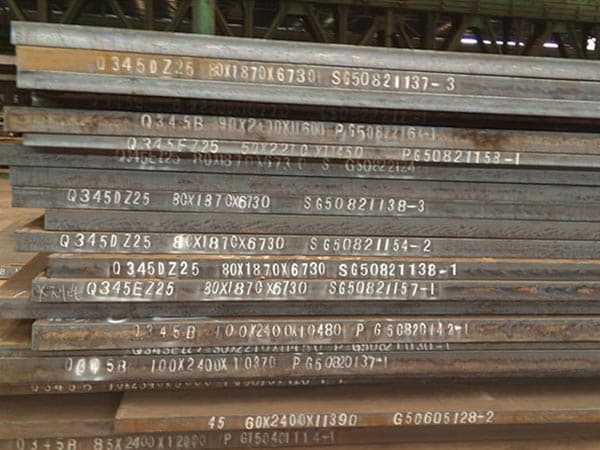
The Essence of Strength in S500MC Thermomechanically Rolled Steels
When discussing high-performance structural materials, S500MC stands out as a benchmark for high-strength low-alloy (HSLA) steels. This grade, defined by the EN 10149-2 standard, is not merely a piece of metal but a product of sophisticated metallurgical engineering. The "S" denotes structural steel, while "500" represents its minimum yield strength of 500 MPa. The "MC" suffix indicates that the steel is thermomechanically rolled (M) and possesses high cold-forming capacity (C). This combination of properties makes it a preferred choice for industries demanding weight reduction without compromising structural integrity.
Understanding the TMCP Process and Grain Refinement
The strength of S500MC is fundamentally derived from the Thermomechanically Controlled Processing (TMCP). Unlike traditional normalized rolling, TMCP involves precise control over the temperature and deformation during the rolling process, followed by accelerated cooling. This technique allows for the creation of a fine-grained microstructure, typically consisting of ferrite and pearlite, or sometimes bainite. By refining the grain size, the steel achieves higher yield strength and toughness simultaneously, a feat difficult to reach through alloying alone. The fine grain structure acts as a barrier to dislocation movement, which is the primary mechanism behind its superior mechanical resistance.
Mechanical Properties and Load-Bearing Capacity
The core question of "how strong" S500MC is can be answered through its impressive mechanical profile. With a minimum yield strength of 500 MPa, it offers nearly 40% more load-bearing capacity than standard S355 structural steel. This allows engineers to use thinner plates, effectively reducing the overall weight of a structure. The tensile strength ranges between 550 and 700 MPa, providing a significant safety margin before ultimate failure occurs. Furthermore, the elongation properties (typically 12% to 14% depending on thickness) ensure that the material can undergo plastic deformation before fracturing, which is critical for crash-relevant components in the automotive sector.
| Property | Value (Thickness ≤ 3mm) | Value (Thickness > 3mm) |
|---|---|---|
| Min. Yield Strength (MPa) | 500 | 500 |
| Tensile Strength (MPa) | 550 - 700 | 550 - 700 |
| Min. Elongation (A80mm %) | 12 | - |
| Min. Elongation (A5 %) | - | 14 |
Exceptional Cold Forming and Bending Performance
One of the most remarkable attributes of S500MC is its ability to be cold-formed despite its high strength. High-strength steels are often associated with brittleness, but S500MC breaks this stereotype. Its low carbon content and fine-grained structure allow for tight bending radii. For a plate with thickness "t", the recommended minimum internal bending radius is often as low as 1.0t to 1.5t, depending on the orientation relative to the rolling direction. This flexibility is essential for manufacturing complex chassis components, longitudinal beams, and cross-members where sharp angles and precise geometries are required.
Weldability and Chemical Composition
Strength is useless if the material cannot be joined effectively. S500MC excels in weldability due to its low Carbon Equivalent Value (CEV). By utilizing micro-alloying elements such as Niobium (Nb), Vanadium (V), and Titanium (Ti) instead of high carbon or manganese levels, the steel remains resistant to cold cracking in the heat-affected zone (HAZ). Standard welding processes like MIG/MAG, TIG, and submerged arc welding can be applied without the need for extensive preheating. This not only speeds up production but also ensures that the joints maintain a strength level comparable to the base metal.
- Carbon (C): ≤ 0.12% - Ensures excellent weldability and ductility.
- Manganese (Mn): ≤ 1.60% - Enhances strength and hardenability.
- Silicon (Si): ≤ 0.50% - Acts as a deoxidizer.
- Niobium (Nb) & Vanadium (V): Provides grain refinement and precipitation hardening.
Fatigue Resistance and Environmental Adaptability
In dynamic environments, such as heavy-duty transport, fatigue strength is more critical than static yield strength. S500MC exhibits high fatigue resistance due to its homogeneous microstructure. The absence of large inclusions and the refined grain boundaries prevent the early initiation of fatigue cracks. Additionally, while S500MC is not a specialized weathering steel, its dense surface structure provides a decent baseline for atmospheric corrosion resistance, especially when paired with modern coating technologies like galvanization or high-performance primers. It maintains its mechanical integrity across a wide temperature range, making it suitable for equipment operating in diverse climates.
Applications Across Heavy Industries
The strength-to-weight ratio of S500MC has revolutionized several manufacturing sectors. In the truck and trailer industry, it is used for chassis frames and side members to increase payload capacity by reducing dead weight. In the crane and lifting equipment sector, S500MC allows for longer boom reaches and higher lift capacities without increasing the mass of the machinery. The agricultural sector utilizes this steel for plow frames and harvester components that must withstand high stress and abrasive conditions. Furthermore, in the automotive industry, it serves as a critical material for safety components and structural reinforcements, providing high energy absorption during impacts.
Optimizing Production with S500MC
Integrating S500MC into a production line requires an understanding of its unique behavior. While it is highly formable, its high yield strength means that "springback" is more pronounced compared to lower-grade steels like S235 or S355. Tooling must be designed to compensate for this elastic recovery. Moreover, laser cutting S500MC is highly efficient; the low impurity levels and consistent thickness tolerances result in clean edges and minimal dross, which reduces the need for secondary finishing operations. This efficiency, combined with material savings, often offsets the higher initial cost per ton compared to commodity steels.
Technical Comparison: S500MC vs. Conventional Steels
Comparing S500MC to conventional hot-rolled grades highlights its economic and technical superiority. For a structural component subjected to a fixed load, switching from S355 to S500MC can lead to a weight reduction of approximately 25-30%. This reduction cascades into lower fuel consumption for vehicles, lower shipping costs, and reduced carbon emissions during the lifecycle of the product. Unlike higher grades like S700MC, which may require more specialized handling and have stricter bending limits, S500MC offers a "sweet spot" of high strength, excellent formability, and ease of processing.
Final Technical Assessment
S500MC thermomechanically rolled steel represents a pinnacle of modern metallurgy, offering a robust solution for demanding structural challenges. Its strength is not just a static value but a dynamic attribute supported by excellent weldability, superior cold forming, and high fatigue resistance. By leveraging the TMCP process, S500MC provides the engineering community with a tool to build lighter, stronger, and more efficient machines. As industries move toward more sustainable and high-performance designs, the role of S500MC as a foundational material continues to expand, proving that strength and versatility can indeed go hand in hand.
Leave a message