
What is the main use of S960MC steel for car safety parts
Discover why S960MC steel is essential for automotive safety parts. This guide covers its mechanical properties, processing benefits, and critical role in vehicle crashworthiness and lightweighting.
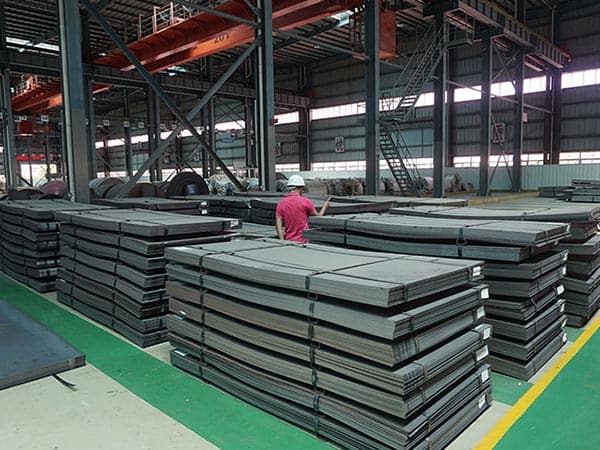
Understanding S960MC: The High-Strength Powerhouse in Automotive Engineering
S960MC steel represents the pinnacle of thermomechanically rolled, high-yield-strength cold-forming steels. Defined by the EN 10149-2 standard, the 'S' stands for structural steel, '960' denotes a minimum yield strength of 960 MPa, and 'MC' indicates its thermomechanical rolling process. In the context of modern vehicle manufacturing, where the balance between safety and weight reduction is paramount, S960MC has emerged as a critical material for structural integrity.
The automotive industry is undergoing a radical shift toward electrification and enhanced passenger protection. This transition requires materials that can withstand immense stress without adding unnecessary bulk. S960MC provides a solution by offering a strength-to-weight ratio that traditional carbon steels cannot match. By utilizing this grade, engineers can design thinner components that maintain or exceed the crash performance of thicker, lower-grade alternatives.
Core Mechanical Properties and Chemical Composition
The exceptional performance of S960MC is rooted in its fine-grained microstructure, achieved through precise thermomechanical rolling. This process involves controlled deformation at specific temperature ranges, followed by rapid cooling, which prevents grain growth and ensures a uniform, high-strength matrix.
| Property | Value / Specification |
|---|---|
| Yield Strength (ReH) | Min. 960 MPa |
| Tensile Strength (Rm) | 980 - 1250 MPa |
| Elongation (A80mm) | Min. 7% |
| Bending Radius (180°) | Min. 3.0 t (thickness) |
The chemical composition is carefully balanced with micro-alloying elements such as Niobium (Nb), Vanadium (V), and Titanium (Ti). These elements facilitate grain refinement and precipitation hardening. The low carbon content (typically below 0.20%) is vital for maintaining excellent weldability and toughness, even at high strength levels. This combination ensures that the steel does not become brittle, a common risk with high-strength materials.
Main Use of S960MC in Car Safety Parts
Safety parts are designed to protect occupants by either resisting deformation or absorbing energy during a collision. S960MC is strategically used in areas where structural collapse is unacceptable.
- Bumper Reinforcements: The bumper beam is the first line of defense in a crash. S960MC allows for a lightweight beam that can resist high-impact forces, preventing engine bay intrusion.
- Side Impact Beams: Located inside the doors, these beams protect passengers during lateral collisions. The high yield strength of S960MC ensures the door structure remains intact under severe localized pressure.
- Chassis and Subframes: The vehicle's foundation must support the weight of the powertrain and suspension while maintaining geometry during extreme maneuvers. S960MC provides the necessary stiffness and fatigue resistance.
- A-Pillar and B-Pillar Reinforcements: These vertical supports are crucial for roof strength and rollover protection. Using S960MC allows for thinner pillars, which improves driver visibility without compromising safety.
- Seat Frames and Mounting Brackets: In a collision, the seat must remain anchored. S960MC prevents the deformation of mounting points, ensuring that seatbelts and airbags function as intended.
Processing Performance: Cold Forming and Welding
Despite its extreme strength, S960MC is designed for cold forming. This is a significant advantage for automotive manufacturers who rely on high-speed stamping and bending processes. However, the high yield strength means that 'springback' is more pronounced compared to lower-grade steels. Tooling must be designed with compensation for this elastic recovery.
Welding is another critical attribute. Thanks to its low carbon equivalent (CEV), S960MC can be welded using standard methods such as MAG (Metal Active Gas) or laser welding. Because the strength is derived from the thermomechanical process rather than high alloy content, the heat-affected zone (HAZ) remains relatively stable. Manufacturers must control heat input to avoid excessive softening in the HAZ, but when executed correctly, the weld joints exhibit excellent integrity.
Environmental Adaptability and Fatigue Resistance
Automotive components are exposed to a wide range of environmental stressors, from road salt and moisture to extreme temperature fluctuations. S960MC exhibits good atmospheric corrosion resistance, though it is typically coated or galvanized in safety-critical applications to ensure long-term durability. Its fatigue resistance is particularly noteworthy; the fine-grained structure hinders the initiation and propagation of cracks, making it ideal for parts subjected to cyclic loading, such as suspension arms and cross members.
The shift toward Electric Vehicles (EVs) has further increased the demand for S960MC. Battery packs are heavy, and to maintain vehicle range, the surrounding structure must be as light as possible. S960MC is often used in the battery enclosure frames to provide maximum protection against side impacts while keeping the overall weight of the vehicle manageable.
Comparative Advantage Over Traditional Steels
When comparing S960MC to more traditional structural steels like S355 or even S700MC, the benefits are clear. While S355 is easier to form, it requires significantly more mass to achieve the same structural performance. S700MC is a common choice for heavy vehicles, but S960MC allows for an additional 20-30% weight reduction in specific safety components.
| Feature | S700MC | S960MC | Impact on Safety Design |
|---|---|---|---|
| Weight Potential | Moderate | High | Enables thinner walls for the same load. |
| Energy Absorption | High | Very High | Superior crashworthiness in compact spaces. |
| Formability | Excellent | Good | Requires advanced tooling for S960MC. |
The use of S960MC also contributes to the circular economy. Higher strength means less raw material is consumed during production, and the steel remains fully recyclable at the end of the vehicle's life cycle. This aligns with the global push for sustainable manufacturing and reduced carbon footprints in the transport sector.
Optimizing Manufacturing for S960MC Components
To maximize the benefits of S960MC in car safety parts, manufacturers must adhere to specific processing guidelines. Laser cutting is preferred over mechanical shearing to prevent edge cracking, as the high strength of the material can lead to high residual stresses at sheared edges. During bending, a larger mandrel radius is required compared to mild steel to ensure the outer fibers do not exceed their limit of ductility.
Surface treatment is also a factor. Many safety parts made of S960MC undergo cathodic dip painting (KTL) or zinc-flake coating. These processes provide excellent corrosion protection without the risk of hydrogen embrittlement, which can be a concern for high-strength steels if acid pickling or electroplating is not carefully controlled.
The integration of S960MC into the automotive supply chain is a testament to the advancement of metallurgical science. It allows for the creation of vehicles that are safer for passengers, more efficient for the environment, and more durable for the long term. As engineering requirements continue to evolve, S960MC will remain a cornerstone material for the next generation of automotive safety innovations.
Leave a message