
Does BS700MC cold forming autobobile steel for car parts rust easily?
Explore the corrosion resistance, mechanical properties, and processing performance of BS700MC high-strength steel. Learn why this cold-forming steel is essential for automotive structural parts and how to manage its oxidation risks.
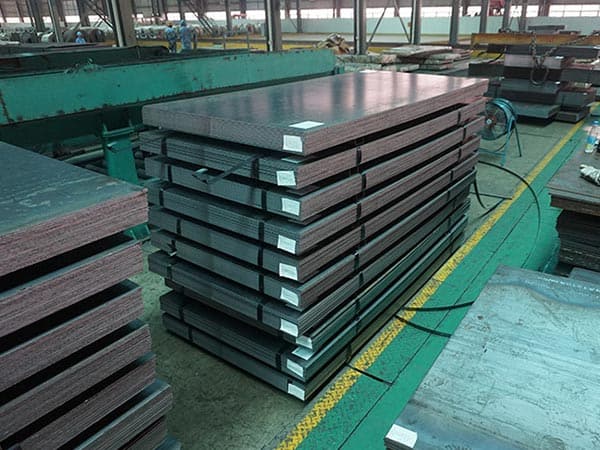
Understanding the Metallurgical Profile of BS700MC High-Strength Steel
BS700MC is a high-strength, low-alloy (HSLA) steel specifically designed for cold forming. Within the context of modern automotive engineering, it represents a pinnacle of thermomechanically rolled products, offering a minimum yield strength of 700 MPa. The 'BS' prefix often refers to specific manufacturer standards (such as Baosteel's enterprise standard), while '700' denotes the yield strength, and 'MC' signifies a thermomechanically rolled condition suitable for cold forming. This material is the backbone of lightweight vehicle design, allowing for thinner gauges without compromising structural integrity.
The core question of whether BS700MC rusts easily requires a nuanced look at its chemical composition. Unlike stainless steel, BS700MC is a carbon-based steel. Its primary alloying elements include Manganese, Niobium, Titanium, and Vanadium. These elements are added in minute quantities to refine the grain structure rather than to provide passive corrosion resistance like Chromium does in stainless grades. Consequently, in its raw, unprotected state, BS700MC is susceptible to oxidation when exposed to moisture and oxygen.
Chemical Composition and Its Influence on Surface Stability
The chemical makeup of BS700MC is optimized for weldability and formability. However, the low carbon content (typically below 0.12%) and the presence of micro-alloying elements have a subtle impact on how the rust layer forms. While it does not prevent rust, the fine-grained microstructure resulting from the TMCP (Thermomechanical Controlled Process) ensures a more uniform surface compared to traditional hot-rolled structural steels.
| Element | C (max) | Mn (max) | Si (max) | P (max) | S (max) | Al (min) | Nb/Ti/V (max) |
|---|---|---|---|---|---|---|---|
| Percentage (%) | 0.12 | 2.10 | 0.50 | 0.025 | 0.015 | 0.015 | 0.22 |
The strictly controlled levels of Sulfur (S) and Phosphorus (P) are critical. Low sulfur content reduces the number of non-metallic inclusions, which are often the initiation points for localized pitting corrosion. By minimizing these impurities, BS700MC exhibits a more predictable oxidation pattern, although it remains a "black" steel that requires surface treatment for long-term durability.
Mechanical Performance: The Trade-off Between Strength and Protection
BS700MC is prized for its mechanical properties, which allow automotive manufacturers to reduce vehicle weight by up to 30% compared to conventional structural steels. This weight reduction is vital for improving fuel efficiency and extending the range of electric vehicles (EVs). The high yield strength (700-820 MPa) and impressive tensile strength (750-950 MPa) make it ideal for parts that must absorb high energy during a collision.
- Yield Strength: Minimum 700 MPa, providing exceptional resistance to permanent deformation.
- Tensile Strength: 750 to 950 MPa, ensuring structural integrity under extreme loads.
- Elongation: Typically around 12-14% (for thickness < 3mm), allowing for complex cold-forming geometries.
- Impact Toughness: Maintains ductility even at low temperatures, crucial for safety-critical components in cold climates.
Because these mechanical properties are achieved through precise rolling temperatures and cooling rates, any subsequent heat treatment or uncontrolled welding can alter the microstructure and, by extension, the corrosion profile. Maintaining the integrity of the grain structure is paramount during the fabrication of car parts.
Corrosion Mechanisms in Automotive Environments
Does BS700MC rust easily? If left as a bare substrate in a salt-spray environment, it will show signs of red rust within hours. In the automotive lifecycle, parts made from BS700MC—such as chassis members, crossbeams, and bumper brackets—are subjected to road salts, humidity, and temperature fluctuations. The high strength of the steel does not inherently protect it from the electrochemical process of rusting.
However, the "ease" of rusting is often mitigated by the manufacturing process. Most BS700MC components undergo a rigorous multi-stage protection sequence. This typically includes pickling to remove mill scale, followed by an Electro-coating (KTL/E-coat) process. The smooth surface finish of BS700MC, a result of the fine grain structure, provides an excellent substrate for these coatings, ensuring superior adhesion compared to coarser structural steels. When the coating remains intact, the underlying steel is perfectly shielded.
Cold Forming and Processing Advantages
The 'MC' designation highlights the steel's suitability for cold forming. Unlike higher carbon steels that might crack during tight bending, BS700MC maintains excellent ductility. This formability is essential for creating the complex shapes required for modern vehicle frames. From a corrosion perspective, the ability to cold-form parts means there is less thermal stress compared to hot-stamping, which can sometimes create surface decarburization zones that are more prone to rapid oxidation.
Welding BS700MC is also highly efficient due to its low Carbon Equivalent (Ceq). A lower Ceq reduces the risk of cold cracking in the heat-affected zone (HAZ). However, engineers must ensure that the weld seams are properly treated. The welding process destroys any pre-existing protective oil or light coating, leaving the HAZ vulnerable to atmospheric corrosion if not promptly painted or galvanized.
Strategies to Prevent Rusting in BS700MC Components
To ensure that BS700MC parts do not rust during their service life, several industry-standard strategies are employed. The choice of protection depends on the specific application of the part within the vehicle architecture.
1. Zinc Coating (Galvanizing): For parts exposed to the underbody environment, using a galvanized version of high-strength steel (like HC700/980DP or similar coated grades) is common. While BS700MC is often supplied as hot-rolled pickled and oiled (HRPO), it can be hot-dip galvanized or electro-galvanized to provide sacrificial protection.
2. Cathodic Electrodeposition (KTL): This is the gold standard for automotive structural parts. The KTL process ensures that even the internal cavities of complex BS700MC pressings are coated with a uniform, corrosion-resistant epoxy layer.
3. Waxing and Undercoating: For heavy-duty applications like truck frames or crane arms where BS700MC is frequently used, additional thick-film bitumen or wax-based undercoatings provide a physical barrier against stone chips and road salt.
Broadening the Scope: Beyond the Automotive Industry
While the automotive sector is the primary consumer of BS700MC, its high strength-to-weight ratio and cold-forming capabilities have led to its adoption in other demanding industries. In the production of mobile cranes, the telescopic booms are often fabricated from 700MPa grade steels to maximize lifting capacity while minimizing self-weight. In these applications, the steel is typically grit-blasted and coated with high-performance marine-grade paints to withstand outdoor exposure.
In the agricultural machinery sector, BS700MC is used for plow frames and trailer chassis. These components face aggressive chemical environments from fertilizers and manure. Here, the "rusting" question is addressed through heavy powder coating or hot-dip galvanizing, proving that the material's utility far outweighs its natural lack of corrosion resistance when properly managed.
Final Assessment of BS700MC Durability
BS700MC is not a rust-proof material, but it is also not "easily destroyed" by rust when integrated into a professional manufacturing workflow. Its susceptibility to oxidation is a known characteristic of all high-strength carbon steels. The engineering focus is not on changing the steel's chemistry to prevent rust—which would be cost-prohibitive and detrimental to its mechanical properties—but on perfecting the surface treatment technologies that shield it.
When designers choose BS700MC, they are prioritizing structural efficiency, safety, and formability. By applying modern coating technologies, the risk of corrosion is effectively neutralized, allowing the steel to perform its primary function of providing a high-strength, lightweight skeleton for the vehicles and machines of tomorrow. The longevity of a BS700MC part is therefore a reflection of the quality of its surface protection system rather than a limitation of the steel itself.
Leave a message