
What are the chemical compoments of S355MC steel complete specifications
Explore the comprehensive guide to S355MC steel, covering its detailed chemical components, mechanical properties, processing performance, and industrial applications. Learn why this thermomechanically rolled steel is the top choice for high-strength cold
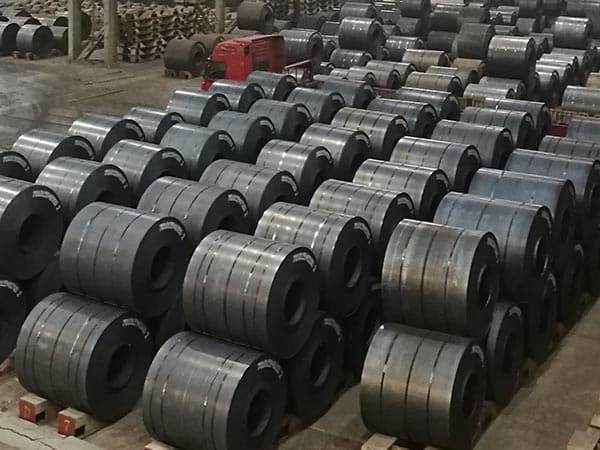
Understanding the Essence of S355MC High-Strength Steel
S355MC is a high-yield strength steel specifically designed for cold-forming applications. Governed by the European standard EN 10149-2, this grade represents a pinnacle of metallurgical engineering where strength and ductility are perfectly balanced through thermomechanical rolling. Unlike traditional hot-rolled structural steels, S355MC undergoes a specialized cooling and rolling process that refines its grain structure, making it exceptionally tough yet easy to shape. The 'S' stands for structural steel, '355' denotes the minimum yield strength in Megapascals (MPa), 'M' signifies its thermomechanically rolled condition, and 'C' indicates its suitability for cold forming.
The Core Chemistry: Chemical Components of S355MC
The superior performance of S355MC is rooted in its precise chemical makeup. Unlike standard carbon steels, S355MC utilizes micro-alloying techniques to achieve high strength without increasing carbon content, which preserves excellent weldability. The low carbon equivalent is a hallmark of this grade, ensuring that the material remains ductile and resistant to cracking during fabrication.
| Element | Maximum Content (%) | Function in S355MC |
|---|---|---|
| Carbon (C) | 0.12 | Ensures weldability and prevents brittleness. |
| Manganese (Mn) | 1.50 | Enhances strength and hardenability through solid solution. |
| Silicon (Si) | 0.50 | Acts as a deoxidizer and improves yield strength. |
| Phosphorus (P) | 0.025 | Controlled strictly to maintain low-temperature toughness. |
| Sulfur (S) | 0.020 | Minimized to reduce inclusions and improve surface quality. |
| Aluminum (Al) | 0.015 (min) | Used for grain refinement and nitrogen binding. |
| Niobium (Nb) | 0.09 | Primary grain refiner and precipitation hardener. |
| Vanadium (V) | 0.20 | Increases strength via carbide and nitride formation. |
| Titanium (Ti) | 0.15 | Prevents grain growth during high-temperature processing. |
The combination of Niobium, Vanadium, and Titanium is particularly critical. These elements form fine precipitates that pin grain boundaries, preventing them from growing during the rolling process. This results in an ultra-fine ferrite-pearlite structure, which is the primary reason S355MC can offer high yield strength while remaining thin and lightweight.
Mechanical Properties and Performance Benchmarks
The mechanical specifications of S355MC are what make it a preferred choice for weight-sensitive structural components. Its high yield-to-tensile ratio allows engineers to design parts that can withstand significant loads without permanent deformation. Below are the standard mechanical requirements according to EN 10149-2.
| Property | Specification (Thickness ≤ 16mm) |
|---|---|
| Yield Strength (Reh) | Min 355 MPa |
| Tensile Strength (Rm) | 430 - 550 MPa |
| Elongation (A80mm for t < 3mm) | Min 19% |
| Elongation (A5 for t ≥ 3mm) | Min 23% |
| 180° Bending Mandrel Diameter | 0.5 x thickness (for t < 3mm) to 1.5 x thickness |
One of the standout features of S355MC is its consistent elongation. Even at high strength levels, the material retains enough plasticity to undergo complex bending and folding operations without edge cracking. This is vital for manufacturing chassis parts, cross members, and intricate brackets where precision is paramount.
Advanced Processing Performance: Welding and Cutting
From a manufacturing perspective, S355MC is highly efficient. Its low carbon content (max 0.12%) translates to a very low Carbon Equivalent Value (CEV). This means that preheating is rarely required before welding, and the risk of cold cracking in the Heat Affected Zone (HAZ) is significantly reduced compared to standard s355jr grades. Whether using MIG, TIG, or laser welding, S355MC maintains its structural integrity across the joint.
When it comes to cutting, the fine grain structure of S355MC allows for exceptionally clean edges. It is highly compatible with laser cutting, plasma cutting, and waterjet processes. The lack of internal stresses, a result of the controlled thermomechanical rolling, ensures that parts remain flat after cutting, reducing the need for secondary leveling operations. This dimensional stability is a major cost-saver in high-volume production lines.
Environmental Adaptability and Durability
While S355MC is not a dedicated weathering steel like Corten, its refined chemistry provides better atmospheric corrosion resistance than basic carbon steels. The tight control of Sulfur and Phosphorus minimizes the formation of non-metallic inclusions, which are often the starting points for localized corrosion. Furthermore, S355MC exhibits excellent low-temperature toughness. While the standard does not always mandate a Charpy V-notch impact test unless specified, the thermomechanical process inherently improves the material's transition temperature, making it reliable in colder climates where brittle fracture might be a concern for lesser grades.
Industrial Applications: Where S355MC Excels
The versatility of S355MC allows it to penetrate various high-demand sectors. Its primary appeal lies in weight reduction; by replacing standard S235 steel with S355MC, manufacturers can often reduce the thickness of components by 20-30% without sacrificing load-bearing capacity.
- Automotive Industry: Used extensively for truck chassis, side rails, cross members, and suspension components where high strength and low weight are critical for fuel efficiency.
- Heavy Machinery: Ideal for crane booms, excavator frames, and agricultural equipment that must withstand dynamic loads and harsh operating conditions.
- Logistics and Warehousing: Employed in the construction of high-load racking systems and automated storage/retrieval systems (ASRS) where vertical strength is essential.
- Cold-Formed Sections: Perfect for producing C-profiles, Z-profiles, and other structural shapes used in solar panel mounting systems and modular buildings.
Strategic Advantages of Choosing S355MC
Selecting S355MC over traditional structural grades offers a clear competitive edge. The ability to use thinner gauges leads to direct savings in raw material costs and indirect savings in transportation and energy consumption. Furthermore, the excellent surface quality of S355MC, characterized by a thin, tightly adherent scale, makes it an ideal substrate for powder coating, galvanizing, or painting. This ensures that the final product not only performs well but also maintains a professional aesthetic over its service life.
The consistency of S355MC across different batches is another critical factor. Because it is produced in highly controlled modern mills, the mechanical properties vary minimally, allowing for predictable spring-back during bending and consistent performance in automated welding cells. For engineers and procurement specialists, S355MC represents a reliable, high-performance solution that meets the rigorous demands of modern structural design.
Leave a message