
What are the main applicable ranges of S420MC construction-machinery high-strength steel
Discover the technical specifications, mechanical properties, and extensive application ranges of S420MC high-strength steel in the construction machinery industry.
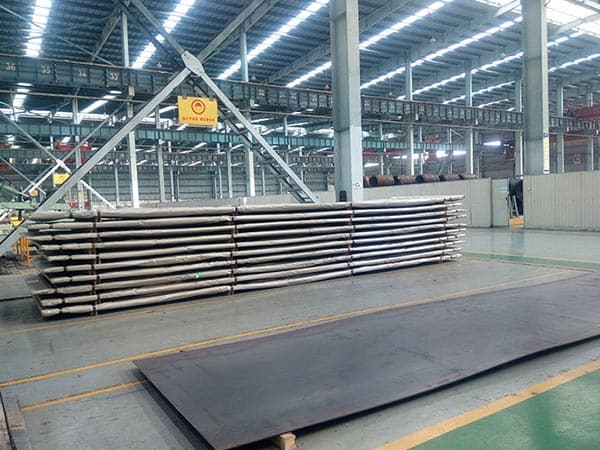
Understanding the Technical Foundation of S420MC High-Strength Steel
S420MC is a high-strength, hot-rolled structural steel specifically engineered for cold forming, governed by the European standard EN 10149-2. The nomenclature reveals its core identity: 'S' stands for structural steel, '420' indicates a minimum yield strength of 420 MPa, and 'MC' signifies that the material is thermomechanically rolled (M) and designed for cold forming (C). This grade represents a pinnacle of metallurgical engineering, balancing high load-bearing capacity with exceptional ductility. Unlike traditional structural steels, S420MC utilizes a precise thermomechanical control process (TMCP) during production, which refines the grain structure at a microscopic level. This refinement is achieved through controlled rolling temperatures and cooling rates, often supplemented by micro-alloying elements such as Niobium (Nb), Vanadium (V), and Titanium (Ti). These elements form stable carbides and nitrides that pin grain boundaries, preventing grain growth and ensuring a fine-grained ferritic-pearlitic or bainitic microstructure. This metallurgical strategy allows S420MC to achieve superior strength without the heavy carbon content that typically compromises weldability and toughness.
Core Mechanical Properties and Chemical Composition
The performance of S420MC in demanding construction environments is a direct result of its balanced chemical profile and mechanical integrity. The low carbon equivalent (CEV) is a standout feature, making it highly resistant to cold cracking during welding. By keeping carbon levels low (typically below 0.12%), the steel maintains excellent plasticity. The addition of Manganese (Mn) enhances hardenability and strength, while Silicon (Si) acts as a deoxidizer. The micro-alloying elements mentioned earlier are the secret to its high yield point. From a mechanical perspective, S420MC offers a yield strength of at least 420 MPa and a tensile strength ranging between 480 and 620 MPa. Elongation values remain impressive, usually exceeding 16% to 19% depending on the thickness, which ensures that the material can undergo significant deformation before failure—a critical safety factor in heavy machinery.
| Element/Property | Chemical Content (Max %) | Mechanical Value |
|---|---|---|
| Carbon (C) | 0.12% | Yield Strength: ≥420 MPa |
| Manganese (Mn) | 1.60% | Tensile Strength: 480-620 MPa |
| Silicon (Si) | 0.50% | Elongation (A50mm): ≥16% |
| Phosphorus (P) | 0.025% | Impact Energy (-20°C): Optional/Specified |
| Sulfur (S) | 0.015% | Bending Radius: 0.5t - 1.5t |
Superior Processing Performance: Welding and Cold Forming
For manufacturers of construction machinery, the ease of processing is as important as the strength of the raw material. S420MC excels in two critical areas: weldability and cold formability. Due to its extremely low carbon equivalent, S420MC can be welded using all standard methods, including MIG/MAG, TIG, and submerged arc welding, without the need for extensive preheating in most thickness ranges. This reduces production time and energy costs significantly. The heat-affected zone (HAZ) remains stable, maintaining much of the base metal's toughness, provided that heat input is controlled to prevent excessive grain coarsening. In terms of cold forming, S420MC is designed to be bent, flanged, and cold-pressed into complex shapes. Its fine-grained structure allows for tight bending radii without the risk of surface cracking or "orange peel" effects. This capability is vital for creating the streamlined, aerodynamic, and structurally optimized components found in modern excavators and cranes.
Main Applicable Ranges in Heavy Construction Machinery
The application of S420MC is diverse, primarily focused on components where weight reduction and high load capacity are paramount. Within the mobile crane industry, S420MC is frequently utilized for telescopic boom sections and chassis frames. By replacing traditional S355 steel with S420MC, engineers can reduce the thickness of the boom plates while maintaining the same lifting capacity. This reduction in dead weight directly translates to a longer reach and higher stability. In the earthmoving sector, S420MC is the preferred choice for excavator arms, buckets, and main frames. These components are subjected to intense cyclic loading and impact forces; the high fatigue resistance of S420MC ensures a long service life even under harsh operating conditions. Furthermore, in the heavy-duty truck and trailer industry, this steel is used for longitudinal beams and cross members. The ability to reduce the vehicle's tare weight allows for a higher payload, improving fuel efficiency and reducing the overall carbon footprint of transport operations.
- Crane Industry: Boom structures, outriggers, and turntable frames.
- Earthmoving: Excavator chassis, loader arms, and grader frames.
- Transportation: High-strength truck frames, semi-trailer chassis, and container supports.
- Agriculture: Large-scale harvester frames and high-capacity trailer bodies.
- Mining: Support structures for conveyors and light-duty underground equipment.
Environmental Adaptability and Low-Temperature Toughness
Construction machinery often operates in extreme environments, from the scorching heat of desert mines to the freezing temperatures of arctic infrastructure projects. S420MC demonstrates remarkable environmental adaptability. While its primary focus is strength and formability, the thermomechanical rolling process ensures that the steel maintains adequate impact toughness at low temperatures. For projects in cold climates, S420MC can be specified with guaranteed impact energy values at -20°C or even -40°C. This prevents brittle fracture, a catastrophic failure mode where steel snaps suddenly under stress in cold weather. Additionally, the clean steel chemistry (low sulfur and phosphorus) improves resistance to atmospheric corrosion compared to lower-grade carbon steels, although protective coatings are still recommended for long-term durability in corrosive environments.
Economic Efficiency and Sustainability Benefits
Adopting S420MC is not just a technical decision but a strategic economic one. The primary driver is weight optimization. Using a higher strength steel allows for a 20% to 30% reduction in material weight compared to conventional S355 steel. This leads to a cascade of savings: lower material purchasing weight, reduced welding consumables, lower shipping costs, and improved fuel economy for the end-user. From a sustainability perspective, less steel used means a lower total energy requirement for production and a reduction in CO2 emissions during the vehicle's lifecycle. As global regulations on emissions and efficiency become stricter, S420MC provides a viable pathway for machinery manufacturers to meet these targets without sacrificing performance or safety.
Strategic Implementation and Manufacturing Considerations
To fully leverage the benefits of S420MC, manufacturers must adhere to specific processing guidelines. When laser or plasma cutting, the low impurity content of S420MC ensures clean edges and minimal dross, which simplifies subsequent welding steps. During the bending process, it is essential to account for the material's springback, which is slightly higher than that of lower-strength steels due to its higher elastic limit. Tooling should be maintained to avoid surface scratches that could act as stress concentrators. In the welding shop, selecting the correct filler metal is crucial; the filler should match or slightly exceed the yield strength of the S420MC base metal to ensure joint integrity. By integrating these best practices, factories can produce high-performance machinery that is both lighter and more durable than previous generations.
Comparative Analysis: S420MC vs. Conventional Alternatives
When compared to S355MC, S420MC offers a significant jump in yield strength with only a marginal increase in cost, making it the "sweet spot" for many structural applications. While even higher grades like S700MC exist, they often come with increased sensitivity to welding heat and more stringent bending requirements. S420MC strikes an ideal balance, offering enough strength for substantial weight savings while remaining as easy to work with as many mid-range steels. This versatility is why it has become the workhorse of the European and Asian construction machinery markets. It allows for the design of complex, high-stress components that would be too heavy if made from S355 or too difficult to mass-produce if made from S960.
Looking at the broader perspective, the shift towards S420MC reflects a global trend in engineering toward "lightweighting" and high-efficiency design. As infrastructure projects become more complex and the demand for larger, more capable machinery grows, the role of high-strength low-alloy steels like S420MC will only expand. Its combination of strength, toughness, and ease of fabrication makes it an indispensable asset for the next generation of construction and mining equipment.
Leave a message