
What is the S315MC high yield strength alloy quality steel steel measurement
A comprehensive guide to S315MC high yield strength alloy quality steel, covering its chemical composition, mechanical properties, thermomechanical rolling process, and industrial applications.
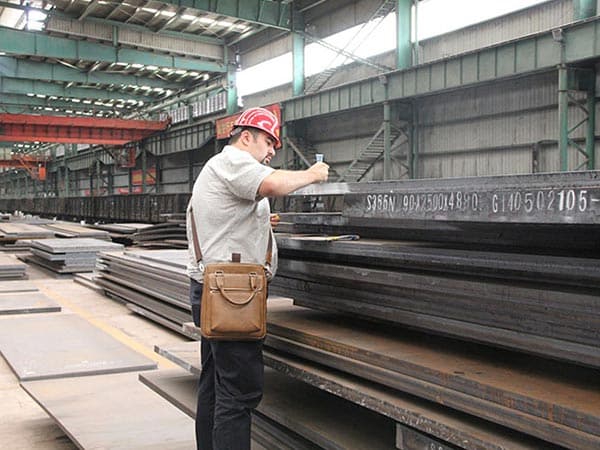
Defining S315MC: The High-Yield Strength Standard for Cold Forming
S315MC is a thermomechanically rolled, high-yield strength steel designed specifically for cold forming processes. Governed by the European standard EN 10149-2, this steel grade represents a significant advancement in metallurgical engineering, offering a balance between weight reduction and structural integrity. The designation 'S' stands for structural steel, '315' refers to the minimum yield strength of 315 MPa, and 'MC' indicates that the material is thermomechanically rolled (M) and suitable for cold forming (C). Unlike traditional hot-rolled steels, S315MC undergoes a controlled rolling process that refines its grain structure, resulting in superior mechanical properties and consistent performance across various industrial applications.
Chemical Composition and the Role of Micro-Alloying
The exceptional performance of S315MC is rooted in its precise chemical composition. To achieve high strength without sacrificing ductility or weldability, manufacturers utilize micro-alloying elements. These elements, though present in small quantities, fundamentally alter the steel's microstructure during the thermomechanical rolling process.
| Element | Maximum Content (%) | Function in S315MC |
|---|---|---|
| Carbon (C) | 0.12 | Ensures strength while maintaining excellent weldability. |
| Manganese (Mn) | 1.30 | Increases hardness and tensile strength. |
| Silicon (Si) | 0.50 | Acts as a deoxidizer and improves yield strength. |
| Phosphorus (P) | 0.025 | Kept low to prevent brittleness. |
| Sulphur (S) | 0.020 | Kept low to improve surface quality and toughness. |
| Aluminum (Al) | 0.015 (min) | Refines grain size and acts as a deoxidizer. |
| Nb / V / Ti | 0.09 / 0.15 / 0.22 | Micro-alloying elements for grain refinement and precipitation hardening. |
The inclusion of Niobium (Nb), Vanadium (V), and Titanium (Ti) is critical. These elements form fine carbides and nitrides that pin grain boundaries during the rolling process, preventing grain growth. This results in a fine-grained ferrite-pearlite structure, which is the primary reason S315MC can achieve high yield strength while remaining highly formable.
Mechanical Properties and Performance Measurement
When measuring the quality of S315MC, the mechanical properties are the most vital indicators. These properties are tested in the longitudinal direction (relative to the rolling direction) to ensure the material meets the rigorous demands of structural engineering. The following table outlines the standard mechanical requirements for S315MC as per EN 10149-2.
| Property | Value / Range | Measurement Context |
|---|---|---|
| Minimum Yield Strength (ReH) | 315 MPa | Measured at the point of permanent deformation. |
| Tensile Strength (Rm) | 390 - 510 MPa | Maximum stress the material can withstand before failure. |
| Minimum Elongation (A80mm) | 20% - 24% | Depends on thickness (t < 3mm or t ≥ 3mm). |
| Bending Angle | 180 Degrees | Tested with a specific mandrel diameter based on thickness. |
The high yield-to-tensile ratio of S315MC allows for the design of components that are both light and strong. This is particularly beneficial in industries where reducing the weight of the final product leads to significant energy savings or increased payload capacity. The elongation values ensure that the steel can undergo complex bending and folding operations without cracking, which is a hallmark of 'quality steel' in the cold-forming sector.
The Thermomechanical Rolling Process (TMCP)
The 'MC' in S315MC signifies the Thermomechanical Control Process (TMCP). This is not just a heat treatment but a sophisticated rolling strategy where the temperature and deformation are strictly controlled. Unlike traditional normalizing, TMCP involves rolling at temperatures where recrystallization is retarded. This process creates a high density of nucleation sites for the ferrite grains, leading to an extremely fine microstructure. This fine grain size is the secret behind the steel's ability to maintain high toughness even at low temperatures, a property often measured by the Charpy V-notch impact test, although not always mandatory for S315MC unless specified by the purchaser.
Processing Performance: Welding and Cold Forming
One of the primary reasons engineers select S315MC is its exceptional processing characteristics. Because the carbon content is kept very low (max 0.12%), the Carbon Equivalent Value (CEV) is also low. This means S315MC can be welded using all standard methods, including MAG, TIG, and laser welding, without the need for preheating or post-weld heat treatment in most cases. The heat-affected zone (HAZ) remains stable, maintaining much of the base metal's strength.
- Cold Forming: S315MC is optimized for bending, flanging, and cold-pressing. It exhibits minimal springback compared to higher-strength grades like S700MC, making it easier to achieve precise dimensions.
- Laser Cutting: The clean chemical composition and uniform microstructure make S315MC an ideal candidate for high-speed laser cutting. It produces clean edges with minimal dross, reducing the need for secondary finishing.
- Surface Quality: As a quality steel, S315MC is typically supplied with a surface finish that is free from scale and defects, facilitating better paint adhesion and corrosion protection.
Diverse Industrial Applications of S315MC
The versatility of S315MC makes it a staple in modern manufacturing. Its ability to provide structural strength while allowing for complex geometries has led to its widespread adoption across several key sectors.
Automotive and Transportation
In the automotive industry, S315MC is used for chassis components, cross members, and longitudinal beams. By replacing traditional S235JR or S275JR steels with S315MC, manufacturers can reduce the thickness of components without compromising safety. This contributes to the overall reduction of vehicle weight, which is essential for meeting modern fuel efficiency and emission standards.
Heavy Machinery and Equipment
For agricultural machinery, cranes, and earth-moving equipment, S315MC provides the necessary durability to withstand high stress. It is frequently used in the fabrication of telescopic arms, trailer frames, and cold-formed sections where high load-bearing capacity is required alongside excellent weldability.
Structural Engineering and Profiles
S315MC is the material of choice for producing cold-rolled sections and profiles. These profiles are used in warehouse racking systems, solar panel mounting structures, and light-gauge steel framing. The consistency of the material ensures that each profile meets strict dimensional tolerances, which is critical for automated assembly lines.
Environmental Adaptability and Longevity
While S315MC is not a weathering steel like Corten, its fine-grained structure provides a slight advantage in uniform corrosion resistance compared to coarse-grained steels. However, for outdoor or harsh environments, it is typically hot-dip galvanized or coated. The low silicon content (often controlled to specific ranges for galvanizing) ensures that the zinc coating is uniform and adheres well, providing long-term protection against atmospheric corrosion. Its performance in low-temperature environments is also noteworthy; the fine grain structure prevents brittle fracture, making it suitable for use in varying climates.
Quality Measurement and Compliance
To ensure that S315MC meets the required standards, several measurement protocols are followed during production. These include ultrasonic testing for internal defects, surface inspection for laminations or cracks, and rigorous dimensional checks. The tolerances for hot-rolled flat products are usually measured against EN 10051, which defines the allowable deviations in thickness, width, and length. A Mill Test Certificate (MTC) according to EN 10204 Type 3.1 is standard, providing the purchaser with the actual chemical analysis and mechanical test results for the specific heat of steel delivered.
- Thickness Tolerance: Ensures the material fits perfectly into automated stamping dies.
- Flatness: Critical for laser cutting and automated welding processes.
- Yield Strength Verification: Confirms the material can handle the calculated design loads.
Understanding the measurement of S315MC involves looking beyond just the numbers on a data sheet. It requires an appreciation of the thermomechanical process, the micro-alloying strategy, and how these factors translate into real-world performance. For manufacturers looking to optimize their production lines and improve product durability, S315MC offers a reliable, high-quality solution that balances cost-effectiveness with high-end engineering properties.
Leave a message