
Alloy steel S700MC factory direct sales to manufacture steel pipes
Explore the technical advantages of S700MC alloy steel for high-performance pipe manufacturing. Learn about its mechanical properties, welding excellence, and weight-saving benefits.
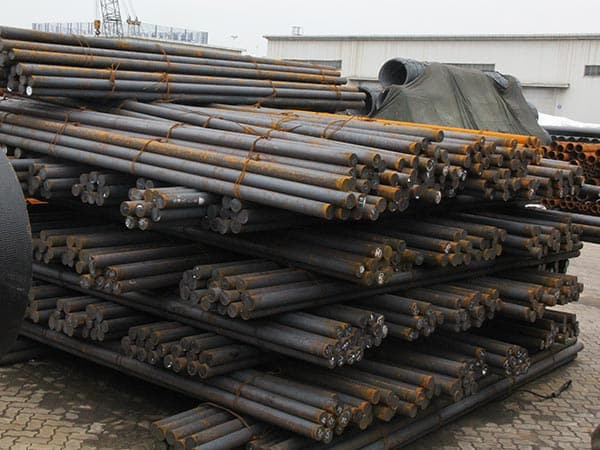
The Technical Evolution of S700MC in Modern Pipe Manufacturing
Modern engineering demands materials that push the boundaries of strength-to-weight ratios. S700MC, a high-strength low-alloy (HSLA) structural steel, stands at the forefront of this industrial shift. Specifically designed for cold forming, this thermomechanically rolled steel offers a minimum yield strength of 700 MPa, making it an ideal candidate for manufacturing high-performance steel pipes. When sourcing through factory direct sales, manufacturers gain access to consistent grain structures and optimized chemical profiles that are essential for high-precision pipe extrusion and longitudinal welding.
The transition from traditional carbon steels to S700MC allows for a significant reduction in wall thickness without compromising structural integrity. This weight reduction is critical for industries where payload efficiency and fuel consumption are paramount. By utilizing S700MC steel pipes, engineers can achieve up to a 30% weight saving compared to standard S355 grade components. This leap in efficiency is not merely about raw strength; it is about the sophisticated micro-alloying process that gives S700MC its unique characteristics.
Chemical Composition and Micro-Alloying Precision
The performance of S700MC is rooted in its precise chemical makeup. Unlike conventional steels that rely on high carbon content for strength—which often compromises weldability—S700MC utilizes a low-carbon philosophy combined with micro-alloying elements such as Niobium (Nb), Vanadium (V), and Titanium (Ti).
| Element | Max Content (%) | Role in Performance |
|---|---|---|
| Carbon (C) | 0.12 | Ensures excellent weldability and prevents brittleness. |
| Manganese (Mn) | 2.10 | Increases hardness and tensile strength. |
| Silicon (Si) | 0.60 | Acts as a deoxidizer and strengthens the ferrite. |
| Niobium (Nb) | 0.09 | Refines grain size during thermomechanical rolling. |
| Titanium (Ti) | 0.22 | Provides precipitation hardening and nitrogen binding. |
This lean chemical design ensures that the steel remains ductile and easy to process. The low carbon equivalent (CEV) value is particularly beneficial for pipe manufacturers, as it minimizes the risk of cold cracking during the welding of long seams. Factory direct sourcing ensures that these elemental tolerances are strictly maintained, providing a predictable response during heat treatment and forming cycles.
Mechanical Properties: Yield Strength and Ductility Balance
The defining characteristic of S700MC is its mechanical resilience. While it boasts a high yield strength, it does not sacrifice the elongation required for complex pipe geometries. This balance is achieved through thermomechanical rolling, a process where the final deformation is carried out in a specific temperature range that leads to a fine-grained microstructure impossible to achieve through heat treatment alone.
| Property | Value (Metric) | Significance for Pipes |
|---|---|---|
| Min. Yield Strength | 700 MPa | Allows for higher internal pressure and load bearing. |
| Tensile Strength | 750 - 950 MPa | Provides a safety margin against catastrophic failure. |
| Min. Elongation (A5) | 10 - 12% | Ensures the pipe can be bent or flared without cracking. |
| Impact Energy (Charpy-V) | 40J at -20°C | Guarantees performance in cold climate environments. |
For manufacturers producing steel pipes for hydraulic cylinders or crane booms, these properties mean that the finished product can withstand extreme dynamic loads. The high yield point ensures that the pipe maintains its shape under stress, while the impact toughness prevents brittle fracture in sub-zero operating conditions.
Cold Forming and Pipe Fabrication Excellence
One of the primary reasons S700MC is favored for pipe manufacturing is its exceptional cold forming capacity. Despite its high strength, the material can be rolled into tight radii. This is essential for creating longitudinal welded pipes where the flat strip must be formed into a perfect cylinder before the welding stage.
- Tight Bending Radii: S700MC allows for smaller bending radii than other steels of similar strength, reducing the footprint of structural components.
- Consistent Springback: The controlled rolling process results in predictable springback behavior, which is vital for maintaining dimensional tolerances in automated pipe production lines.
- Surface Quality: Factory direct S700MC typically features a clean, scale-free surface (often pickled and oiled), which reduces wear on forming tools and improves the final coating adhesion.
When fabricating pipes, the uniformity of the material is paramount. Variations in thickness or hardness can lead to "dog-boning" or uneven seams. S700MC’s fine grain structure ensures that the deformation is uniform across the entire width of the coil, resulting in pipes with superior concentricity and wall thickness consistency.
Advanced Welding Performance for Structural Integrity
Welding S700MC requires an understanding of its micro-alloyed nature. Because the strength is derived from the thermomechanical rolling process rather than high alloy content, the heat-affected zone (HAZ) must be carefully managed. However, compared to quenched and tempered steels, S700MC is remarkably forgiving.
Using standard methods such as MAG (Metal Active Gas) or Submerged Arc Welding (SAW), manufacturers can produce high-strength seams that match the base metal's performance. It is recommended to use low-hydrogen consumables to further mitigate any risk of hydrogen-induced cracking. The low carbon content means that preheating is often unnecessary for standard thicknesses, which significantly reduces production time and energy costs in a factory setting.
Direct factory support often includes specific welding parameters tailored to the particular melt of steel, ensuring that the pipe’s longitudinal or circumferential welds meet the stringent safety standards required for lifting equipment and pressure-retaining structures.
Expanding Industry Applications for S700MC Pipes
The versatility of S700MC steel pipes extends far beyond simple structural tubes. Its unique properties are being leveraged across various high-stakes sectors:
Mobile Cranes and Lifting Gear: The telescopic booms of mobile cranes require immense strength and minimal weight. S700MC pipes provide the necessary rigidity to lift heavy loads at great heights while keeping the overall vehicle weight within road-legal limits.
Automotive Chassis and Safety Components: In the automotive industry, S700MC is used for cross-members and chassis frames. Steel pipes made from this grade offer superior energy absorption during impacts, enhancing passenger safety while contributing to vehicle lightweighting goals.
Agricultural Machinery: Modern farm equipment is getting larger and more powerful. S700MC pipes are used in the frames of large-scale sprayers and seeders, where the material's fatigue resistance ensures a long service life despite the constant vibration and stress of field operations.
Offshore and Energy: While not a traditional "marine" grade, the high strength and cold-weather toughness of S700MC make it suitable for secondary structures in offshore platforms and support equipment for wind turbines, where reducing the weight of topside components is a priority.
Environmental Sustainability and Economic Efficiency
Choosing S700MC is an environmentally conscious decision. The ability to use less steel to achieve the same structural performance leads to a lower carbon footprint throughout the product's lifecycle. Less raw material extraction, reduced energy consumption during transport, and lower fuel usage for the vehicles incorporating these pipes all contribute to a greener industrial ecosystem.
From an economic perspective, factory direct sales eliminate middleman markups and ensure that the material is delivered with full traceability and certification (such as EN 10204 3.1). This direct link between the mill and the pipe manufacturer allows for custom slit widths and specific coil weights, optimizing the production flow and reducing scrap rates. The longevity of S700MC—thanks to its fatigue resistance—also means lower maintenance and replacement costs for the end-user, providing a superior return on investment over the lifespan of the equipment.
Strategic Sourcing: The Factory Direct Advantage
Procuring S700MC through factory direct channels offers more than just price benefits. It provides a technical partnership. Steel pipe manufacturing is a complex process where the input material's quality directly dictates the output's reliability. Direct access to the mill's technical data allows for precise calibration of rolling mills and welding stations.
Furthermore, factory direct sourcing ensures that the steel meets the latest EN 10149-2 standards, with documented proof of the thermomechanical rolling parameters. This level of transparency is vital for projects requiring high-level compliance and safety certifications. As global industries continue to demand higher performance and lower weights, S700MC stands as a critical material, bridging the gap between traditional metallurgy and the future of high-strength engineering.
Leave a message