
What is the S315MC hot-rolled pickled strip machining
Explore the technical specifications, machining characteristics, and industrial applications of S315MC hot-rolled pickled strip steel. Learn why its high yield strength and superior surface finish make it a top choice for automotive and structural enginee
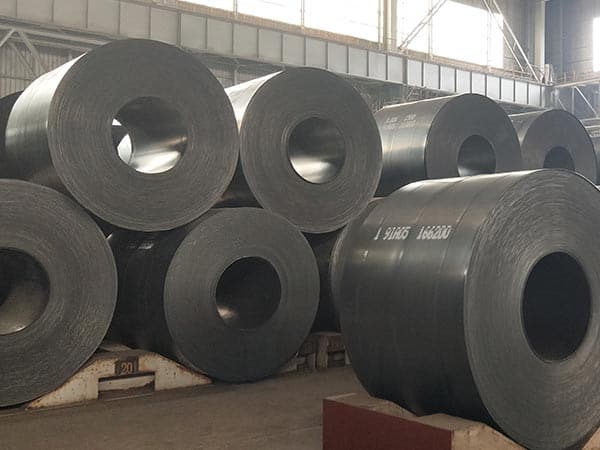
Understanding S315MC: The Foundation of High-Yield Structural Steel
S315MC is a high-yield strength steel specifically designed for cold forming, governed by the European standard EN 10149-2. The designation 'S' stands for structural steel, '315' refers to the minimum yield strength of 315 MPa, and 'MC' indicates that the material is thermomechanically rolled (M) and suitable for cold forming (C). When we discuss the hot-rolled pickled strip version of S315MC, we are looking at a material that has undergone an acid wash process to remove the surface scale (iron oxides) formed during hot rolling.
The pickling process is not merely a cosmetic enhancement. By removing the abrasive scale, the steel becomes much kinder to machining tools and dies. This results in a cleaner surface finish, better weldability, and improved paint adhesion. For engineers and manufacturers, S315MC represents a balance between high strength and excellent formability, making it a staple in industries where weight reduction and structural integrity are paramount.
Chemical Composition and Metallurgical Advantages
The performance of S315MC is rooted in its low-carbon, micro-alloyed chemistry. Unlike traditional carbon steels that rely on high carbon content for strength, S315MC utilizes elements like Niobium (Nb), Titanium (Ti), and Vanadium (V) to achieve grain refinement during the thermomechanical rolling process.
| Element | Maximum Content (%) |
|---|---|
| Carbon (C) | 0.12 |
| Manganese (Mn) | 1.30 |
| Silicon (Si) | 0.50 |
| Phosphorus (P) | 0.025 |
| Sulfur (S) | 0.020 |
| Aluminium (Al) | 0.015 |
This low carbon equivalent (CEV) is critical for weldability. Manufacturers can use standard welding techniques without the high risk of cold cracking often associated with higher strength steels. The micro-alloying elements create a fine-grained structure that provides superior toughness even at low temperatures, which is a vital attribute for components exposed to harsh environmental conditions.
Mechanical Properties and Machining Performance
The machining of S315MC hot-rolled pickled strip involves several key processes: cutting, bending, stamping, and welding. Its mechanical properties determine how the material reacts under these stresses. The high yield strength allows for thinner sections to be used compared to standard S235JR steel, leading to significant weight savings.
- Yield Strength: Min 315 MPa (for thicknesses ≤ 16mm).
- Tensile Strength: 390 - 510 MPa.
- Elongation: Min 20% to 24% depending on thickness.
When it comes to cold bending, S315MC excels. Its high ductility allows for tight bending radii without the risk of surface cracking. For a thickness (t) of less than 3mm, the recommended internal bending radius is 0.25t, which is remarkably tight for a steel of this strength class. This flexibility is a direct result of the pickling process, which removes surface defects that could otherwise act as stress concentrators during the bending phase.
Laser Cutting and Stamping Dynamics
The use of pickled strips significantly enhances laser cutting efficiency. Scale-free surfaces allow the laser beam to penetrate the material more consistently, reducing the heat-affected zone (HAZ) and preventing the 'dross' or slag buildup that often occurs with unpickled hot-rolled steel. This results in a smoother edge finish that often requires no secondary deburring.
In stamping and deep drawing operations, the pickled and oiled surface of S315MC provides a consistent friction coefficient. This consistency is vital for high-speed automated production lines. Because the hard iron oxide scale is gone, the wear on expensive stamping dies is reduced by up to 50%, extending tool life and reducing maintenance downtime. The material's uniform thickness tolerance, typical of high-quality hot-rolled strips, ensures that the springback after forming is predictable, allowing for high-precision component manufacturing.
Environmental Adaptability and Corrosion Resistance
While S315MC is not a stainless steel, the pickling and subsequent oiling provide a temporary layer of protection against atmospheric corrosion during transport and storage. For long-term environmental adaptability, the clean surface of S315MC is an ideal substrate for hot-dip galvanizing, powder coating, or E-coating.
The absence of scale ensures that the protective coatings bond directly to the metallic iron, preventing the delamination that can occur when coatings are applied over mill scale. This makes S315MC particularly suitable for outdoor structural applications, such as solar mounting systems, where the material must withstand decades of exposure to humidity and temperature fluctuations without losing its structural load-bearing capacity.
Expanding Industry Applications
The versatility of S315MC hot-rolled pickled strip has led to its adoption across diverse sectors. In the automotive industry, it is used for chassis parts, seat frames, and suspension components where high strength and low weight are required to meet fuel efficiency standards. The material's ability to absorb energy during deformation also makes it a candidate for safety-critical components.
In the logistics and warehousing sector, S315MC is the preferred choice for high-load racking systems. The high yield strength allows for taller and more slender rack uprights that can support immense weights. Similarly, in the heavy machinery industry, it is utilized for crane booms, trailer frames, and agricultural equipment components that require a combination of toughness and ease of fabrication.
From a manufacturing perspective, choosing S315MC over traditional structural steels offers a competitive edge. The reduction in material volume (due to higher strength) and the reduction in processing costs (due to the pickled surface) create a compelling economic case for its use in modern engineering projects.
Leave a message