
What are the factors influencing the lamellar tearing of Z-direction ZQS700L cold forming automobile structure steel
A technical guide on the metallurgical and processing factors influencing lamellar tearing in Z-direction ZQS700L high-strength automotive steel.
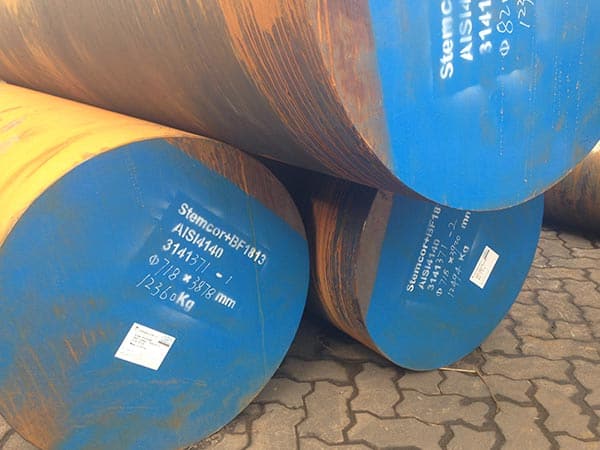
Introduction to ZQS700L and the Challenge of Lamellar Tearing
ZQS700L is a high-strength, low-alloy (HSLA) steel specifically engineered for the demanding requirements of modern automotive structural components. With a minimum yield strength of 700 MPa, it offers an exceptional strength-to-weight ratio, facilitating vehicle lightweighting without compromising safety. However, when ZQS700L is produced with Z-direction properties (through-thickness ductility), it must withstand stresses perpendicular to its rolling plane. Lamellar tearing, a step-like cracking phenomenon, remains a critical concern for engineers and manufacturers using thick-walled or complex-jointed structural parts. Understanding the multi-faceted factors that influence this failure mode is essential for ensuring the structural integrity of heavy-duty truck frames, crane booms, and chassis components.
The Role of Non-Metallic Inclusions and Sulfur Content
The primary metallurgical culprit behind lamellar tearing is the presence of elongated non-metallic inclusions, particularly manganese sulfides (MnS). During the hot rolling process of ZQS700L, these inclusions are flattened into thin, plate-like shapes aligned with the rolling direction. When tensile stress is applied in the Z-direction, these inclusions act as internal stress concentrators, leading to decohesion at the interface between the inclusion and the steel matrix.
- Sulfur Concentration: To achieve high Z-direction performance, sulfur levels must be strictly controlled, often below 0.005%. Lower sulfur reduces the volume fraction of MnS inclusions.
- Inclusion Shape Control: The use of calcium treatment (Ca-si wire injection) is vital. Calcium reacts with sulfur to form complex oxy-sulfides that remain spherical during rolling, significantly reducing the risk of planar weakness.
- Oxygen and Phosphorus: These elements also contribute to the formation of brittle phases. Phosphorus segregation at grain boundaries can lower the cohesive strength of the material, exacerbating tearing tendencies under high constraint.
Microstructural Anisotropy and Banding
The microstructure of ZQS700L typically consists of fine-grained ferrite and tempered martensite or bainite, achieved through thermo-mechanical controlled processing (TMCP). However, chemical segregation during casting can lead to "banding"—alternating layers of different microstructural constituents. This banding creates planes of relative weakness that are susceptible to crack propagation.
Grain Refinement: Utilizing micro-alloying elements like Niobium (Nb), Vanadium (V), and Titanium (Ti) helps in refining the grain size. A finer, more homogeneous grain structure distributes strain more evenly and inhibits the easy path for lamellar cracks. When the Z-direction reduction of area (RA) is tested, a fine-grained ZQS700L exhibits much higher ductility than a coarse-grained counterpart, as the crack path becomes more tortuous and energy-intensive.
Impact of Cold Forming and Residual Stress
As a cold forming automobile structure steel, ZQS700L is frequently subjected to bending, stamping, and stretching. These processes introduce significant plastic deformation and residual stress. If the forming radius is too tight, the outer fibers of the steel experience extreme tension, while the inner layers may experience compression. In thick sections, this creates a triaxial stress state that can trigger lamellar tearing even before any external load is applied.
Work hardening during cold forming reduces the local ductility of the material. If the steel already possesses elongated inclusions, the combination of reduced ductility and high residual tensile stress in the thickness direction becomes a recipe for failure. Manufacturers must optimize the bending radius (R/t ratio) to ensure that the through-thickness strain remains within the material's elastic-plastic limits.
Welding Metallurgy and Joint Constraint Factors
Welding is perhaps the most common trigger for lamellar tearing in ZQS700L structures. The thermal cycle of welding induces localized expansion and contraction. In highly constrained joints, such as T-joints or corner joints with full penetration welds, the shrinkage of the weld metal pulls on the base plate in the Z-direction.
- Heat Input: High heat input slows the cooling rate, potentially coarsening the heat-affected zone (HAZ) and making it more susceptible to cracking. Conversely, extremely low heat input can lead to hydrogen-induced cracking, which may interact with lamellar tearing.
- Joint Design: Designing joints to minimize Z-direction strain is a primary preventative measure. For instance, using symmetrical welds or balanced welding sequences can help redistribute shrinkage stresses.
- Hydrogen Control: Hydrogen embrittlement can act as a catalyst for lamellar tearing. Using low-hydrogen welding consumables and preheating the base material helps diffuse hydrogen away from the critical fusion zone.
Technical Specifications and Comparison Table
To better understand the performance of ZQS700L in relation to other grades, the following table outlines typical mechanical properties and Z-direction requirements.
| Property | ZQS700L (Standard) | ZQS700L-Z25 | ZQS700L-Z35 |
|---|---|---|---|
| Yield Strength (MPa) | ≥ 700 | ≥ 700 | ≥ 700 |
| Tensile Strength (MPa) | 750 - 950 | 750 - 950 | 750 - 950 |
| Elongation A50 (%) | ≥ 12 | ≥ 12 | ≥ 12 |
| Z-Direction RA (%) | N/A | ≥ 25 | ≥ 35 |
| Sulfur Content (%) | ≤ 0.010 | ≤ 0.005 | ≤ 0.003 |
Environmental Adaptability and Corrosion Fatigue
Automobile structures are exposed to harsh environments, including road salts, moisture, and fluctuating temperatures. For ZQS700L, environmental factors can exacerbate the risk of lamellar tearing over the vehicle's lifespan. Stress corrosion cracking (SCC) can initiate at the site of a small lamellar tear, leading to rapid structural failure. The presence of a refined microstructure and controlled inclusion morphology improves the steel's resistance to these environmental stressors by preventing the formation of easy pathways for corrosive agents to penetrate the core of the plate.
Application Industry Expansion: Beyond Basic Frames
While primarily used in truck frames, the unique properties of Z-direction ZQS700L are finding applications in other high-stress sectors. In the renewable energy sector, it is used for the structural supports of heavy machinery. In construction equipment, it serves in the telescopic booms of cranes where multi-axial loading is constant. The ability of ZQS700L to handle cold forming while maintaining Z-direction integrity makes it a versatile choice for any industry requiring high-strength, weldable, and reliable structural steel.
Strategic Quality Control Measures
To mitigate the risk of lamellar tearing in ZQS700L, a multi-layered quality control approach is necessary. This begins at the steel mill with vacuum degassing and ultra-low sulfur refining. During fabrication, ultrasonic testing (UT) should be employed to detect any pre-existing laminations or large inclusion clusters. Furthermore, the Z-direction tensile test (according to standards like ASTM A770 or GB/T 5313) must be performed to verify that the reduction of area meets the specified Z25 or Z35 grade requirements. By integrating these metallurgical insights with disciplined manufacturing practices, the full potential of ZQS700L can be realized, ensuring long-term durability and safety in the most demanding automotive applications.
Leave a message