
Alloy steel S700MC steel for car gear 10mm thick size
Explore the properties of S700MC alloy steel for automotive applications. This guide covers mechanical performance, welding, and cold forming of 10mm thick S700MC plates.
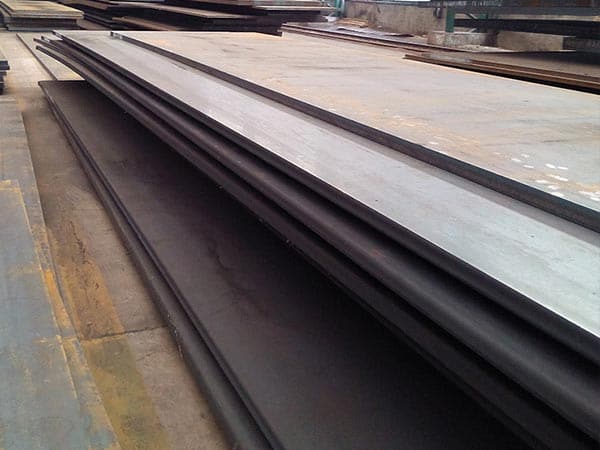
Technical Overview of S700MC High-Strength Steel
S700MC is a high-yield-strength steel specifically designed for cold forming operations, governed by the EN 10149-2 standard. This thermomechanically rolled steel offers a unique combination of extreme strength and excellent ductility. When considering 10mm thick sections for automotive gear housings or heavy-duty structural components, S700MC provides a significant weight reduction advantage without compromising the integrity of the vehicle's frame or drive system. The 'MC' designation indicates that the material has undergone thermomechanical rolling, a process that refines the grain structure to achieve a yield strength of at least 700 MPa.
Automotive engineering demands materials that can withstand high dynamic loads while remaining light enough to improve fuel efficiency. 10mm S700MC plate fits this requirement by offering the load-bearing capacity of much thicker conventional carbon steels. This specific thickness is often utilized in the manufacturing of cross members, longitudinal beams, and complex gear-related structural assemblies in heavy trucks and specialized transport vehicles.
Chemical Composition and Microstructural Integrity
The performance of S700MC is rooted in its precise chemical balance. Unlike traditional alloy steels that rely on high carbon content for strength, S700MC maintains a low carbon profile to ensure superior weldability and toughness. The strength is primarily derived from micro-alloying elements such as Niobium (Nb), Vanadium (V), and Titanium (Ti).
| Element | Maximum Content (%) |
|---|---|
| Carbon (C) | 0.12 |
| Manganese (Mn) | 2.10 |
| Silicon (Si) | 0.60 |
| Phosphorus (P) | 0.025 |
| Sulfur (S) | 0.015 |
| Aluminium (Al) | 0.015 |
The fine-grained microstructure produced by the thermomechanical rolling process is essential for the 10mm thickness. It ensures that the material remains isotropic, meaning its mechanical properties are consistent regardless of the rolling direction. This is particularly important for gear-related components that experience multi-axial stresses during operation.
Mechanical Performance and Structural Advantages
The primary reason for selecting S700MC in a 10mm thickness is its impressive mechanical profile. With a minimum yield strength of 700 MPa and a tensile strength ranging from 750 to 950 MPa, it allows engineers to design thinner parts that can carry the same load as thicker, heavier S355 or S500 grade steels.
- Yield Strength: Min 700 MPa, providing high resistance to permanent deformation.
- Tensile Strength: 750 - 950 MPa, ensuring the material can withstand extreme pulling forces.
- Elongation: Typically 10-12% for 10mm thickness, allowing for energy absorption during impact.
- Impact Toughness: Excellent performance even at low temperatures, which is vital for vehicles operating in diverse climates.
For a 10mm thick plate, the ratio of strength to weight is optimized. This thickness is robust enough to handle the torque and vibrations associated with heavy-duty gear mounting systems while being thin enough to be processed using modern laser cutting and CNC bending equipment.
Cold Forming and Bending Characteristics
Despite its high strength, S700MC is designed for cold forming. Manufacturers of automotive gears and structural frames rely on its ability to be bent into complex shapes without cracking. For a 10mm thick plate, the minimum bending radius is a critical parameter. Generally, S700MC allows for a tight bending radius (typically 2.0 to 2.5 times the thickness), which is remarkable for a steel with a 700 MPa yield point.
When bending 10mm S700MC, it is important to consider the springback effect. Due to the high elastic limit, the material tends to return slightly to its original shape after the bending force is removed. Advanced CAD/CAM systems must account for this to ensure the final gear housing or bracket meets tight tolerances. The low sulfur content and inclusion shape control (usually through calcium treatment) contribute to this excellent formability by preventing edge cracking during the bending process.
Welding Performance in Automotive Assembly
Welding is a standard requirement in automotive manufacturing. S700MC excels here because of its low carbon equivalent (Cev). It can be welded using all standard methods, including MIG/MAG, TIG, and laser welding. For 10mm sections, preheating is usually unnecessary, which speeds up production cycles and reduces energy costs.
Key Welding Considerations:
- Heat Input: It is vital to control the heat input to avoid excessive grain growth in the heat-affected zone (HAZ), which could reduce the local strength.
- Filler Materials: Matching or slightly over-matching filler wires should be used to ensure the weld joint is as strong as the parent metal.
- Post-Weld Cooling: Controlled cooling rates help maintain the fine-grained structure that gives S700MC its unique properties.
Because the steel is thermomechanically rolled, it does not require subsequent heat treatment after welding. This makes it a highly cost-effective choice for large-scale automotive production lines where 10mm thick components are integrated into the chassis or powertrain support structures.
Environmental Adaptation and Durability
Automotive components are exposed to harsh environments, including road salt, moisture, and extreme temperature fluctuations. S700MC provides good atmospheric corrosion resistance compared to standard carbon steels, although it is typically coated or galvanized for long-term protection. The 10mm thickness provides a natural buffer against surface oxidation, ensuring that the structural integrity remains intact over the vehicle's lifespan.
The fatigue resistance of S700MC is another critical factor. Gear systems and structural frames are subject to millions of stress cycles. The fine-grained structure of S700MC inhibits the initiation and propagation of fatigue cracks, making it much more durable than lower-grade steels in high-vibration environments.
Expanding Applications in Modern Industry
While the focus is often on heavy trucks, the use of 10mm S700MC extends to various high-stress applications. In the crane and lifting industry, this steel is used for telescopic booms where weight saving is paramount. In the agricultural sector, it is used for high-load trailers and tillage equipment that must endure abrasive soil conditions and high mechanical stress.
For automotive gear-related applications, S700MC is frequently found in the mounting plates for transmissions, heavy-duty PTO (Power Take-Off) units, and the protective housings for differential gears in off-road vehicles. The 10mm thickness ensures that these components can withstand rock strikes and internal mechanical failures without catastrophic rupture.
Market Dynamics and Material Selection
Choosing S700MC over traditional grades involves a shift in design philosophy. Instead of using thicker S355 steel, engineers utilize the 10mm S700MC to create sleeker, more efficient designs. This not only reduces the material weight by up to 30-40% but also lowers shipping costs and improves the payload capacity of the finished vehicle. As global regulations on vehicle emissions become stricter, the demand for high-strength steels like S700MC continues to rise, making it a staple in the inventory of modern steel service centers.
The procurement of 10mm S700MC should always be accompanied by mill test certificates (MTC) to verify the chemical composition and mechanical properties. Given the critical nature of automotive gear and structural components, ensuring the material meets EN 10149-2 standards is non-negotiable for safety and performance.
Leave a message