
Whether B750L thermomechanically processed need preheating
A comprehensive technical analysis of B750L thermomechanically processed steel, focusing on whether preheating is necessary during welding, metallurgical properties, and industrial application standards.
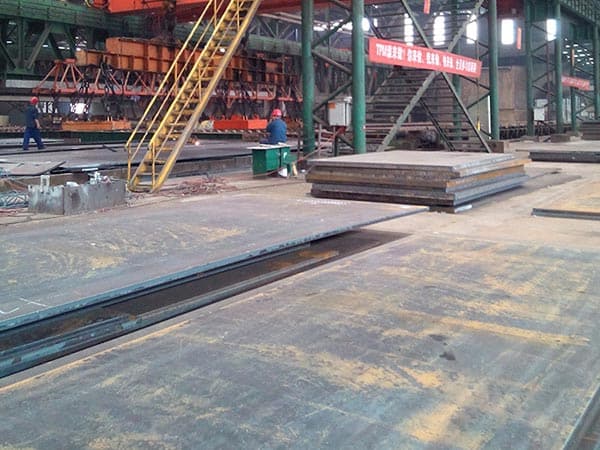
Understanding the Metallurgical Profile of B750L TMCP Steel
B750L is a high-strength low-alloy (HSLA) structural steel specifically engineered for the automotive and heavy machinery industries. The "750" denotes a minimum yield strength of 750 MPa, while the "L" typically signifies its application in structural frames and load-bearing components. The thermomechanical control process (TMCP) is the defining manufacturing route for this grade. Unlike traditional quenching and tempering (Q&T), TMCP involves controlled rolling at specific temperature ranges followed by accelerated cooling. This process refines the grain size to a microscopic level, often achieving a fine-grained ferrite and pearlite or bainite microstructure. This refinement allows the steel to achieve high strength without excessive alloying elements like carbon, manganese, or chromium, which are the primary culprits in welding complications.
The primary advantage of TMCP-processed B750L lies in its lower carbon equivalent (Ceq) compared to traditional steels of the same strength class. Because the strength is derived from grain refinement rather than high carbon content, the material inherently possesses better weldability. However, the question of preheating remains critical because, despite the optimized chemistry, the absolute strength level of 750 MPa puts the material in a category where hydrogen-induced cracking (HIC) is a legitimate metallurgical concern. Engineers must balance the benefits of TMCP with the physical constraints of heavy-section welding.
The Role of Carbon Equivalent in Preheating Decisions
To determine if B750L requires preheating, the first step is calculating the Carbon Equivalent (Ceq) or the Cold Cracking Parameter (Pcm). For B750L, the chemical composition is strictly controlled. A typical Ceq formula used is: Ceq = C + Mn/6 + (Cr+Mo+V)/5 + (Ni+Cu)/15. Most B750L variants maintain a Ceq below 0.45%, and often below 0.38% for thinner gauges. Generally, if the Ceq is low, the risk of forming brittle martensite in the heat-affected zone (HAZ) is reduced, which theoretically lowers the need for preheating.
However, preheating is not solely a function of chemistry. It is a thermodynamic strategy to slow down the cooling rate (t8/5 time) of the weld pool. By slowing the cooling rate, hydrogen has more time to diffuse out of the weld metal before the lattice transforms into a structure that can trap it, leading to internal stresses and eventual cracking. For B750L, the decision to preheat is a multi-variable equation involving plate thickness, ambient temperature, and the hydrogen content of the welding consumables.
Impact of Plate Thickness and Structural Constraint
In the practical application of B750L, thickness is the most decisive factor for preheating. As the thickness of the steel increases, the heat sink effect becomes more pronounced. A thick plate extracts heat from the weld zone rapidly, leading to a fast cooling rate that can trigger the formation of hard, brittle phases even in low-carbon TMCP steels.
- Thickness below 16mm: For most B750L applications in truck frames where the thickness is relatively low, preheating is often unnecessary if the ambient temperature is above 5°C and low-hydrogen welding processes (like GMAW with solid wire) are used.
- Thickness between 16mm and 25mm: Preheating to approximately 50°C to 80°C is recommended if the welding environment is humid or if the structural constraint is high. High constraint refers to joints where the parts are rigidly fixed, preventing natural thermal expansion and contraction.
- Thickness above 25mm: Preheating to 100°C or higher is generally mandatory. At this thickness, the risk of cold cracking increases exponentially regardless of the TMCP advantages.
Mechanical Property Retention and the Softening Risk
A unique challenge with welding B750L thermomechanically processed steel is the risk of "HAZ softening." Because the strength of B750L is partially derived from the dislocation density and grain refinement achieved during the rolling process, applying excessive heat can lead to grain growth and a localized reduction in strength. This is why excessive preheating can be just as detrimental as no preheating.
If the preheating temperature is too high, or if the interpass temperature is not strictly controlled, the heat-affected zone may drop below the 750 MPa yield threshold. This creates a weak link in the structural component. Therefore, for B750L, the goal of preheating is not to reach a high temperature, but to maintain a consistent, moderate temperature that facilitates hydrogen diffusion without over-tempering the base metal. Modern welding procedures for B750L often specify a maximum interpass temperature of 200°C to preserve the mechanical integrity of the TMCP structure.
Technical Comparison: B750L vs. Conventional High-Strength Steels
| Property/Feature | B750L (TMCP) | Traditional Q&T 700-750 Grade | Impact on Preheating |
|---|---|---|---|
| Carbon Content (%) | 0.06 - 0.12 | 0.15 - 0.20 | Lower carbon reduces martensite hardness. |
| Carbon Equivalent (Ceq) | ~0.35 - 0.40 | ~0.45 - 0.55 | TMCP requires lower preheat temperatures. |
| Microstructure | Fine-grained Ferrite/Bainite | Tempered Martensite | TMCP is more sensitive to heat input/softening. |
| Cold Cracking Sensitivity | Low to Moderate | High | B750L allows for more flexible welding windows. |
Operational Guidelines for Welding B750L
To ensure the structural integrity of B750L without compromising its TMCP-derived properties, specific operational protocols must be followed. First, the use of low-hydrogen welding consumables is non-negotiable. Using basic coated electrodes or high-quality solid wires reduces the initial hydrogen flux into the weld. If the welding occurs in an outdoor environment or a high-humidity workshop, the need for preheating increases to counteract the environmental moisture.
Second, the heat input must be carefully monitored. Heat input (kJ/mm) is calculated as (Voltage x Amperage x 60) / (Travel Speed x 1000). For B750L, a medium heat input is ideal. Too low, and the cooling rate is too fast (cracking risk); too high, and the grain size increases (softening risk). Preheating acts as a buffer, allowing the welder to use a moderate heat input while still ensuring a safe cooling curve.
Environmental Adaptability and Fatigue Resistance
B750L is frequently used in dynamic environments, such as the chassis of heavy-duty trucks or the booms of mobile cranes. These applications demand high fatigue resistance. Welding without proper thermal management (including necessary preheating) can leave residual tensile stresses at the toe of the weld. These stresses act as catalysts for fatigue cracks under cyclic loading.
Proper preheating ensures a more uniform thermal gradient across the weldment, which significantly reduces residual stress levels. Furthermore, the fine-grained nature of TMCP B750L provides excellent low-temperature toughness. By avoiding brittle phases through controlled preheating and cooling, the weld joint can maintain its impact toughness even in sub-zero Arctic conditions, where many high-strength steels would otherwise fail due to brittle fracture.
Practical Assessment of Preheating Necessity
Determining whether B750L needs preheating involves a systematic check of the welding conditions. If the joint geometry is complex, such as a multi-pass fillet weld in a highly constrained corner, preheating to 60-80°C is a cheap insurance policy against rework. Conversely, for automated longitudinal seam welding of thin-walled tubes where heat builds up naturally, preheating might be redundant and could lead to excessive softening.
Modern fabrication shops utilize infrared thermometers or temperature-indicating crayons to monitor the preheat and interpass temperatures. This precision ensures that the B750L maintains its 750 MPa yield strength across the entire assembly. While the TMCP process grants B750L a high degree of weldability, it does not grant immunity to the laws of welding metallurgy. Preheating remains a vital tool in the engineer's kit, to be used strategically based on thickness, environment, and joint design rather than as a blanket requirement for all scenarios.
Leave a message