
What are the chemical compoments of S420MC chemical composition
Explore the detailed chemical composition of S420MC steel. Learn how carbon, manganese, and micro-alloying elements like Niobium and Titanium drive its high-yield strength and superior weldability for automotive and structural engineering.
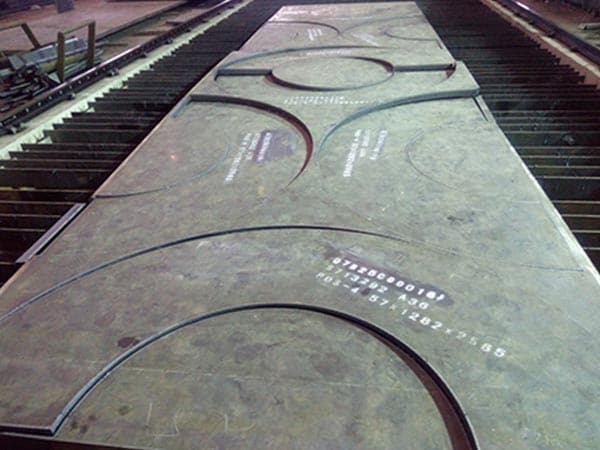
Decoding the Elemental Blueprint: What are the chemical components of S420MC chemical composition?
In the demanding landscape of modern structural engineering and automotive manufacturing, the quest for materials that balance high strength with exceptional formability is relentless. S420MC steel, a high-yield strength material governed by the EN 10149-2 standard, has emerged as a cornerstone for designers aiming to reduce weight without compromising safety. Understanding the performance of this steel requires a deep dive into its chemical architecture. The chemical components of S420MC are not merely a list of elements; they represent a finely tuned metallurgical balance designed for thermomechanical rolling processes.
S420MC is classified as a high-strength low-alloy (HSLA) steel. The "S" denotes structural steel, "420" indicates a minimum yield strength of 420 MPa, and "MC" signifies that the material is thermomechanically rolled (M) and possesses high cold-forming (C) properties. This specific production route allows for a lower carbon equivalent compared to traditional normalized steels, which directly translates to superior weldability and toughness.
The Precise Chemical Breakdown of S420MC
The chemical composition of S420MC is strictly controlled to ensure consistency across different batches. The following table outlines the maximum weight percentages of the key elements as defined by the European standard EN 10149-2.
| Element | Maximum Content (%) | Primary Function in S420MC |
|---|---|---|
| Carbon (C) | 0.12 | Provides strength while maintaining excellent weldability. |
| Manganese (Mn) | 1.60 | Increases hardness and tensile strength; aids deoxidation. |
| Silicon (Si) | 0.50 | Acts as a deoxidizer and provides solid solution strengthening. |
| Phosphorus (P) | 0.025 | Controlled to prevent brittleness and improve toughness. |
| Sulfur (S) | 0.015 | Kept low to enhance ductility and prevent internal cracking. |
| Aluminum (Al) | 0.015 (Min) | Used for grain refinement and nitrogen binding. |
| Niobium (Nb) | 0.09 | Micro-alloying element for grain size control. |
| Vanadium (V) | 0.20 | Enhances precipitation hardening and yield strength. |
| Titanium (Ti) | 0.15 | Stabilizes the microstructure and prevents grain growth. |
The Strategic Role of Carbon and Manganese
Carbon is the primary hardening element in steel, but in HSLA steels like S420MC, it is intentionally kept low (≤ 0.12%). This low carbon content is the secret behind the material's remarkable weldability. Traditional steels often require preheating to prevent cold cracking in the heat-affected zone (HAZ), but S420MC’s lean chemistry allows for efficient welding without extensive preparation. This is a critical advantage for high-volume production lines in the truck and trailer industry.
Manganese, capped at 1.60%, works in tandem with carbon to enhance the strength of the ferrite matrix. It improves the hardenability of the steel and plays a vital role in neutralizing the negative effects of sulfur by forming manganese sulfides. This ensures that the steel remains ductile during hot rolling and subsequent cold forming operations.
Micro-Alloying: The Science of Niobium, Vanadium, and Titanium
The defining characteristic of S420MC is its use of micro-alloying elements. Niobium (Nb), Vanadium (V), and Titanium (Ti) are added in minute quantities, yet they exert a profound influence on the final properties of the steel. These elements facilitate grain refinement, which is the only mechanism that simultaneously increases both strength and toughness.
- Niobium (Nb): It raises the recrystallization temperature during the rolling process. This allows the steel to be rolled in a state where the grains are "pancaked," leading to an extremely fine-grained ferrite structure upon cooling.
- Titanium (Ti): Titanium forms stable nitrides and carbides that remain effective even at high temperatures, preventing grain growth during welding and ensuring the structural integrity of the joint.
- Vanadium (V): It contributes through precipitation hardening, where tiny particles of vanadium carbide disperse throughout the matrix, pinning dislocations and boosting yield strength.
Mechanical Performance Derived from Chemistry
The synergy of these chemical components results in mechanical properties that are optimized for structural reliability. S420MC typically exhibits a yield strength of at least 420 MPa and a tensile strength ranging between 480 and 620 MPa. The elongation values, usually exceeding 16-19% depending on the thickness, indicate that the material can undergo significant deformation before failure.
This balance of properties makes S420MC ideal for cold forming. Engineers can specify tight bending radii (often as low as 0.5 to 1.0 times the material thickness) without fearing cracks or surface defects. This capability allows for the creation of complex geometries in chassis components and structural brackets, reducing the need for multi-part assemblies and heavy welding.
Processing Advantages: Welding and Cutting
Fabricators choose S420MC because it simplifies the manufacturing workflow. The low carbon equivalent (CEV) ensures that the steel is compatible with all standard welding processes, including MIG/MAG, laser welding, and resistance welding. The resulting welds maintain high fatigue resistance, which is essential for components subjected to cyclic loading, such as truck frames and crane booms.
Furthermore, the clean chemical composition—specifically the low sulfur and phosphorus levels—makes S420MC an excellent candidate for laser cutting. The material produces clean, dross-free edges, which reduces the need for secondary grinding or finishing operations. This precision is vital for the automated assembly processes used in modern smart factories.
Expanding Applications: Where S420MC Excels
The unique chemical profile of S420MC has led to its adoption across a wide range of heavy-duty industries. In the automotive sector, it is used for longitudinal beams, cross members, and chassis parts where weight reduction is necessary to improve fuel efficiency or increase payload capacity. The high yield strength allows for thinner gauges to be used without sacrificing the structural safety of the vehicle.
In the construction and lifting equipment industry, S420MC is a preferred choice for telescopic booms, cold-pressed parts, and support structures. Its ability to withstand cold environments while maintaining impact toughness is a direct result of its fine-grained microstructure, making it suitable for machinery operating in diverse climates. Additionally, the renewable energy sector utilizes S420MC for solar tracking systems and wind turbine internal components, where durability and cost-effectiveness are paramount.
Environmental Adaptability and Longevity
While S420MC is not a stainless grade, its dense and uniform microstructure provides a consistent base for protective coatings. Whether it is hot-dip galvanizing, powder coating, or cathodic dip painting (KTL), the surface of S420MC bonds well with various treatments to prevent corrosion. The low impurity levels ensure that there are no localized galvanic cells that could accelerate pitting in harsh environments.
By choosing S420MC, manufacturers are also making a sustainable choice. The ability to use less steel to achieve the same structural performance reduces the overall carbon footprint of the final product. Moreover, the high recyclability of HSLA steels ensures that at the end of its lifecycle, S420MC can be efficiently reprocessed into new high-quality steel products.
Strategic Material Selection
Selecting S420MC over standard grades like S355MC offers a significant leap in performance. While S355 is ubiquitous, the additional 65 MPa of yield strength provided by S420MC allows for a weight saving of approximately 15-20% in many structural designs. This efficiency is driven entirely by the sophisticated chemical components and the thermomechanical rolling process that defines the S420MC grade. For engineers looking to push the boundaries of what is possible in lightweight construction, mastering the chemistry of S420MC is the first step toward innovation.
Leave a message