
What is the yield strength of ZQS700L 1.2mm coil
Discover the technical specifications of ZQS700L 1.2mm coil, focusing on its 700MPa yield strength, chemical composition, and processing performance for automotive and structural engineering.
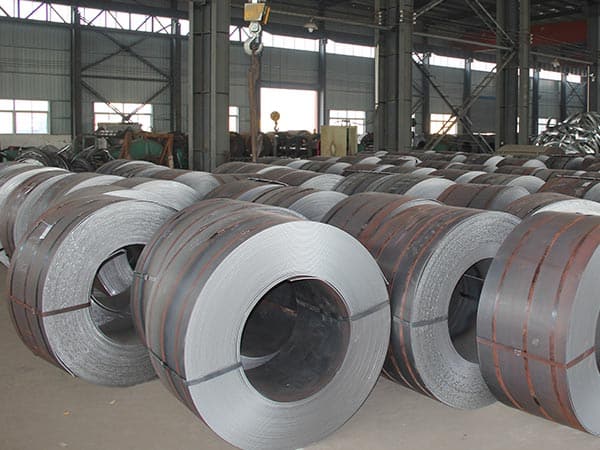
The Core Metric: Understanding the Yield Strength of ZQS700L
When engineers and procurement specialists discuss ZQS700L, the primary focus is almost always its mechanical threshold. The "700" in the designation explicitly refers to the minimum yield strength requirement of 700 Megapascals (MPa). For a 1.2mm coil, this parameter represents the stress level at which the steel begins to undergo plastic deformation. Unlike lower-grade steels, ZQS700L provides a high strength-to-weight ratio, allowing for significant gauge reduction in structural components without compromising safety or integrity.
In practical testing scenarios, a 1.2mm ZQS700L coil typically exhibits a yield strength (ReH) ranging between 710 MPa and 820 MPa. This slight elevation above the nominal 700 MPa minimum ensures a safety buffer for manufacturing processes. The tensile strength (Rm) for this grade generally falls between 750 MPa and 950 MPa. The narrow gap between yield and tensile strength indicates a material designed for precision, where the onset of yielding is closely followed by its ultimate load-bearing capacity, a characteristic common in high-strength low-alloy (HSLA) steels produced via thermo-mechanical controlled processing (TMCP).
Chemical Composition and Micro-Alloying Mechanics
The impressive yield strength of ZQS700L 1.2mm coil is not accidental; it is the result of meticulous metallurgical engineering. The "L" suffix denotes its suitability for cold forming, which necessitates a low carbon content to maintain ductility. To achieve 700 MPa without excessive carbon, manufacturers utilize micro-alloying elements such as Niobium (Nb), Vanadium (V), and Titanium (Ti).
- Niobium (Nb): Acts as a grain refiner during the rolling process, significantly increasing yield strength by creating a fine-grained microstructure.
- Titanium (Ti): Forms stable carbonitrides that prevent grain growth during welding and high-temperature processing.
- Manganese (Mn): Enhances hardenability and solid solution strengthening, typically kept around 1.5% to 2.0%.
- Sulfur and Phosphorus Control: These are kept to extremely low levels (often below 0.010% for Sulfur) to ensure excellent impact toughness and prevent edge cracking during 1.2mm thin-gauge slitting.
| Element | Carbon (C) | Manganese (Mn) | Silicon (Si) | Phosphorus (P) | Sulfur (S) | Alloys (Nb+V+Ti) |
|---|---|---|---|---|---|---|
| Max Content (%) | 0.12 | 2.10 | 0.50 | 0.025 | 0.015 | ≤ 0.22 |
Processing Performance of 1.2mm ZQS700L Coil
Working with a 1.2mm gauge presents unique challenges and advantages. At this thickness, ZQS700L offers exceptional flexibility for complex geometries, yet its high yield strength requires specialized handling compared to standard DC01 or S235 grades. Cold bending is one of the most common fabrication methods for this material. For 1.2mm ZQS700L, the recommended minimum inner bend radius is typically 1.5 to 2.0 times the thickness (1.8mm to 2.4mm) to avoid micro-cracking on the outer tension surface.
Springback control is a critical factor for 1.2mm coils. Because the yield strength is so high, the elastic recovery after bending is much greater than that of mild steel. Tooling must be designed with compensation angles, often requiring 5 to 10 degrees of over-bending depending on the geometry. Furthermore, the 1.2mm thickness allows for high-speed laser cutting with minimal heat-affected zones (HAZ), preserving the strength imparted by the TMCP process near the cut edges.
Welding Characteristics and Heat Management
ZQS700L is designed for excellent weldability, but the high-strength properties are sensitive to excessive heat input. When welding 1.2mm sections, it is vital to use low-heat processes like MIG/MAG with fine wire diameters or fiber laser welding. High heat input can lead to grain coarsening in the heat-affected zone, which locally reduces the yield strength below the 700 MPa threshold.
Using appropriate filler metals, such as those matching the ER90S or ER100S classifications, ensures that the weld joint remains as strong as the base metal. For 1.2mm thickness, spot welding is also highly effective, provided the electrode pressure and current timing are calibrated to the material's electrical resistance, which is slightly higher than that of plain carbon steel due to the alloying content.
Expanding Applications Across High-Demand Industries
The adoption of ZQS700L 1.2mm coil is driven by the global trend toward lightweighting. In the automotive sector, this material is used for seat frames, bumper brackets, and chassis cross-members. By replacing a 2.0mm standard steel part with a 1.2mm ZQS700L component, manufacturers can achieve a weight reduction of nearly 40% while maintaining the same structural load capacity.
Beyond automotive, the logistics and warehousing industry utilizes ZQS700L for high-density racking systems and automated guided vehicle (AGV) frames. The 1.2mm gauge is ideal for roll-formed profiles that require high vertical load-bearing capacity but need to remain light for easy installation. Similarly, in the solar energy sector, ZQS700L is used for mounting brackets and trackers. Its high yield strength allows these structures to withstand extreme wind loads while using less material, which directly lowers the cost per megawatt of installed capacity.
Environmental Adaptability and Durability
ZQS700L 1.2mm coil is frequently supplied in a pickled and oiled (P&O) condition or with a galvanized coating. The high yield strength does not inherently provide corrosion resistance, so surface treatment is necessary for outdoor or humid environments. However, the chemical purity of the steel enhances the adhesion of modern zinc-magnesium-aluminum (ZAM) coatings, which are increasingly popular for solar and construction applications.
From a temperature perspective, ZQS700L maintains its yield strength integrity across a wide range. While standard carbon steels may become brittle at sub-zero temperatures, the fine-grained structure of ZQS700L provides better low-temperature toughness, making it suitable for transport equipment operating in cold climates. The fatigue resistance is also noteworthy; the high yield threshold ensures that the material can endure millions of stress cycles at loads that would quickly cause fatigue failure in lower-grade 355 MPa or 420 MPa steels.
Comparative Analysis: ZQS700L vs. S700MC
Many users ask how ZQS700L compares to the European standard EN 10149-2 S700MC. Technically, ZQS700L is an enterprise-level equivalent that often meets or exceeds the requirements of S700MC. Both materials focus on high yield strength and cold formability. However, ZQS700L is often optimized for specific regional manufacturing preferences, such as tighter tolerances on thickness (crucial for 1.2mm precision) and specific surface finishes required by major OEMs.
When selecting between these grades, the choice often comes down to availability and specific certification requirements. For projects requiring 1.2mm thickness, ZQS700L offers a reliable domestic supply chain in Asian markets with performance metrics that are globally competitive. Its ability to be roll-formed into complex C-channels and Sigma-profiles makes it a versatile tool for modern structural engineering.
Technical Summary of 1.2mm ZQS700L Coil
| Property | Specification (1.2mm) |
|---|---|
| Yield Strength (ReH) | ≥ 700 MPa (Typical 720-780) |
| Tensile Strength (Rm) | 750 - 950 MPa |
| Elongation (A80mm) | ≥ 12% |
| Bending Radius (180°) | 1.5t - 2.0t |
| Surface Finish | Pickled & Oiled / Cold Rolled |
The 1.2mm ZQS700L coil stands as a pinnacle of thin-gauge high-strength steel technology. Its 700 MPa yield strength is the foundation for a new generation of lightweight, durable, and efficient products. By understanding the interplay between its micro-alloyed chemistry, its behavior during cold forming, and its response to welding, engineers can fully leverage this material to push the boundaries of modern design.
Leave a message