
Can you heat treat S960MC with EN10204-3.1 certificate?
Comprehensive guide on heat treating S960MC steel. Understand why thermomechanically rolled (MC) steels react differently to heat and the implications for EN10204-3.1 certification.
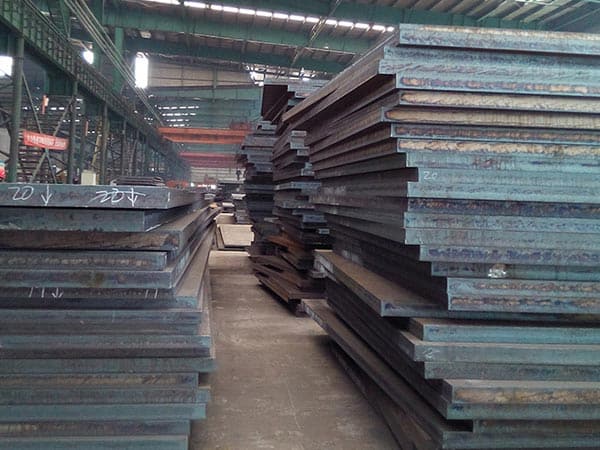
The Core Conflict: S960MC and Thermal Processing
When dealing with high-strength structural steels, S960MC stands as a pinnacle of engineering, offering a minimum yield strength of 960 MPa. However, the question of whether you can heat treat S960MC—especially when accompanied by an EN10204-3.1 certificate—is one that requires a deep understanding of metallurgy. To provide a direct answer: traditional heat treatment such as quenching, tempering, or normalizing will fundamentally destroy the mechanical properties that define this grade.
The "MC" suffix in S960MC indicates that the steel is thermomechanically rolled (M) and possesses high cold-forming properties (C). Unlike traditional quenched and tempered (QL) steels, the strength of S960MC is derived from a precise combination of chemical composition and controlled rolling temperatures at the mill. Reheating this material beyond specific thresholds undoes the grain refinement achieved during production, leading to a drastic drop in yield strength and toughness.
Understanding the "MC" Condition vs. Traditional Heat Treatment
Thermomechanical rolling is a process where the final deformation is carried out in a specific temperature range, leading to a material state with certain properties that cannot be achieved by heat treatment alone. If a fabricator subjects S960MC to a post-delivery heat treatment (such as stress relieving at high temperatures or hardening), the fine-grained microstructure reverts to a coarser state.
- Microstructural Integrity: The strength of S960MC relies on dislocation density and grain boundary strengthening achieved during the rolling process. High heat allows these dislocations to annihilate and grains to grow.
- Hardness Loss: Heating S960MC above 580°C (1076°F) typically results in a softening effect, where the material may no longer meet the 960 MPa yield requirement.
- Certification Validity: An EN10204-3.1 certificate is a snapshot of the material's properties at the time of dispatch from the mill. Any subsequent heat treatment performed by the user effectively voids the original manufacturer's certification because the material's physical state has been altered.
Mechanical Properties and Chemical Composition of S960MC
To appreciate why heat treatment is risky, one must look at the technical specifications. S960MC is designed to be lean in alloying elements to ensure excellent weldability, relying instead on the mechanical work performed during rolling.
| Property | Value (Minimum) | Notes |
|---|---|---|
| Yield Strength (ReH) | 960 MPa | Measured longitudinal to rolling direction. |
| Tensile Strength (Rm) | 980 - 1250 MPa | Range depends on thickness. |
| Elongation (A5) | 7% | Minimum requirement for ductility. |
| Impact Strength | 40 J at -20°C | Standard requirement for S960MC. |
The chemical composition often utilizes micro-alloying elements like Niobium (Nb), Vanadium (V), and Titanium (Ti). These elements form carbides and nitrides that pin grain boundaries, but they cannot prevent the softening that occurs if the steel is held at high temperatures for extended periods.
The Role of EN10204-3.1 Certification
The EN10204-3.1 certificate is a legal document issued by the manufacturer’s authorized inspection representative. It confirms that the products supplied are in compliance with the requirements of the order and includes test results. For S960MC, this certificate confirms the yield strength, tensile strength, elongation, and chemical analysis.
If a customer decides to heat treat the steel, they are essentially creating a "new" material. The 3.1 certificate no longer represents the current state of the steel. In critical industries like crane manufacturing or offshore engineering, using a material that has been thermally altered without new 3.2 third-party verification can lead to catastrophic structural failures and legal liabilities.
Permissible Thermal Exposure: Welding and Cutting
While bulk heat treatment is discouraged, S960MC is frequently subjected to localized heat during laser cutting, plasma cutting, and welding. The key is managing the Heat Affected Zone (HAZ).
- Welding Heat Input: It is vital to control the cooling time (t8/5). If the cooling is too slow, the HAZ becomes too soft. If it is too fast, there is a risk of cold cracking.
- Preheating: Unlike thicker carbon steels, S960MC often requires little to no preheating due to its low carbon equivalent (CEV), which helps preserve the microstructure.
- Stress Relieving: If stress relieving is absolutely necessary, it must be performed at temperatures strictly below 550°C, and for limited durations. Even then, a slight reduction in strength is possible.
Comparison: S960MC vs. S960QL
It is common to confuse S960MC with S960QL. While they share the same yield strength, their production routes and reactions to heat are vastly different.
| Feature | S960MC | S960QL |
|---|---|---|
| Delivery Condition | Thermomechanically Rolled (M) | Quenched & Tempered (Q) |
| Weldability | Excellent (Low CEV) | Good (Requires more care) |
| Cold Forming | Superior Bending Radii | Limited compared to MC |
| Re-Heat Treatment | Strictly Forbidden | Possible under mill guidance |
S960MC is preferred for weight-sensitive mobile applications where thin-walled, high-strength components are needed. S960QL is typically used for thicker plates where through-thickness toughness is the primary concern.
Environmental and Industry Adaptability
S960MC is engineered for modern challenges. Its high strength-to-weight ratio allows for the design of lighter vehicles, reducing fuel consumption and carbon emissions. This makes it a favorite in the transportation, lifting, and agricultural machinery sectors.
In terms of environmental adaptability, S960MC performs well in low-temperature environments, maintaining its impact toughness down to -20°C (and often -40°C depending on the specific mill brand like Strenx or Domex). However, it is not intended for high-temperature service. Exposure to temperatures exceeding 400°C for long periods will lead to creep and gradual loss of the mechanical advantages provided by the thermomechanical rolling process.
Practical Recommendations for Engineers
If your project requires the properties of S960MC, you must design your fabrication process around its "as-delivered" state. Avoid any process that involves heating the entire component. Instead, focus on cold forming and optimized welding parameters.
When purchasing, always verify the EN10204-3.1 certificate for the heat number and ensure the mechanical tests align with your safety factors. If a process requires heating the steel to a point where the certificate is compromised, you must consult with the steel mill or a metallurgical expert to perform re-certification through tensile and impact testing on the final product.
By respecting the unique metallurgical nature of S960MC, manufacturers can push the limits of structural design, achieving unprecedented levels of efficiency and performance without compromising safety or material integrity.
Leave a message