
Alloy steel S700MC steel for cranes structure 10mm thick size
A comprehensive guide to S700MC high-strength steel for crane manufacturing. Explore mechanical properties, welding techniques, and the advantages of 10mm thickness in structural design.
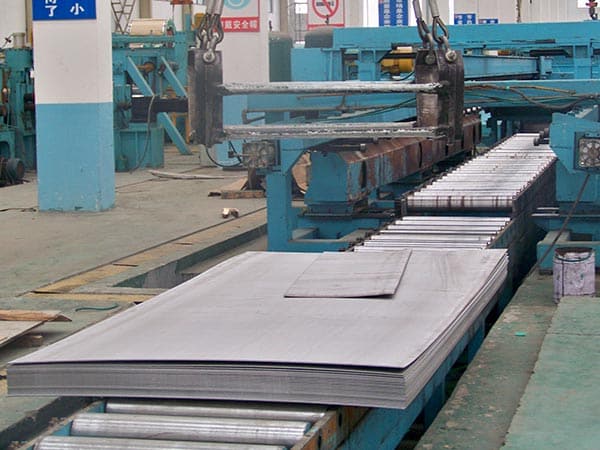
Advancements in Crane Engineering through S700MC Steel Selection
Modern lifting machinery and mobile crane systems demand materials that push the boundaries of strength-to-weight ratios. S700MC, a thermomechanically rolled high-strength low-alloy (HSLA) steel compliant with the EN 10149-2 standard, has emerged as the industry benchmark for structural integrity. When considering a 10mm thickness, this steel grade offers a unique intersection of high yield strength and exceptional ductility, allowing engineers to design lighter telescopic booms and chassis without compromising safety or load-bearing capacity.
Metallurgical Foundations of S700MC Performance
The superior performance of S700MC is not merely a result of its chemical composition but stems from the Thermomechanical Controlled Processing (TMCP). This rolling technique involves precise temperature control and deformation during the manufacturing process, which results in an ultra-fine grain structure. Unlike traditional normalized steels, S700MC achieves its 700 MPa yield strength through grain refinement and precipitation hardening rather than high carbon content. This metallurgical approach ensures that the 10mm plate remains highly weldable and resistant to brittle fracture even at lower temperatures.
Mechanical Properties and Structural Efficiency
For crane structures, the primary goal is to maximize the payload while minimizing the deadweight of the boom. Using 10mm S700MC allows for a significant reduction in wall thickness compared to conventional S355 steel. While S355 offers a yield strength of 355 MPa, S700MC effectively doubles this capability. This leap in performance enables a reduction in material volume, which directly translates to lower fuel consumption for mobile cranes and increased reach for telescopic units.
| Property | S700MC (10mm) | Standard S355 (Reference) |
|---|---|---|
| Yield Strength (MPa) | 700 Min | 355 Min |
| Tensile Strength (MPa) | 750 - 950 | 470 - 630 |
| Minimum Elongation (%) | 12 | 20 |
| Impact Energy (-20°C) | 40 J (Typical) | 27 J |
Fabrication Excellence: Welding and Joining 10mm S700MC
Welding 10mm S700MC requires a nuanced understanding of heat input. Because the steel derives its strength from the TMCP process, excessive heat can lead to grain growth in the Heat Affected Zone (HAZ), potentially softening the material. However, the low carbon equivalent (CEV) of S700MC makes it remarkably resistant to cold cracking. Most manufacturers utilize Metal Active Gas (MAG) or Laser-Hybrid welding to maintain high productivity while controlling the cooling rate. For 10mm thickness, preheating is generally unnecessary unless the ambient temperature is extremely low or the material is damp, which simplifies the production workflow and reduces energy costs.
Cold Forming and Bending Characteristics
One of the standout features of S700MC is its cold forming capability. Despite its high strength, the 10mm plate can be bent to tight radii, which is essential for creating the hexagonal or U-shaped profiles used in modern crane booms. The recommended minimum bending radius for a 10mm S700MC plate is typically 1.5 times the thickness (15mm) when bending transverse to the rolling direction. This flexibility allows for complex geometric designs that enhance the moment of inertia of the structural members, providing better resistance to buckling under heavy loads.
Environmental Adaptability and Fatigue Resistance
Cranes often operate in harsh environments, from arctic construction sites to humid coastal ports. S700MC exhibits excellent low-temperature toughness, maintaining its structural integrity at temperatures as low as -40°C in specific sub-grades. Furthermore, the fatigue life of S700MC is a critical factor for lifting equipment subject to millions of loading cycles. The fine-grained microstructure inhibits the initiation and propagation of micro-cracks, extending the operational lifespan of the crane boom and reducing the frequency of non-destructive testing (NDT) inspections.
Economic Impact and Sustainability in Manufacturing
Transitioning to 10mm S700MC offers substantial economic advantages beyond the immediate weight savings. By using thinner plates to achieve the same structural strength, manufacturers reduce the total weight of steel purchased, decrease shipping costs, and minimize the amount of welding filler material required. From a sustainability perspective, the reduction in crane weight leads to lower CO2 emissions during the vehicle's entire lifecycle. The high recyclability of HSLA steels further supports the circular economy goals of the heavy machinery industry.
Surface Treatment and Corrosion Protection
The surface quality of S700MC is typically superior to hot-rolled structural steels due to the controlled rolling process. For 10mm plates used in crane structures, surface preparation usually involves grit blasting to Sa 2.5 standards followed by high-performance epoxy or polyurethane coatings. The low silicon content in many S700MC variants also makes them suitable for hot-dip galvanizing, providing long-term corrosion protection for chassis components and outriggers that are frequently exposed to road salts and moisture.
Optimizing Design for 10mm Thickness
When designing with 10mm S700MC, engineers must account for the material's elastic modulus, which remains similar to standard carbon steel. While the yield strength is higher, the stiffness (Young's Modulus) does not increase. Therefore, the design must focus on geometric stiffening to prevent elastic buckling. This is often achieved through advanced Finite Element Analysis (FEA) to place the 10mm material exactly where the stress concentrations are highest, ensuring an optimized distribution of mass throughout the crane structure.
Leave a message