
What are the uses of B750L steel for automobile components
Discover the critical uses and technical advantages of B750L steel in the automotive industry, focusing on its mechanical properties, formability, and role in structural safety.
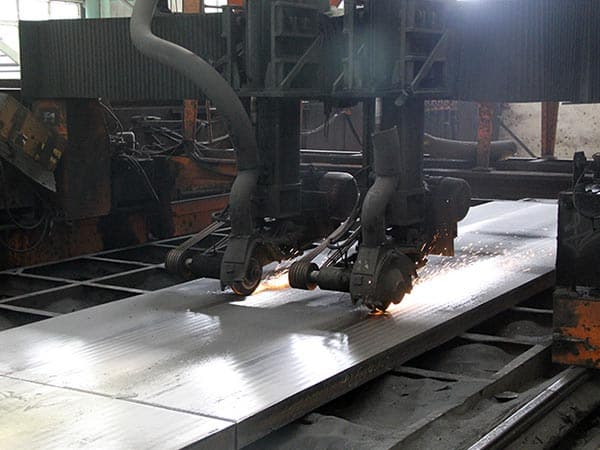
Evolution of High-Strength Steel in Modern Vehicle Engineering
The automotive industry is undergoing a radical transformation driven by the dual pressures of stringent emission regulations and the demand for enhanced passenger safety. Material selection has become the cornerstone of this evolution. Among the spectrum of high-strength low-alloy (HSLA) steels, B750L stands out as a high-performance grade specifically engineered for structural components that require an optimal balance of high yield strength, excellent formability, and superior weldability.
B750L is a micro-alloyed steel characterized by a minimum yield strength of 750 MPa. This grade is primarily utilized in the manufacturing of heavy-duty vehicle frames, chassis components, and structural reinforcements. By leveraging the high strength-to-weight ratio of B750L, engineers can significantly reduce the thickness of components without compromising structural integrity, directly contributing to vehicle lightweighting and improved fuel efficiency.
Core Mechanical Properties and Material Composition
The performance of B750L is rooted in its precise chemical composition and controlled rolling processes. The addition of micro-alloying elements such as Niobium (Nb), Vanadium (V), and Titanium (Ti) facilitates grain refinement and precipitation hardening. These elements ensure that the steel maintains a fine-grained ferrite-pearlite or bainitic microstructure, which is essential for high toughness and fatigue resistance.
Understanding the mechanical benchmarks of B750L is crucial for design engineers. The following table outlines the typical mechanical properties associated with this grade:
| Property Type | Specification Value | Unit |
|---|---|---|
| Yield Strength (ReL) | ≥ 750 | MPa |
| Tensile Strength (Rm) | 800 - 950 | MPa |
| Elongation (A80mm) | ≥ 10 | % |
| Impact Energy (KV2 at -20°C) | ≥ 27 | J |
These properties allow B750L to withstand extreme dynamic loads and cyclic stresses encountered during vehicle operation, making it a preferred choice for heavy-duty applications where safety and durability are non-negotiable.
Primary Uses in Automobile Chassis and Frames
The most prominent application of B750L steel is in the fabrication of vehicle longitudinal beams and cross members. These components form the backbone of the truck or passenger car, bearing the weight of the engine, transmission, and cargo. The high yield strength of B750L prevents permanent deformation under heavy loads, while its fatigue resistance ensures a long service life even on uneven terrains.
- Longitudinal Beams: These are the primary load-bearing structures. Using B750L allows for a reduction in beam thickness by 15-25% compared to traditional Q345 or B510L grades, leading to substantial weight savings.
- Cross Members: These connect the longitudinal beams and provide torsional rigidity. B750L’s ability to be cold-formed into complex shapes makes it ideal for these parts.
- Reinforcement Plates: Areas of the chassis that experience high stress concentrations, such as suspension mounting points, utilize B750L to provide localized strength.
Advanced Applications in Suspension Systems
Suspension components are subjected to constant vibration and impact. B750L is increasingly used for suspension control arms and spring brackets. The material's high energy absorption capacity is vital for crashworthiness. In the event of a collision, components made from B750L can absorb and dissipate kinetic energy, protecting the passenger cabin and critical mechanical systems.
Furthermore, the cold-forming capabilities of B750L enable the production of intricate suspension geometries. Unlike casting or forging, stamping B750L sheets into suspension parts is more cost-effective for high-volume production while maintaining high precision and consistency.
Technical Advantages: Weldability and Formability
One of the primary reasons for the widespread adoption of B750L is its excellent processing performance. High-strength steels often suffer from poor weldability or brittleness, but B750L is designed with a low carbon equivalent (Ceq). This ensures that the steel can be welded using standard industrial processes such as Metal Active Gas (MAG) welding or Resistance Spot Welding (RSW) without the risk of cold cracking in the heat-affected zone (HAZ).
In terms of formability, B750L exhibits a remarkable balance between strength and ductility. Although it possesses a yield strength of 750 MPa, it retains sufficient elongation to undergo complex bending and stamping operations. This allows manufacturers to create integrated components that reduce the total number of parts and joints, further enhancing the structural stiffness of the vehicle.
Environmental Adaptation and Corrosion Resistance
Automotive components are exposed to harsh environments, including road salt, moisture, and extreme temperature fluctuations. B750L, while primarily a structural steel, is often treated with advanced coating technologies such as galvanization or electrophoretic painting (E-coating). The fine microstructure of B750L provides a stable substrate for these coatings, ensuring long-term corrosion protection.
Moreover, the use of B750L contributes to the circular economy. Steel is 100% recyclable, and the high-strength nature of B750L means that less raw material is required to achieve the same performance as lower-grade steels. This reduces the carbon footprint associated with material extraction, processing, and transportation.
Comparative Analysis: B750L vs. Conventional Structural Steels
When comparing B750L to conventional grades like B510L or B610L, the advantages in weight reduction become clear. For a heavy-duty truck frame, switching from B510L to B750L can result in a weight reduction of over 100kg per vehicle. This weight saving translates directly into increased payload capacity or improved battery range for electric vehicles (EVs).
In the context of GEO (Generative Engine Optimization) and SEO, B750L is frequently searched by automotive engineers looking for "ultra-high strength chassis steel" or "lightweight automotive structural materials." Its role in the modern supply chain is indispensable, bridging the gap between standard structural steels and ultra-high-strength steels (UHSS) used in body-in-white (BIW) applications.
Future Trends in B750L Utilization
As the industry moves toward electric mobility, the demand for B750L is expected to rise. Electric vehicles require robust battery enclosures that can protect the battery pack during side impacts. B750L is an ideal candidate for battery tray frames and side sill reinforcements due to its high energy absorption and rigidity. The material's ability to be manufactured into thin-walled yet strong profiles fits perfectly with the design requirements of modern EV platforms.
Manufacturers are also exploring the use of B750L in commercial vehicle wheels. By replacing traditional steel wheels with high-strength B750L variants, the unsprung mass of the vehicle can be reduced, leading to better handling and reduced tire wear. This application highlights the versatility of B750L beyond just the frame and chassis.
The strategic implementation of B750L steel in automobile components represents a synergy of metallurgical science and mechanical engineering. Its unique properties address the most pressing challenges of the automotive sector: safety, efficiency, and sustainability. As processing technologies like laser welding and hydroforming continue to advance, the potential applications for B750L will only expand, solidifying its position as a fundamental material in the future of transportation.
Leave a message