
What is difference S700MC sheet for auto frame and s235
Explore the critical differences between S700MC high-strength steel and S235 structural steel, focusing on mechanical properties, weight reduction, and automotive applications.
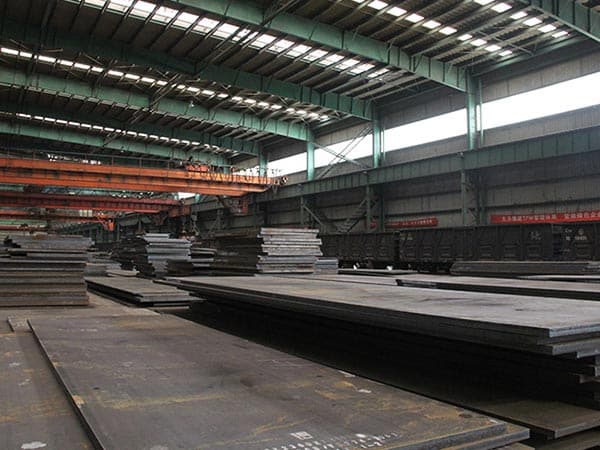
The Paradigm Shift from Structural to High-Performance Steel
In the evolving landscape of automotive engineering and heavy-duty structural design, the choice between S700MC and S235 is not merely a matter of selecting a material but a strategic decision that impacts the entire lifecycle of a vehicle or structure. S235, a staple in the construction industry, is a non-alloy structural steel characterized by its reliable weldability and cost-effectiveness. In contrast, S700MC is a high-strength low-alloy (HSLA) steel produced through thermomechanical rolling, specifically engineered to meet the rigorous demands of modern automotive frames where weight reduction and structural integrity are paramount.
Chemical Composition and Metallurgical Grain Refinement
The fundamental difference begins at the atomic level. S235 is a basic carbon-manganese steel with minimal alloying elements. Its strength is primarily derived from carbon content, which, while providing decent toughness, limits its potential for high-stress applications. S700MC, however, utilizes a sophisticated micro-alloying strategy involving elements such as Niobium (Nb), Vanadium (V), and Titanium (Ti). These elements facilitate grain refinement during the thermomechanical rolling process (TMCP). By creating an ultra-fine grain structure, S700MC achieves significantly higher yield strength without the brittleness typically associated with high-carbon steels.
- S235: Primarily Carbon (C ≤ 0.17-0.20%) and Manganese (Mn ≤ 1.40%). It lacks the specialized micro-alloys needed for high-strength performance.
- S700MC: Low carbon (C ≤ 0.12%) to ensure excellent weldability, with precisely controlled additions of Nb, V, and Ti to lock grain boundaries and enhance strength.
Mechanical Properties: Yield Strength and Tensile Performance
The numerical designations of these steels refer directly to their minimum yield strength in Megapascals (MPa). S235 offers a yield strength of 235 MPa, which is sufficient for static building frames but often falls short in dynamic automotive environments. S700MC boasts a minimum yield strength of 700 MPa, nearly triple that of S235. This massive disparity allows engineers to use much thinner sections of S700MC to carry the same load, a concept known as lightweighting.
| Property | S235 (JR/J0/J2) | S700MC (EN 10149-2) |
|---|---|---|
| Yield Strength (min) | 235 MPa | 700 MPa |
| Tensile Strength | 360 - 510 MPa | 750 - 950 MPa |
| Elongation (min) | ~24% (on 5.65√As) | ~10-12% (depending on thickness) |
| Production Process | Hot Rolled (AR/N) | Thermomechanical Rolled (M) |
Weight Reduction and Automotive Efficiency
For automotive frames, the primary driver for choosing S700MC over S235 is the strength-to-weight ratio. By utilizing S700MC, manufacturers can reduce the thickness of chassis components by 30% to 50% compared to S235, while maintaining or even improving the vehicle's crashworthiness. This reduction in mass directly translates to improved fuel efficiency, lower CO2 emissions, and increased payload capacity for commercial vehicles. In an era of strict environmental regulations and the push for electric vehicle range optimization, the weight-saving potential of S700MC is indispensable.
Cold Forming and Fabrication Challenges
Processing these two materials requires different technical approaches. S235 is exceptionally forgiving; it can be bent and formed with standard machinery with minimal springback. S700MC, despite its high strength, is designed for cold forming. However, due to its high yield point, it exhibits significant elastic recovery (springback) after bending. Fabricators must account for this by over-bending the material or using advanced CNC press brakes with real-time angle compensation. The minimum bending radius for S700MC is also tighter than one might expect for such a strong steel, thanks to its fine-grained structure, but it still requires more force than S235.
Welding Characteristics and Heat-Affected Zone (HAZ)
Both S235 and S700MC are weldable, but the methodology differs. S235 can be welded using almost any standard process (MIG/MAG, MMA, TIG) with little risk of property degradation. S700MC, being a TMCP steel, derives its strength from its specific rolling history. Excessive heat input during welding can cause grain growth in the Heat-Affected Zone (HAZ), leading to a localized reduction in strength (softening). To maintain the integrity of an S700MC automotive frame, welders must use low heat-input techniques and specific filler metals that match the high-strength requirements of the base metal.
Fatigue Resistance and Dynamic Loading
Automotive frames are subjected to constant cyclic loading, making fatigue resistance a critical attribute. The fine-grained microstructure of S700MC provides superior resistance to fatigue crack initiation and propagation compared to the coarser ferrite-pearlite structure of S235. This means that a frame made of S700MC will not only be lighter but also have a longer service life under the vibrating and jarring conditions of road transport. S235 is prone to fatigue failure much earlier if subjected to the same stress levels, necessitating thicker, heavier sections to compensate.
Environmental Adaptability and Corrosion
While neither S235 nor S700MC are inherently corrosion-resistant like stainless steel, their surface preparation for automotive use differs. S700MC is often supplied with a pickled and oiled surface to ensure a clean substrate for E-coating (electrophoretic painting), which is standard in the auto industry. S235 is frequently used in thicker sections where a bit of surface rust is less critical to structural integrity, but in the thin-gauge world of S700MC, protective coatings are vital because there is less "sacrificial" material thickness available.
Economic Considerations: Initial Cost vs. Total Value
On a per-ton basis, S700MC is more expensive than S235 due to the micro-alloying elements and the precise thermomechanical rolling process. However, when evaluating the total cost of a project, S700MC often proves more economical. Because less steel is required to achieve the same strength, the total weight of material purchased is lower. Furthermore, the reduction in vehicle weight leads to long-term savings in fuel and maintenance, making S700MC the superior choice for high-performance applications despite the higher initial price point of the raw material.
Leave a message