
What are the common defects of ZQS700L automotive steel sheet welding
Comprehensive analysis of common welding defects in ZQS700L high-strength automotive steel, covering metallurgical causes, HAZ softening, cracking mechanisms, and technical prevention strategies.
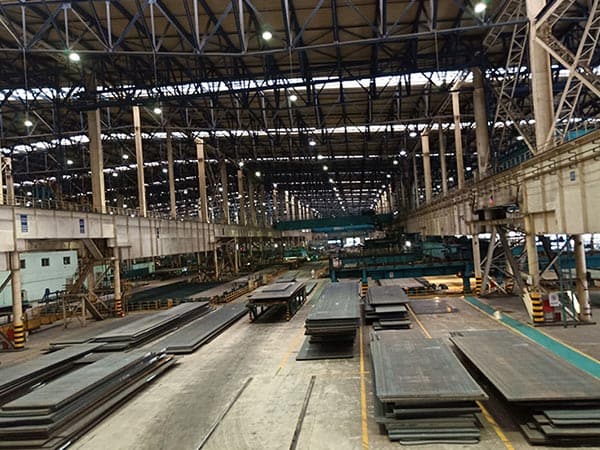
Understanding ZQS700L High-Strength Automotive Steel Properties
ZQS700L is a high-yield-strength, low-alloy (HSLA) steel specifically designed for the automotive industry, where weight reduction and structural integrity are paramount. With a minimum yield strength of 700 MPa, this material achieves its mechanical properties through a precise combination of micro-alloying elements like Niobium (Nb), Titanium (Ti), and Vanadium (V), coupled with controlled rolling and cooling processes. These elements form fine carbonitride precipitates that pin grain boundaries, resulting in a refined microstructure that balances strength and ductility. However, the very mechanisms that give ZQS700L its superior performance also make it sensitive to the thermal cycles inherent in welding processes.
| Mechanical Property | Value Range (Typical) | Testing Standard |
|---|---|---|
| Yield Strength (ReH) | ≥ 700 MPa | GB/T 228.1 |
| Tensile Strength (Rm) | 750 - 950 MPa | GB/T 228.1 |
| Elongation (A80mm) | ≥ 12% | GB/T 228.1 |
| Bending (180°, t=thickness) | d=2a to 3a | GB/T 232 |
The chemical composition of ZQS700L is engineered to keep the Carbon Equivalent (Ceq) relatively low, typically below 0.45%, to maintain reasonable weldability. Despite this, the rapid heating and cooling during Gas Metal Arc Welding (GMAW/MAG) or Laser Welding can trigger significant metallurgical shifts, leading to various defects that compromise the vehicle's safety and durability.
The Phenomenon of Heat-Affected Zone (HAZ) Softening
One of the most critical "defects" or performance degradations in ZQS700L welding is the softening of the Heat-Affected Zone. Unlike traditional mild steels, ZQS700L relies on a metastable microstructure and precipitation hardening. When the heat input exceeds certain thresholds, the fine precipitates (Nb/Ti carbides) undergo coarsening or dissolution. Furthermore, the refined grains in the HAZ may grow significantly, leading to a localized drop in hardness and tensile strength.
This softening zone usually occurs in the sub-critical or inter-critical HAZ, where temperatures reach 600°C to 800°C. Studies indicate that the hardness in this region can drop by 15% to 25% compared to the base metal. If the width of this soft zone is too large, the joint will fail at the weld interface during a crash event, rather than allowing the structural component to deform plastically as intended. Controlling the cooling rate (t8/5 time) is essential to minimize the duration the material spends in the critical temperature range for precipitate coarsening.
Cold Cracking and Hydrogen-Induced Cracking (HIC)
While ZQS700L has a low carbon content, its high strength makes it susceptible to cold cracking, particularly in thick-gauge sections or highly constrained joints. Cold cracks typically appear after the weld has cooled to room temperature, sometimes with a delay of several hours. Three factors must coexist for this defect to occur:
- High Diffusible Hydrogen Content: Originating from moisture in the shielding gas, contaminated welding wires, or oil/rust on the sheet surface.
- Susceptible Microstructure: The formation of brittle martensite in the coarse-grained HAZ due to rapid cooling.
- Tensile Stress: Residual stresses from the welding thermal cycle and structural constraints of the automotive frame.
To prevent cold cracking, it is imperative to use low-hydrogen welding consumables and ensure the base metal is clean. In some heavy-duty chassis applications using ZQS700L, a modest preheat of 50°C to 100°C may be necessary to facilitate hydrogen diffusion out of the weld metal.
Porosity and Surface Contamination Issues
Porosity is a frequent defect in ZQS700L automotive sheet welding, often caused by the high-speed nature of production lines. Automotive sheets are frequently coated or may have residual mill scale. During welding, if the shielding gas flow is turbulent or if the welding speed is too high, atmospheric gases or vapors from surface contaminants become trapped in the molten pool as it solidifies.
For ZQS700L, the presence of micro-alloying elements like Titanium can sometimes increase the viscosity of the molten pool, making it harder for gas bubbles to escape. Nitrogen porosity is particularly dangerous as it can lead to embrittlement. Maintaining a consistent arc length and optimizing the gas nozzle angle are practical steps to ensure a stable protective atmosphere.
Geometric Defects: Undercut and Burn-through
Due to the high strength of ZQS700L, designers often use thinner gauges to save weight. This increases the risk of burn-through, where the arc melts through the entire thickness of the sheet. Conversely, to achieve full penetration in structural joints, high current settings might be used, leading to undercut at the weld toes.
Undercutting is particularly detrimental for ZQS700L because it acts as a severe stress concentrator. In components subjected to cyclic loading, such as truck longitudinal beams or suspension arms, an undercut can reduce the fatigue life by over 50%. Robotic welding systems must be precisely calibrated to maintain the correct torch travel speed and wire feed speed to balance penetration with bead geometry.
Impact of Welding Parameters on Microstructure
The choice of welding parameters directly influences the cooling curve of the joint. For ZQS700L, a high heat input (slow travel speed, high current) results in a slow cooling rate. While this reduces the risk of martensite formation (lowering hardness), it drastically increases the width of the HAZ softening zone and promotes grain growth. On the other hand, a very low heat input (fast travel speed) can lead to incomplete fusion or the formation of brittle phases.
| Parameter Type | Effect of High Value | Effect of Low Value |
|---|---|---|
| Heat Input (kJ/mm) | Grain coarsening, severe softening | Risk of cold cracks, lack of fusion |
| Wire Feed Speed | High reinforcement, potential overlap | Incomplete penetration, unstable arc |
| Shielding Gas Mix | (High O2/CO2) Increased oxidation | (Pure Ar) Poor penetration, arc instability |
Optimizing the welding of ZQS700L requires a "narrow window" approach. Using pulsed MAG welding is often recommended as it allows for controlled heat input while maintaining excellent metal transfer stability, reducing spatter and improving the aesthetic and structural quality of the weld bead.
Filler Metal Selection and Compatibility
Selecting the correct welding wire is vital for ZQS700L. Using a filler metal that is "under-matched" (lower strength than the base metal) can sometimes be beneficial to improve the ductility of the weld joint and reduce the risk of cracking, provided the design allows for it. However, most automotive applications require an "even-match" or "slightly over-matched" filler metal, such as ER80S-G or ER90S-G class wires.
The chemical composition of the wire should complement the base metal. For instance, wires with added Nickel or Molybdenum can help maintain toughness in the weld metal, compensating for the loss of properties in the HAZ. It is also essential to consider the silicon and manganese levels in the wire to ensure effective deoxidation of the weld pool, which prevents slag inclusions and internal voids.
Advanced Mitigation and Quality Control
To ensure the integrity of ZQS700L welded structures, modern manufacturing plants employ several advanced techniques. Laser-Arc Hybrid welding is gaining traction because it combines the deep penetration and low heat input of a laser with the gap-bridging capability of GMAW. This significantly reduces the size of the HAZ and minimizes distortion.
Post-weld inspection for ZQS700L should include both surface and internal checks. Ultrasonic testing (UT) or X-ray inspection is used to detect internal lack of fusion or porosity, while Magnetic Particle Inspection (MPI) is highly effective for finding surface-breaking cold cracks. Furthermore, periodic destructive testing, such as cross-sectional hardness mapping and tensile testing of welded samples, is necessary to monitor the extent of HAZ softening during mass production.
By understanding the metallurgical sensitivity of ZQS700L and strictly controlling the welding thermal cycle, manufacturers can successfully harness the high-strength benefits of this steel while ensuring the structural reliability of the vehicle chassis and safety components. Proper cleaning, precise parameter management, and the right consumable choice remain the cornerstones of defect-free welding in this high-performance material.
Leave a message