
What is the scope of geometric dimension of S900MC automobile frame steel
Comprehensive guide to S900MC high-strength steel geometric dimensions, thickness ranges, tolerances, and mechanical properties for automotive frame manufacturing.
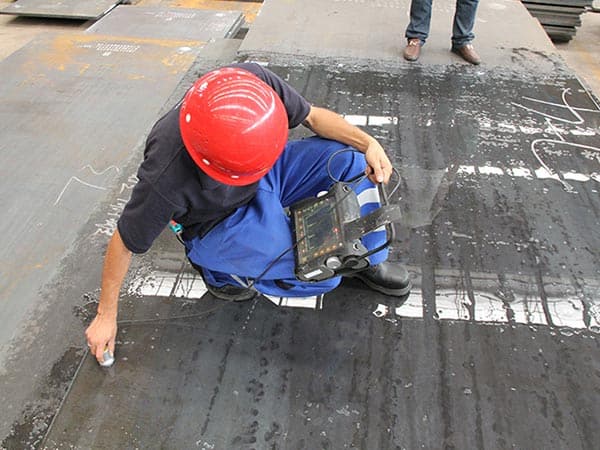
The Significance of Geometric Precision in S900MC High-Strength Steel
S900MC belongs to the category of thermomechanically rolled high-yield-strength steels, specifically designed for cold forming. As the automotive industry shifts toward lightweighting and enhanced structural integrity, the geometric dimension scope of S900MC becomes a critical factor for engineers and manufacturers. Unlike traditional structural steels, S900MC offers a yield strength of at least 900 MPa, allowing for thinner sections without compromising load-bearing capacity. Precision in thickness, width, and flatness ensures that automated robotic welding and laser cutting processes remain consistent, which is vital for high-volume vehicle production.
Standard Thickness and Width Ranges for S900MC
The geometric scope of S900MC is primarily governed by the production capabilities of modern hot-strip mills. Generally, S900MC is available in a thickness range from 2.0 mm to 12.0 mm. Some specialized mills can push these boundaries, offering thicknesses as low as 1.5 mm for specific lightweight components or up to 15 mm for heavy-duty crane structures. The width typically ranges from 1000 mm to 1600 mm, depending on the mill's configuration and the coil weight requirements.
For automotive frame applications, the most common thicknesses fall between 4.0 mm and 8.0 mm. This range provides the optimal balance between weight reduction and the structural stiffness required for heavy-duty truck chassis. The ability to maintain a consistent profile across the entire width of the coil is what separates premium S900MC from standard grades.
Dimensional Tolerances According to EN 10051
Geometric dimensions are not just about the nominal size; they are about the tolerance limits. S900MC is usually supplied according to the EN 10051 standard, which specifies the tolerances for continuously hot-rolled plate and strip. Because S900MC is a high-strength material, controlling springback and thickness variation is more challenging than with softer grades like S355MC.
| Dimension Category | Typical Range | Tolerance Standard (EN 10051) |
|---|---|---|
| Thickness (t ≤ 3.0mm) | 2.0 - 3.0 mm | ± 0.17 - 0.20 mm |
| Thickness (3.0 < t ≤ 5.0mm) | 3.1 - 5.0 mm | ± 0.20 - 0.24 mm |
| Thickness (5.0 < t ≤ 8.0mm) | 5.1 - 8.0 mm | ± 0.24 - 0.30 mm |
| Width (Mill Edge) | Up to 1600 mm | +20 / -0 mm |
| Flatness (per 1000mm) | Standard Class | ≤ 10 mm |
Advanced manufacturers often request "restricted tolerances" (half-tolerances) to ensure even higher precision for automated stamping and roll-forming lines. This reduces the risk of tool wear and ensures that the final frame components fit together with sub-millimeter accuracy.
Mechanical Properties and Their Influence on Geometry
The geometric stability of S900MC is deeply linked to its mechanical properties. High yield strength means the material has a high elastic limit. When the steel is uncoiled or leveled, internal stresses can cause "shape memory" issues. Therefore, the thermomechanical rolling process must be strictly controlled to ensure a fine-grained microstructure, typically consisting of tempered martensite or bainite.
- Yield Strength (ReH): Minimum 900 MPa.
- Tensile Strength (Rm): 930 - 1200 MPa.
- Elongation (A5): Minimum 7% to 10% (depending on thickness).
- Bending Radius: Typically 3.0t to 4.0t (where t is thickness) for 90-degree bends.
These properties dictate the minimum allowable geometric shapes in part design. For instance, a designer cannot specify a bend radius tighter than the material's physical limit without risking micro-cracking on the outer tension surface.
Processing Performance: Cutting and Forming
The geometric integrity of S900MC is maintained through various processing stages. Laser cutting is the preferred method for S900MC due to its high precision and minimal heat-affected zone (HAZ). Because S900MC has low carbon equivalent (CEV) values, it maintains its geometric dimensions without significant thermal distortion during the cutting process.
In cold forming, the geometric accuracy of the final part is influenced by springback. Since S900MC has a much higher springback than conventional steel, the dies must be designed with compensation angles. The consistency of the steel's thickness (geometric dimension) is paramount here; if the thickness varies by even 0.2 mm, the springback angle will change, leading to dimensional non-conformity in the vehicle frame assembly.
Industry Applications and Geometric Requirements
The scope of S900MC's application is expanding as industries seek to replace heavier castings and thicker low-grade plates. In the heavy truck industry, S900MC is used for longitudinal beams and cross-members. Here, the flatness of the steel strip is essential for the automated riveting and welding of the chassis.
In the mobile crane and lifting equipment sector, the weight-to-strength ratio provided by S900MC allows for longer boom reaches. The geometric requirement here often involves extra-long plates (up to 12 or 15 meters) with extremely tight straightness (camber) tolerances to ensure the boom sections slide into each other smoothly.
The agricultural machinery sector utilizes S900MC for high-stress components like plow frames and trailer chassis. The material's ability to withstand dynamic loads while maintaining its geometric shape under stress makes it superior to traditional S355 or S500 grades.
Environmental Adaptability and Surface Geometry
S900MC is often used in harsh environments where it is exposed to vibration, moisture, and temperature fluctuations. While the base material is not stainless, its surface geometry (smoothness) allows for excellent adhesion of protective coatings, such as cataphoretic painting (KTL) or powder coating. The absence of heavy scale, thanks to the controlled thermomechanical rolling process, ensures that the geometric dimensions measured at the mill remain the same after surface treatment.
Furthermore, the fatigue strength of S900MC is exceptional. In vehicle frames, the geometric design of joints and holes is critical. The high strength of S900MC allows for smaller hole diameters and tighter edge distances compared to lower-strength steels, enabling more compact and efficient geometric designs for complex assemblies.
Optimizing Geometric Design with S900MC
To fully utilize the geometric scope of S900MC, engineers must adopt a "strength-based" design philosophy rather than a "thickness-based" one. By utilizing the 900 MPa yield strength, a component previously made from 10 mm S355 steel can often be redesigned using 6 mm S900MC. This 40% reduction in thickness significantly alters the geometric profile of the vehicle, lowering the center of gravity and increasing payload capacity.
The precision of the geometric dimensions of S900MC is the foundation of modern automotive engineering. By understanding the thickness ranges, tolerance standards like EN 10051, and the relationship between mechanical properties and forming behavior, manufacturers can produce safer, lighter, and more efficient vehicles. As steel mills continue to refine their rolling technologies, the scope of what can be achieved with S900MC will only continue to expand.
Leave a message