
Alloy steel S900MC mechanical properties 10mm thick size
Comprehensive analysis of S900MC alloy steel mechanical properties, focusing on 10mm thickness performance, chemical composition, welding, and industrial applications.
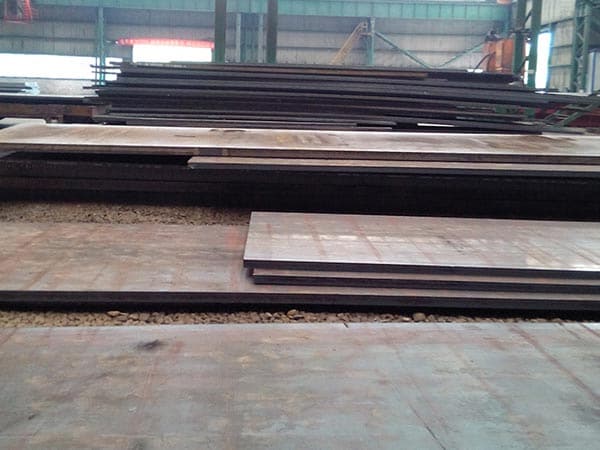
Introduction to S900MC High-Strength Steel Technology
In the modern era of structural engineering, the demand for materials that combine extreme strength with reduced weight has led to the development of thermomechanically rolled (TMCP) steels. S900MC represents the high-performance end of the EN 10149-2 standard, specifically designed for cold forming applications where structural integrity and weight savings are paramount. When we examine the 10mm thick size, we are looking at a critical gauge that balances structural rigidity with the flexibility required for advanced fabrication.
The "S" in S900MC stands for structural steel, "900" denotes the minimum yield strength of 900 MPa, and "MC" indicates that the material is thermomechanically rolled (M) and possesses high cold-forming properties (C). Unlike traditional quenched and tempered steels, S900MC achieves its properties through a precise controlled rolling and cooling process, which refines the grain structure to a microscopic level, ensuring uniformity across the entire 10mm cross-section.
Chemical Composition and Microstructural Integrity
The exceptional performance of 10mm S900MC is rooted in its low-carbon, micro-alloyed chemistry. By keeping the carbon content low, the steel maintains excellent weldability, while additions of Niobium (Nb), Vanadium (V), and Titanium (Ti) create fine precipitates that hinder grain growth during processing.
| Element | Maximum Content (%) |
|---|---|
| Carbon (C) | 0.20 |
| Manganese (Mn) | 2.20 |
| Silicon (Si) | 0.60 |
| Phosphorus (P) | 0.025 |
| Sulfur (S) | 0.015 |
| Aluminium (Al) | 0.015 |
For a 10mm thickness, the cooling rate during the TMCP process is carefully calibrated. This thickness allows for a consistent cooling gradient from the surface to the core, resulting in a fine-grained bainitic or martensitic-bainitic microstructure. This uniformity is what allows the material to withstand high stress without localized failure.
Detailed Mechanical Properties of 10mm S900MC
The mechanical properties of S900MC are what set it apart from standard structural grades like S355. For 10mm plates, the focus is on the yield-to-tensile ratio and the material's ability to absorb energy under impact.
- Yield Strength (ReH): Minimum 900 MPa. This is the stress level at which the steel begins to deform plastically.
- Tensile Strength (Rm): Ranges between 930 and 1200 MPa, providing a robust safety margin.
- Elongation (A5): Minimum 7-8% for 10mm thickness. While lower than softer steels, it is sufficient for complex cold forming.
- Impact Energy: Typically tested at -20°C or -40°C, ensuring the material does not become brittle in cold climates.
| Property | Value (10mm Thickness) |
|---|---|
| Min. Yield Strength | 900 MPa |
| Tensile Strength | 930 - 1200 MPa | 8% |
The high yield strength allows engineers to use thinner sections—such as 10mm instead of 15mm or 20mm in traditional grades—without sacrificing the load-bearing capacity. This "down-gauging" is the primary driver for using S900MC in mobile equipment and transportation.
Cold Forming and Fabrication Characteristics
Despite its extreme strength, 10mm S900MC is designed for cold bending. However, the high strength requires significantly higher bending forces compared to standard steels. The minimum bending radius is a critical parameter for fabricators to avoid cracking on the outer tension surface.
For a 10mm plate, the recommended minimum internal bending radius (r) is typically 3.0 to 4.0 times the thickness (t), depending on whether the bend is transverse or longitudinal to the rolling direction. Using a 40mm radius for a 10mm plate is a safe starting point for transverse bends. It is also essential to ensure that the bending tools are in good condition and that the plate edges are deburred to prevent crack initiation.
Welding Protocols for High-Strength Alloy Steel
Welding 10mm S900MC requires a sophisticated approach to heat management. Because the steel derives its strength from the TMCP process, excessive heat input can soften the Heat Affected Zone (HAZ), leading to a localized drop in strength. Low heat input welding techniques (such as MIG/MAG with pulsed arc) are preferred.
- Preheating: Generally not required for 10mm thickness unless the ambient temperature is very low or the material is damp, which helps prevent hydrogen cracking.
- Interpass Temperature: Should be kept below 200°C to maintain the refined grain structure.
- Filler Materials: Should be matched to the strength of the base metal (e.g., AWS A5.28 ER110S or ER120S grades) or slightly under-matched if the joint design allows, to improve toughness.
Post-weld heat treatment (PWHT) is generally discouraged for S900MC as it can significantly reduce the yield strength by altering the thermomechanical grain structure.
Environmental Adaptability and Durability
S900MC performs exceptionally well in various environmental conditions, particularly where vibration and dynamic loading are present. Its high fatigue strength makes it ideal for components subjected to cyclic stress. While S900MC is not a "weathering steel" like Corten, its low impurity content (low Sulfur and Phosphorus) improves its resistance to atmospheric corrosion compared to lower-grade carbon steels.
In 10mm thickness, the surface quality of S900MC is typically excellent, often supplied in a pickled and oiled condition. This provides a clean substrate for high-quality coatings or paints, which are necessary for long-term corrosion protection in marine or industrial environments.
Expanding Applications: Beyond the Standard
The use of 10mm S900MC has expanded far beyond simple truck chassis. Today, it is a staple in the heavy lifting industry, specifically for telescopic crane booms where weight at height is the enemy of stability. By using 10mm S900MC, manufacturers can create lighter, longer booms that can lift heavier loads at greater radii.
Other industries benefiting from this 10mm high-strength plate include:
- Mobile Hydraulics: Lightweight cylinders and support structures.
- Agricultural Machinery: High-stress components in large-scale harvesters and plows that must resist deformation while hitting obstacles.
- Renewable Energy: Specialized transport frames for wind turbine blades that require immense stiffness.
- Waste Management: Lightweight containers and ejector blades in refuse trucks to maximize payload.
The transition to S900MC is not just about material substitution; it is about redesigning components to take full advantage of the 900 MPa yield limit. This involves using finite element analysis (FEA) to optimize geometry, ensuring that the 10mm thickness is utilized where stress is highest and reduced where it is not needed.
Technical Considerations for Procurement
When sourcing 10mm S900MC, it is vital to verify the mill test certificates (MTC) according to EN 10204 3.1. Key data to check includes the actual yield strength (not just the minimum), the impact test values at the specified temperature, and the thickness tolerance (typically according to EN 10051). Given the high strength, flatness tolerances are also crucial for automated laser cutting and robotic welding processes. High-quality S900MC should exhibit superior flatness to ensure precision in complex assemblies.
Leave a message