
What is S960MC auto steel flat chrome
Explore the technical specifications of S960MC high-strength steel. Learn about its mechanical properties, chemical composition, and why it is essential for modern automotive and heavy machinery manufacturing.
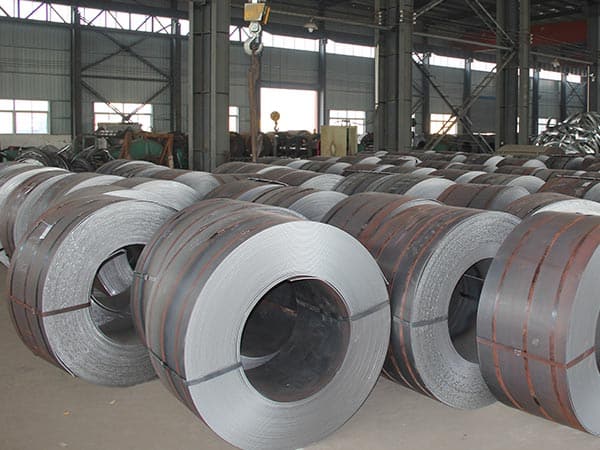
Understanding S960MC: The Peak of High-Strength Structural Steel
S960MC represents one of the highest grades of thermomechanically rolled, high-yield-strength steels designed specifically for cold forming. In the context of modern engineering, the designation "S" stands for structural steel, while "960" indicates a minimum yield strength of 960 megapascals (MPa). The "MC" suffix denotes that the material is produced through a thermomechanical rolling process, ensuring a fine-grained microstructure that balances extreme strength with surprising ductility. While the term "flat chrome" in commercial inquiries often refers to the flat-rolled nature of the product or specific surface finishes, S960MC itself is primarily valued for its weight-saving potential in automotive and heavy equipment manufacturing.
Chemical Composition and Microstructural Integrity
The performance of S960MC is rooted in its precise chemical makeup. Unlike traditional carbon steels, S960MC utilizes a low-alloy approach to maintain weldability while achieving elite strength levels. The carbon content is strictly controlled, usually kept below 0.20%, to prevent brittleness. Manganese (Mn) and Silicon (Si) are added to enhance solid solution strengthening. However, the true secret lies in micro-alloying elements such as Niobium (Nb), Vanadium (V), and Titanium (Ti). These elements form fine carbides and nitrides during the thermomechanical rolling process, which pin grain boundaries and prevent grain growth, resulting in an exceptionally fine-grained structure.
| Element | Maximum Content (%) |
|---|---|
| Carbon (C) | 0.20 |
| Manganese (Mn) | 2.20 |
| Silicon (Si) | 0.60 |
| Phosphorus (P) | 0.025 |
| Sulfur (S) | 0.010 |
| Aluminium (Al) | 0.015 (min) |
This lean chemistry ensures that the steel remains weldable without the need for extensive preheating, a critical factor in high-volume automotive assembly lines. The inclusion of Chromium (Cr) and Molybdenum (Mo) may occur in trace amounts or specific proprietary variations to improve hardenability and tempering resistance, though S960MC remains fundamentally a low-alloy steel.
Mechanical Power: Yield Strength and Ductility
The primary reason engineers select S960MC is its yield strength. With a minimum of 960 MPa, it allows for significant "down-gauging." This means manufacturers can use thinner sheets of S960MC to achieve the same structural integrity as thicker, heavier sheets of standard S355 steel. The tensile strength typically ranges between 980 and 1250 MPa, providing a robust safety margin for dynamic loads.
- Yield Strength (ReH): min. 960 MPa
- Tensile Strength (Rm): 980 - 1250 MPa
- Elongation (A5): min. 7% to 10% (depending on thickness)
- Impact Toughness: Often tested at -20°C or -40°C to ensure performance in cold climates.
Despite its high strength, S960MC maintains a level of ductility that allows for cold bending and folding. This is a significant advantage over quenched and tempered steels, which can be prone to cracking during aggressive forming operations. The fine-grain structure provides a uniform response to stress, reducing the risk of localized thinning or necking during the manufacturing process.
Processing and Fabrication: Bending and Welding
Working with S960MC requires an understanding of its unique physical limits. Because of its high yield point, the material exhibits significant "springback" after bending. Fabricators must compensate for this by over-bending the material or using advanced CNC-controlled press brakes. The minimum bending radius is typically larger than that of lower-grade steels, usually ranging from 3.0 to 4.0 times the material thickness, depending on the orientation of the bend relative to the rolling direction.
Welding S960MC is highly efficient due to its low carbon equivalent (CEV). Standard methods such as MAG (Metal Active Gas), MIG (Metal Inert Gas), and Laser welding are commonly used. However, it is vital to control the heat input. Excessive heat can cause grain coarsening in the Heat Affected Zone (HAZ), which may lead to a localized reduction in strength. Using high-quality filler metals that match the strength of the base material is essential for maintaining the integrity of the joint.
Environmental Adaptability and Sustainability
In the current industrial landscape, sustainability is a major driver of material choice. S960MC contributes to environmental goals primarily through weight reduction. In the automotive industry, reducing the weight of a vehicle chassis or frame directly translates to lower fuel consumption and reduced CO2 emissions. For electric vehicles (EVs), the use of high-strength steel like S960MC helps offset the weight of heavy battery packs, extending the vehicle's range without compromising passenger safety.
Furthermore, S960MC demonstrates excellent fatigue resistance. Components subjected to cyclic loading—such as the booms of mobile cranes or the chassis of heavy-duty trailers—benefit from the steel's ability to withstand repeated stress without developing micro-cracks. This longevity reduces the need for frequent replacements, contributing to a more sustainable product lifecycle.
Industry Applications: Beyond the Chassis
While often categorized as an "auto steel," the utility of S960MC extends into various high-stress sectors. Its combination of flatness, strength, and formability makes it ideal for:
- Lifting Equipment: Telescopic booms for cranes where weight reduction at the tip is crucial for lifting capacity.
- Transportation: Lightweight trailers, timber trucks, and agricultural machinery that require high payload-to-weight ratios.
- Structural Components: Cross-members, longitudinal beams, and safety cages in commercial vehicles.
- Mining and Construction: Support structures and wear-resistant parts that need to be both light and tough.
The term "flat chrome" sometimes appears in procurement for decorative or highly polished structural parts. While S960MC is not a stainless steel, it can be treated with various coatings, including zinc-nickel plating or specialized paints, to provide the aesthetic of chrome while maintaining the structural dominance of high-yield steel.
Technical Comparison: S960MC vs. Quenched and Tempered Steel
It is important to distinguish S960MC from quenched and tempered (Q&T) steels like S960QL. S960MC is produced via thermomechanical rolling, which is generally more cost-effective and results in better cold-forming properties. S960QL, on the other hand, undergoes a separate heat treatment process. While S960QL may offer better toughness at extremely low temperatures (e.g., -60°C), S960MC is often the preferred choice for automated production environments where consistent forming and welding behavior are paramount.
The surface quality of S960MC is also typically superior for automotive applications. The rolling process results in a smooth, clean surface that is ideal for laser cutting and subsequent coating processes. This "flat" precision ensures that complex parts fit together perfectly in robotic assembly cells, minimizing downtime and maximizing throughput.
Leave a message